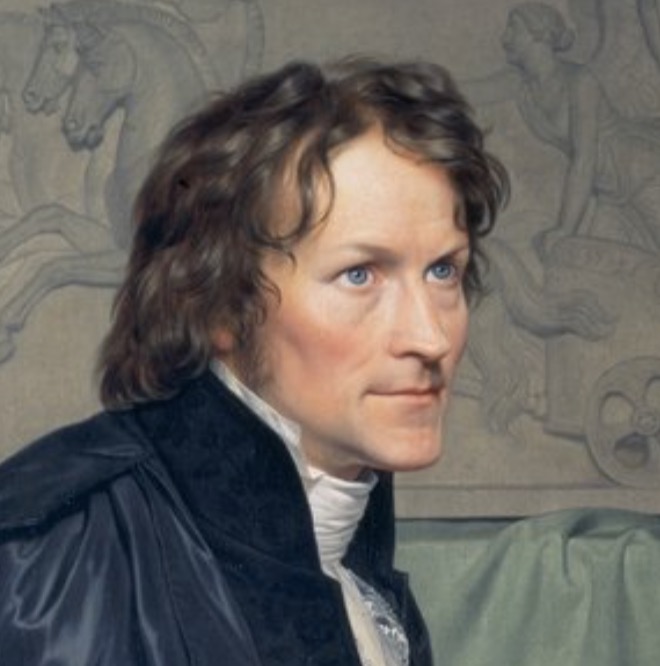



Albert (Bertel) Thorvaldsen (Father: Gotskalk Thorvaldsen, an Icelandic woodcarver; Mother: Karen Dagnes; Though unmarried, he had a long-term companion, Anna Maria Magnani, and two children, Carlo and Elisa)
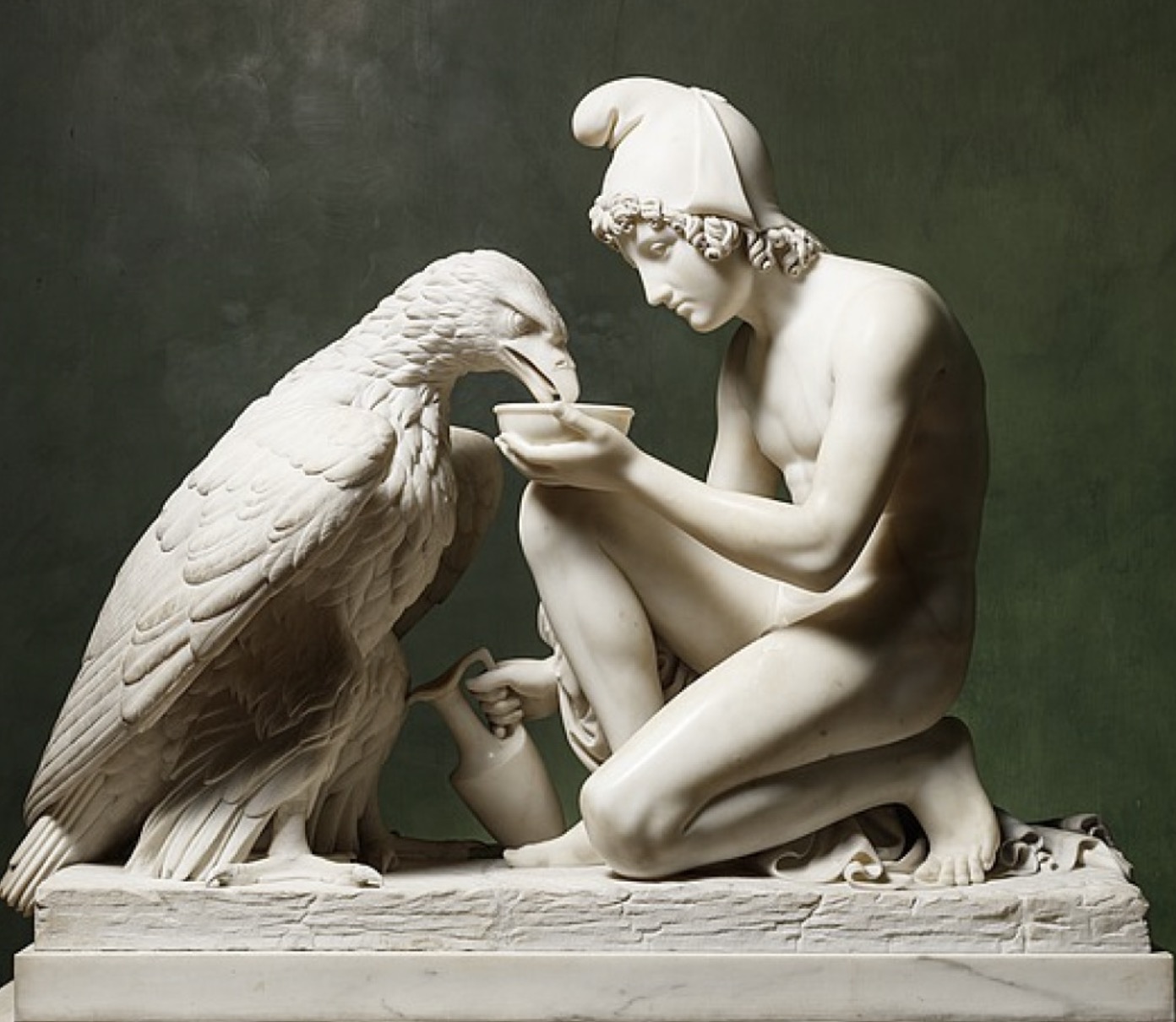
Bertel Thorvaldsen (1770–1844) was a Danish sculptor and one of the most prominent figures of Neoclassicism in 19th-century Europe. Working primarily in Rome for most of his life, he was widely regarded as the successor to Antonio Canova, defining the standard for classical grace, mythological purity, and heroic proportion in sculpture.
Born in Copenhagen to an Icelandic woodcarver, Thorvaldsen displayed early artistic talent and was accepted into the Royal Danish Academy of Fine Arts at the age of eleven. While working part-time helping his father carve ship figureheads, he excelled academically and won a travel stipend to Rome. He arrived there in 1797—a date he cherished so deeply that he referred to it as his “Roman birthday.”
In Rome, Thorvaldsen immersed himself in the study of classical antiquity. His international breakthrough came in 1803 with the creation of his monumental statue, Jason with the Golden Fleece. The magnificent piece caught the eye of the wealthy British art patron Thomas Hope, who commissioned it in marble, launching Thorvaldsen into European stardom.
Unlike Canova’s highly polished, sensual, and dynamic approach, Thorvaldsen’s Neoclassicism was characterized by a stricter, more rigid adherence to ancient Greek art—heroic, calm, emotionally restrained, and idealized. He established a massive, factory-like studio in Rome, employing numerous assistants to translate his plaster models into flawless white marble for clients spanning from royalty to the Pope.
Among his most famous public works are the Lion Monument in Lucerne, Switzerland, which commemorates the Swiss Guards massacred during the French Revolution, and his majestic statues of Christ and the Twelve Apostles for the Church of Our Lady (Vor Frue Kirke) in Copenhagen.
In 1838, Thorvaldsen returned to Denmark as a national hero. He bequeathed his extensive personal art collection and most of his original plaster models to the city of Copenhagen, funding the construction of the Thorvaldsens Museum. He died suddenly in 1844 while attending the Royal Danish Theatre and is buried in a simple grave in the courtyard of his museum.
Active in others filds : Drawing, Art Collecting (Antiquities and Contemporary Art), Medal Design.