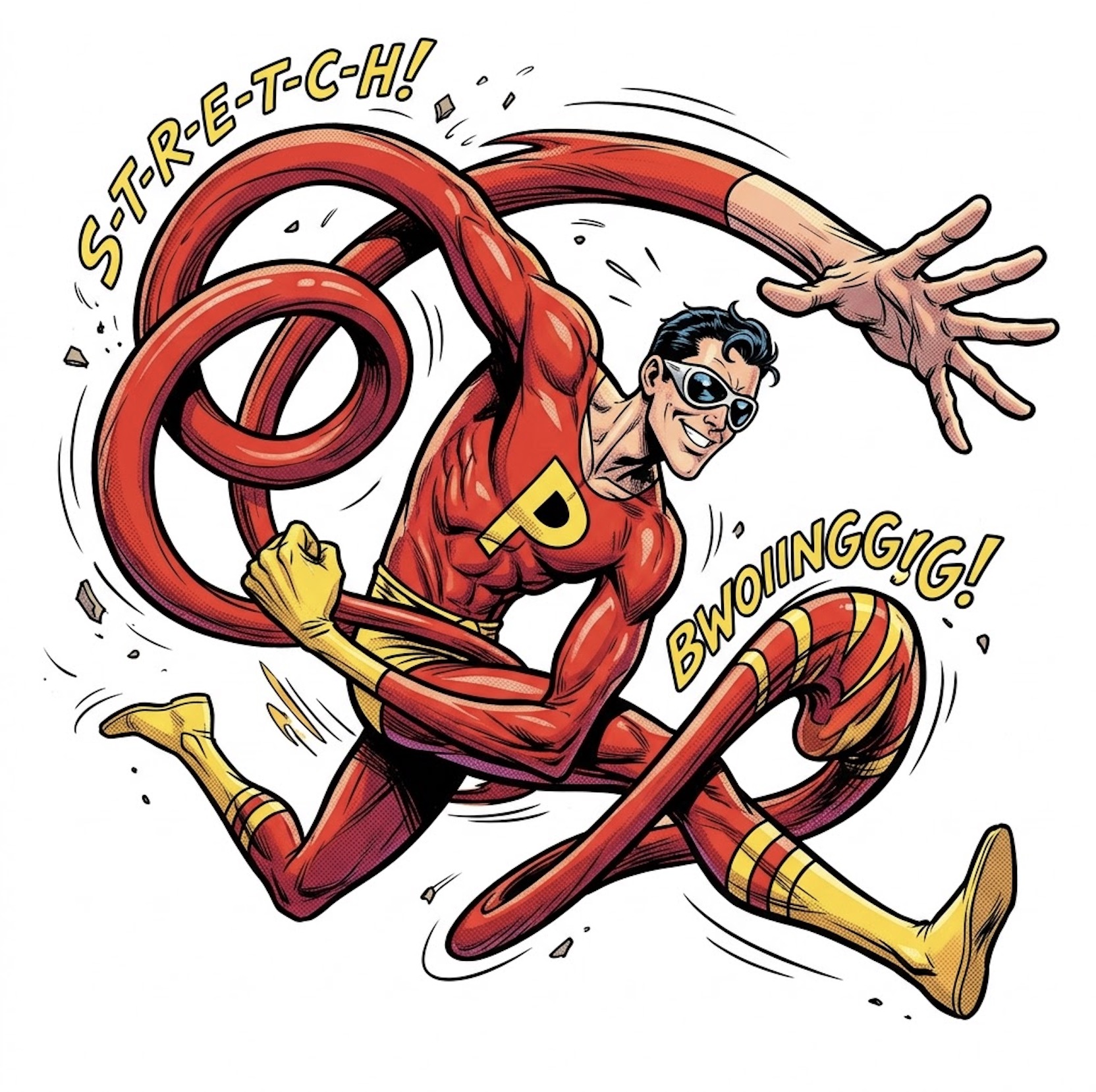
The Visual Elasticity of Plastic Man: Master of Surrealist Shape-Shifting
When examining the boundaries of character design for cgitems, Plastic Man represents the ultimate departure from rigid anatomical structure. He is not merely a superhero; he is a living, breathing exercise in surrealism and the absolute embodiment of morphological freedom. Unlike the stoic, heavily armored vigilantes of the modern era, Eel O’Brian’s visual identity relies on manic energy, cartoon physics, and a profound lack of physical boundaries. For artists and animators, Plastic Man is both a boundless playground and a terrifying technical challenge.
The Genesis: Jack Cole and the Golden Age of Surrealism Created by visionary writer and artist Jack Cole in 1941 for Quality Comics, Patrick “Eel” O’Brian began his fictional life as a mobster before a chemical vat accident transformed his cellular structure. Cole’s foundational artwork was lightyears ahead of its time, utilizing fluid, frenetic linework that broke traditional panel layouts. Rather than simply stretching limbs like later heroes such as Mr. Fantastic, Cole’s Plastic Man shape-shifted into fully functional, bizarre objects—a bouncy ball, a working parachute, a massive flyswatter, or a highly detailed grandfather clock. The genius of the original design was the costume: a vibrant red leotard, a plunging laced V-neck, a yellow and black striped belt, and a pair of white goggles. No matter what bizarre shape Eel assumed, those core visual motifs remained, allowing readers to instantly identify him within the visual chaos.
The Anatomy of Elasticity: A Unique Visual Challenge For comic illustrators, rendering Plastic Man requires unlearning the strict rules of human anatomy. His body possesses no skeletal limitations, meaning artists must rely entirely on the flow of lines and the distribution of visual weight. Throughout the Silver and Bronze Ages, after the character was acquired by DC Comics, artists integrated his looney-tunes aesthetic into a more grounded superhero universe. This created a brilliant visual foil; placing the wildly distorted, brilliantly colored Plastic Man next to the grim, hyper-realistic Batman highlighted the sheer absurdity and unique kinetic energy of his design.
Animated Anarchy: The Master of Squash and Stretch If there is one medium where Plastic Man truly belongs, it is animation. His very existence is a tribute to “squash and stretch,” the most fundamental principle of traditional 2D animation. The 1979 Ruby-Spears production, The Plastic Man Comedy/Adventure Show, brought his transformations to Saturday morning television, relying on quick, seamless morphing sequences. Decades later, shows like Batman: The Brave and the Bold fully embraced his Golden Age roots. Animators utilized bold, thick outlines and exaggerated, snappy timing to capture his manic personality, proving that the character’s design is virtually indestructible, no matter how wildly his proportions are distorted.
Modern Masterpieces: From Slapstick to Body Horror In the modern era of comic illustration, artists have pushed the character in wildly divergent stylistic directions. Kyle Baker’s legendary 2004 comic run fully embraced the character’s rubbery, cartoonish essence, using fluid, expressive digital artwork that felt like a Golden Age animation cel brought to life. Conversely, legendary painter Alex Ross took a radically different approach in the epic series Justice. Rendering Plastic Man with photorealistic gouache and watercolors, Ross highlighted the inherent body horror of the character. By applying realistic lighting, glossy specular highlights, and highly detailed muscle tension to wildly unnatural proportions, Ross proved that elasticity can look genuinely unsettling in a realistic context.
The 3D Modeler’s Nightmare: Rigging the Impossible For the modern visual effects artist, 3D modeler, or technical rigger, Plastic Man presents an almost insurmountable challenge. Traditional skeletal rigs and weight-painting techniques are designed to mimic human joints and bones. To render Plastic Man in a 3D environment requires insanely complex mesh deformations, blend shapes, and custom spline rigs to prevent textures from tearing or looking overly stretched during extreme morphs. Designing his materials requires balancing the look of skin and spandex with the glossy, reflective properties of industrial rubber. For the cgitems community, Plastic Man remains a fascinating case study in pushing rendering engines and character rigging to their absolute breaking points, demanding an imagination as limitless as the character himself.