




Giovanni Battista Tiepolo (Father: Domenico Tiepolo; Mother: Orsetta; Spouse: Maria Cecilia Guardi; Notable children: Painters Giovanni Domenico Tiepolo and Lorenzo Baldissera Tiepolo)
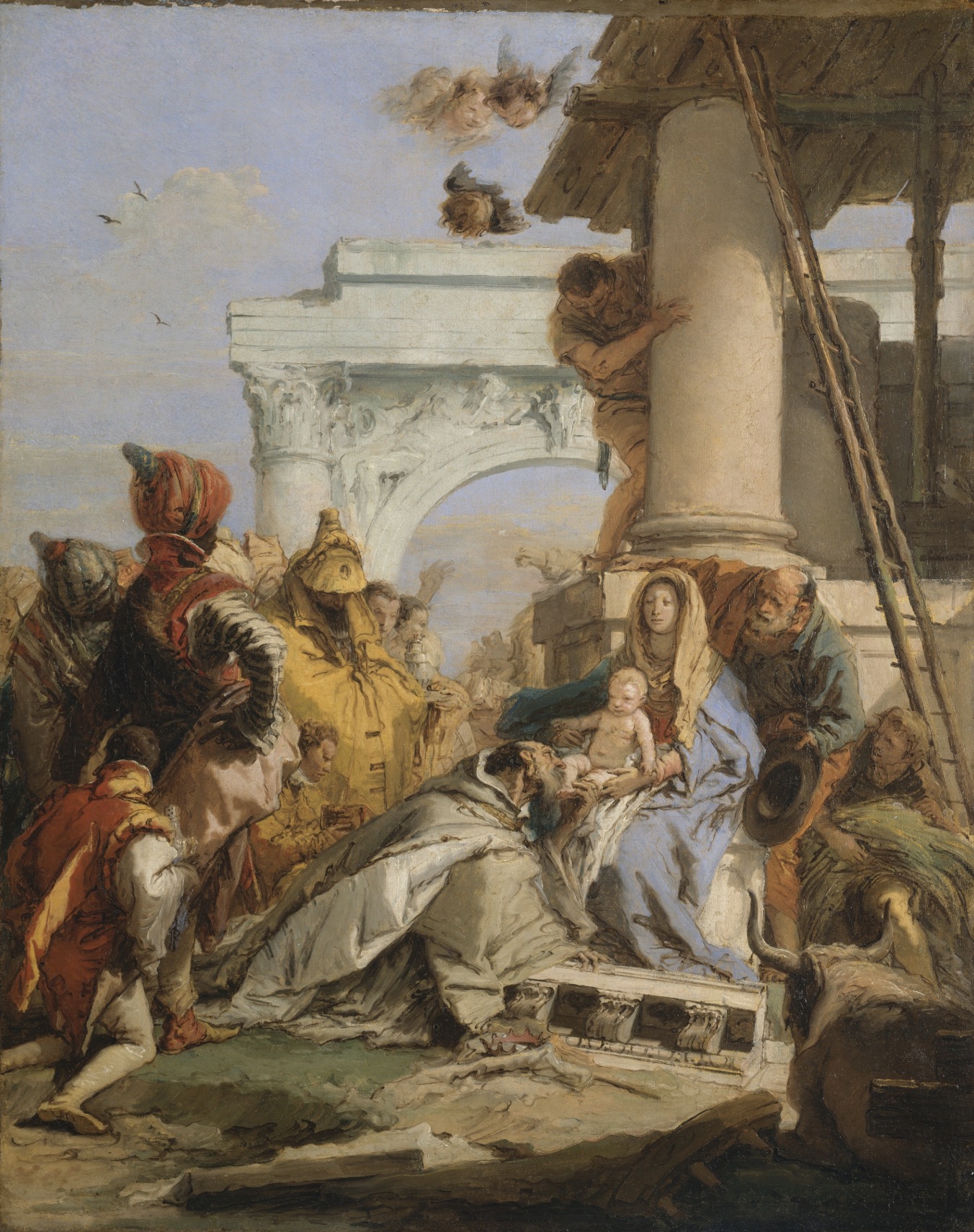
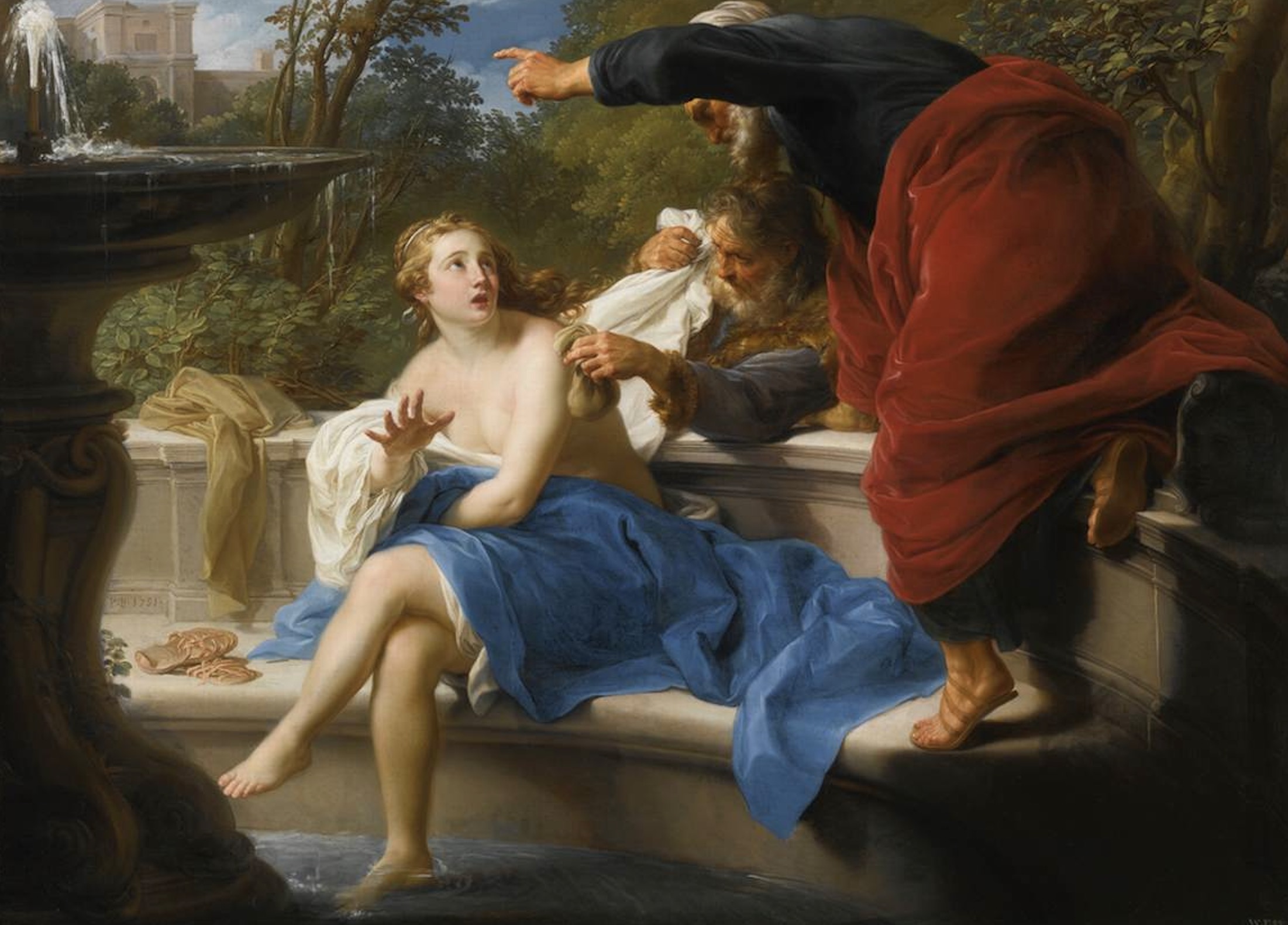
Giovanni Battista (Giambattista) Tiepolo (1696–1770) was the last great master of the Venetian school and is widely considered the greatest decorative painter of 18th-century Europe. Renowned for his luminous, airy frescoes and brilliant mastery of light and color, Tiepolo’s work epitomizes the grandeur and theatricality of the Rococo era.
Born in Venice to a shipping merchant who died when Giambattista was only a year old, he showed early artistic promise and apprenticed under the academic painter Gregorio Lazzarini. However, his true influences were the older Venetian masters, particularly Paolo Veronese, whose grand, luminous compositions heavily inspired Tiepolo’s mature style. In 1719, he married Maria Cecilia Guardi, sister of the famous Venetian view-painters (vedutisti) Francesco and Giovanni Antonio Guardi, further embedding himself in the city’s artistic elite.
Tiepolo’s reputation grew rapidly as he executed spectacular altarpieces and ceiling frescoes for churches and patrician palaces across Venice and Northern Italy. His ability to create the illusion of limitless, sunlit space on flat ceilings—often depicting swirling clouds, plunging perspectives, and mythological figures—was unmatched.
His international fame led to his most celebrated commission: the decoration of the Würzburg Residence in Franconia (Germany) between 1750 and 1753. Working alongside his sons Domenico and Lorenzo, Tiepolo painted the magnificent ceiling above the grand staircase, portraying Apollo and the Continents. Spanning an immense 7,287 square feet, it remains one of the largest and most complex ceiling frescoes ever created, seamlessly blending painted architecture with physical stucco to create a stunning trompe l’œil effect.
In 1761, King Charles III of Spain summoned Tiepolo to Madrid to decorate the new Royal Palace. Though he created several masterful ceilings there, his final years were clouded by the shifting tastes of the era. The ornate, emotional Rococo style was falling out of favor, replaced by the rigid Neoclassicism championed by his younger rival, Anton Raphael Mengs. Tiepolo died in Madrid in 1770, marking the end of the great era of Venetian grand-scale decorative painting.
Active in others filds : Printmaking (Etchings, notably the Scherzi di fantasia and Capricci series), Draftsmanship.