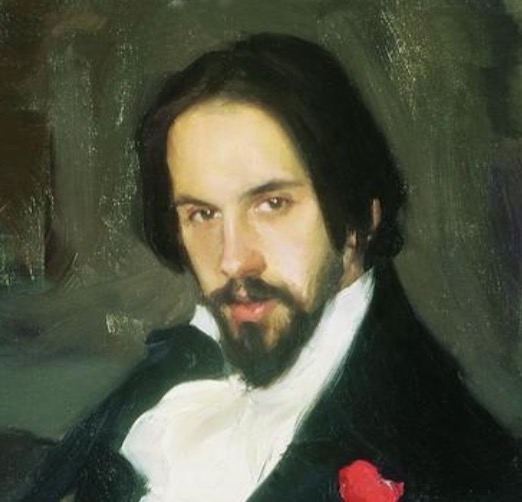




Ivan Yakovlevich Bilibin (Parents: Yakov Ivanovich Bilibin, a naval physician, and Varvara Alexandrovna; Spouses: Maria Chambers, Renée O’Connell, Alexandra Shchekatikhina-Pototskaya)
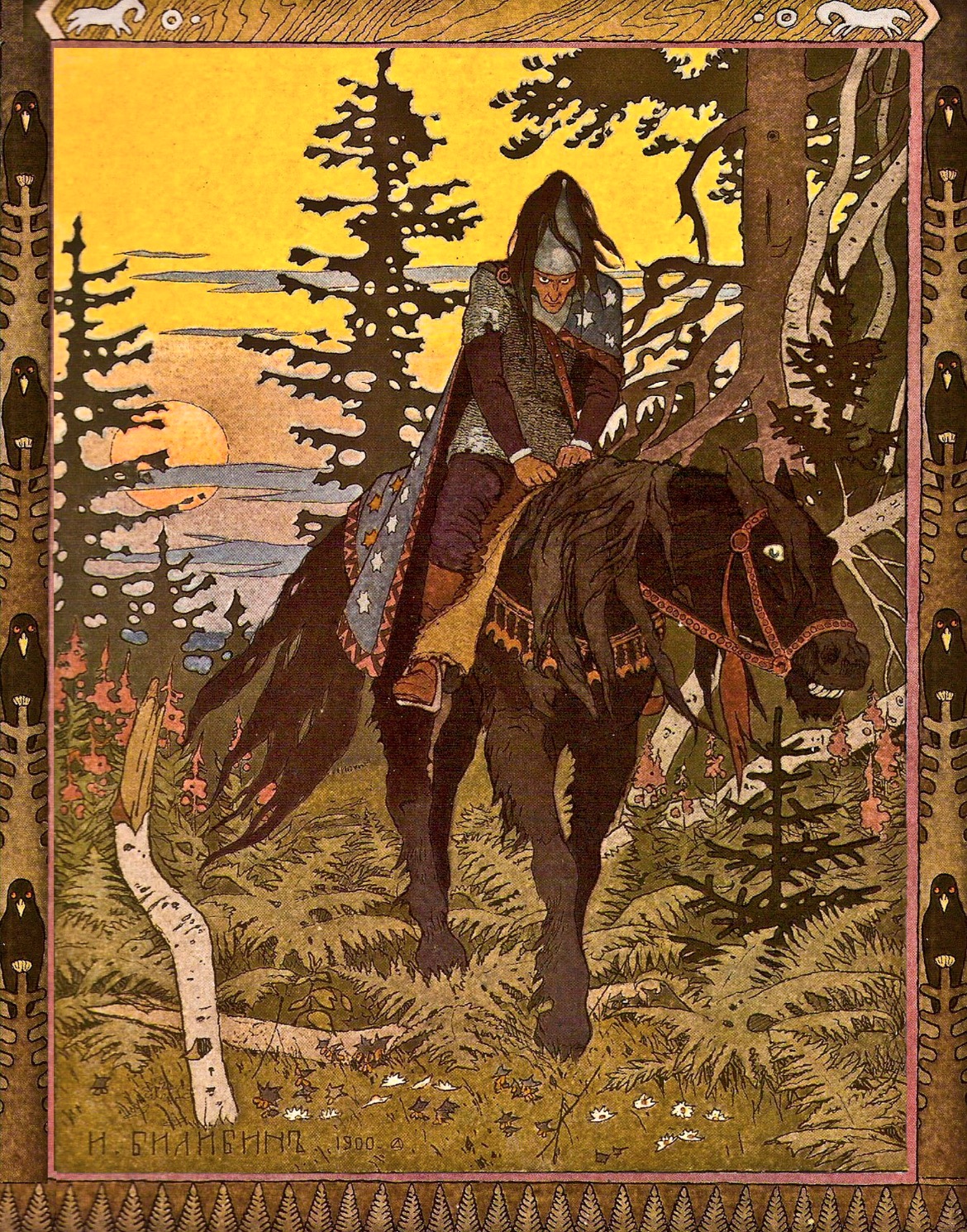
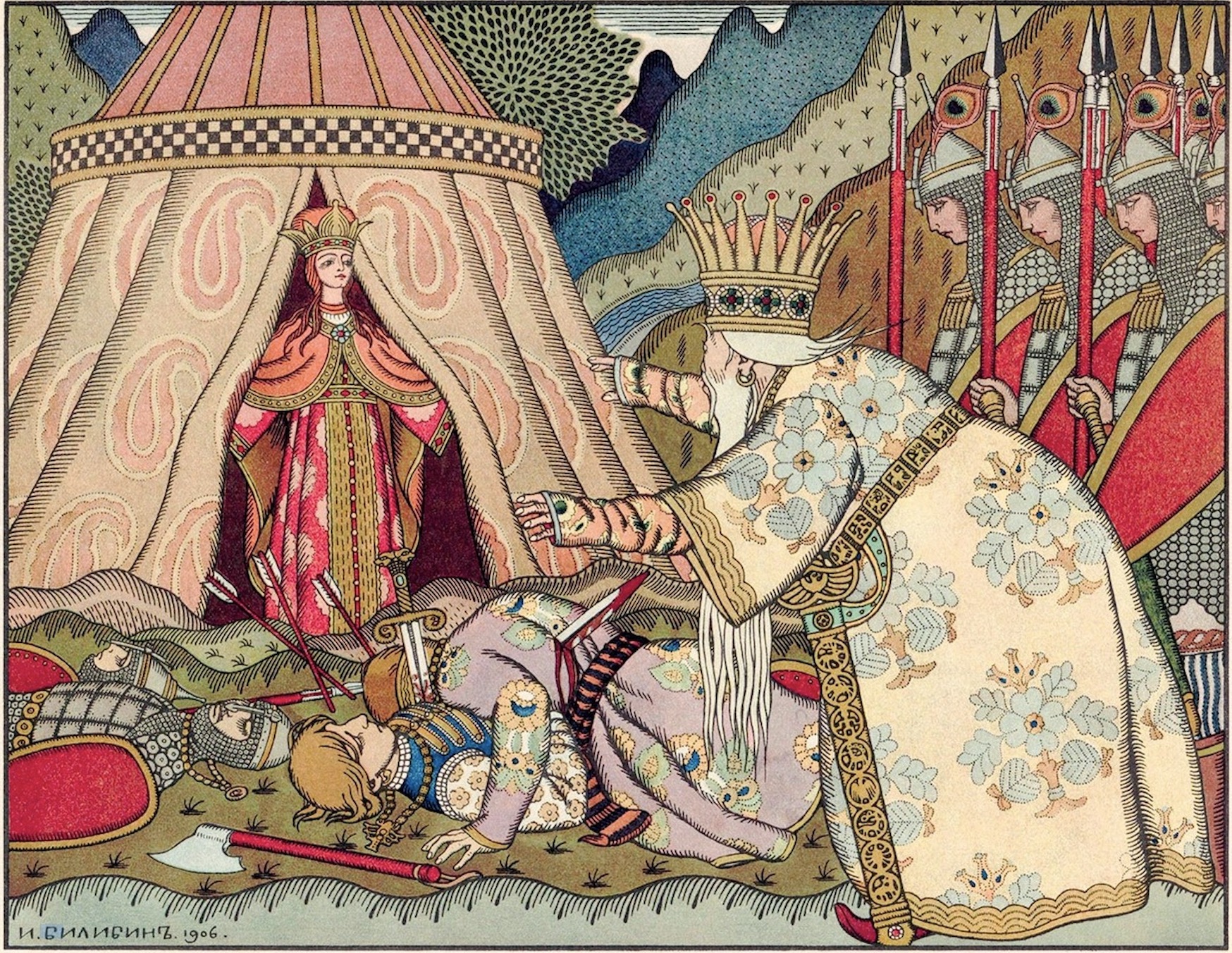
Ivan Yakovlevich Bilibin (1876–1942) was a highly influential Russian illustrator and stage designer who brought the visual language of traditional Russian folklore into the modern era. His unique approach, often referred to as the “Bilibin style,” became the definitive visual representation of Russian fairy tales and epic poems (byliny).
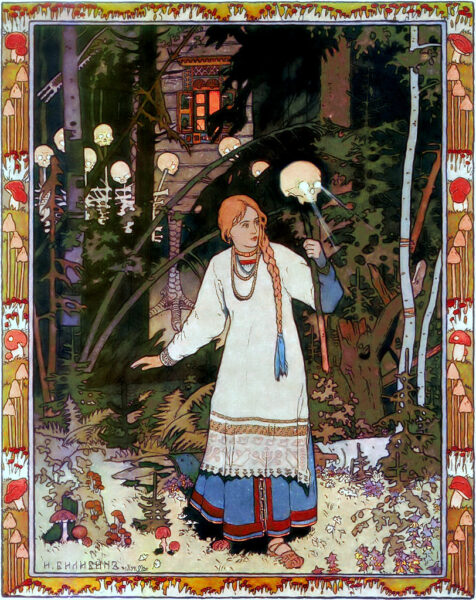
Bilibin initially studied law in St. Petersburg but quickly shifted his focus to art, eventually studying under the great Russian realist painter Ilya Repin. His artistic revelation came in 1899 when he visited the Tver region and saw dense northern forests and traditional wooden architecture. Deeply inspired by this, along with the influence of traditional Russian woodcuts (lubok) and Japanese ukiyo-e prints, Bilibin developed his signature graphic style. This aesthetic is characterized by firm, continuous black outlines, large areas of flat, vivid watercolors, and intricate, decorative borders that frame the main image like a window.
In 1899, he released his first illustrations for Russian fairy tales, including The Tale of Ivan Tsarevich, the Firebird and the Grey Wolf, and later Vasilisa the Beautiful. He was a prominent member of the Mir Iskusstva (World of Art) movement, which sought to elevate book illustration and theatrical design to fine art. His expertise in historical Russian aesthetics led him to design stunning costumes and sets for Sergei Diaghilev’s Ballets Russes, as well as for operas like Rimsky-Korsakov’s The Golden Cockerel.
Following the Russian Revolution of 1917, Bilibin left the country, living in exile in Egypt and later Paris, where he continued to design for private patrons and European theaters. Homesick, he returned to the Soviet Union in 1936, where he taught at the All-Russian Academy of Arts. Tragically, Bilibin died of starvation in 1942 during the brutal Siege of Leningrad, refusing to be evacuated and working until his final days.
Active in others filds : Stage Design (Opera and Ballet Sets), Costume Design, Graphic Design, Art Education.