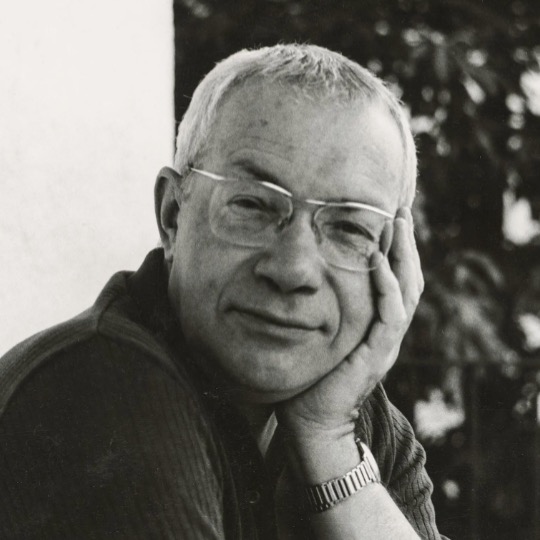
Max Bill (Parents: Erwin Bill and Marie Bill-Geiger; Spouse: Binia Bill; Son: Jakob Bill)
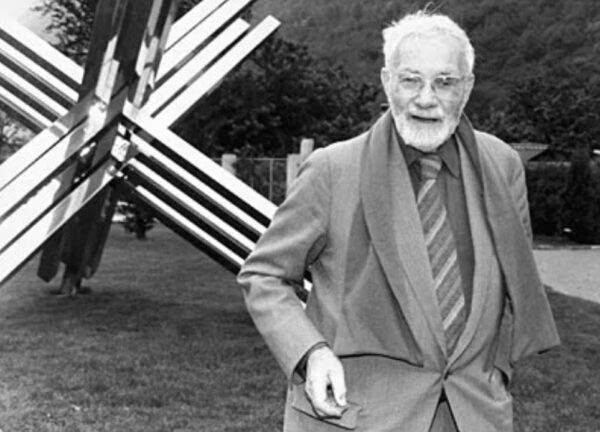
Max Bill (1908–1994) was a Swiss polymath—an architect, sculptor, painter, and graphic designer—who became the primary theorist and practitioner of Concrete Art. His work was characterized by a strict adherence to mathematical logic and the belief that art should be “calculated” rather than inspired by nature or emotion.
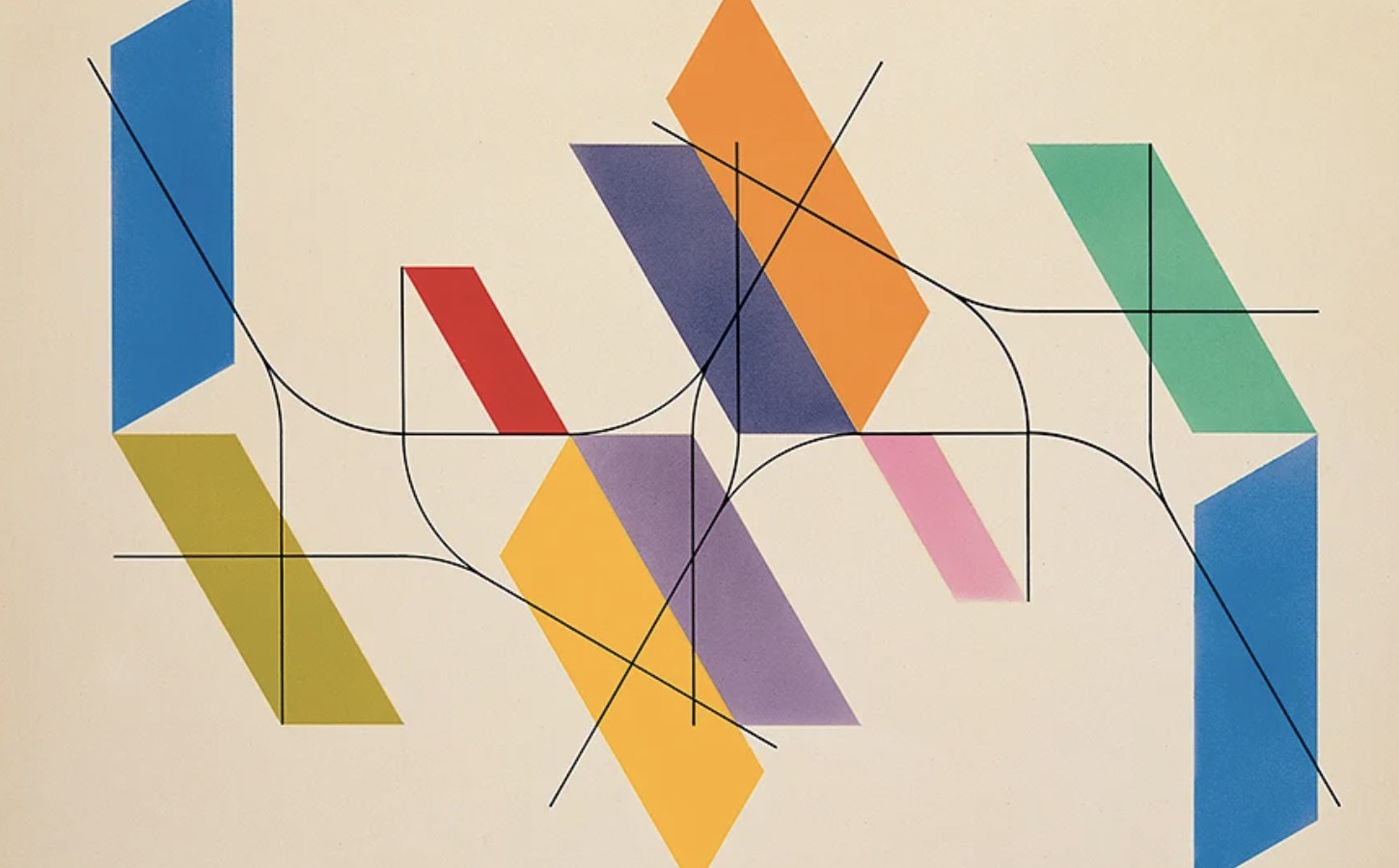
After an apprenticeship as a silversmith, Bill studied at the Bauhaus in Dessau from 1927 to 1928 under masters such as Wassily Kandinsky, Paul Klee, and Oskar Schlemmer. This period profoundly shaped his functionalist approach to aesthetics. Upon returning to Zurich, he began to develop his “Concrete” philosophy, a term he adopted from Theo van Doesburg. For Bill, “concrete” meant that the art did not represent anything other than itself; a line was a line, and a color was a color, organized according to clear geometric and mathematical principles.
In 1953, Bill co-founded the Ulm School of Design (Hochschule für Gestaltung – HfG) in Germany, which was envisioned as a successor to the Bauhaus. He designed the school’s buildings and served as its first rector. During this time, he created the iconic “Ulm Stool,” a testament to his belief that even the most utilitarian objects should be designed with mathematical precision and aesthetic clarity.
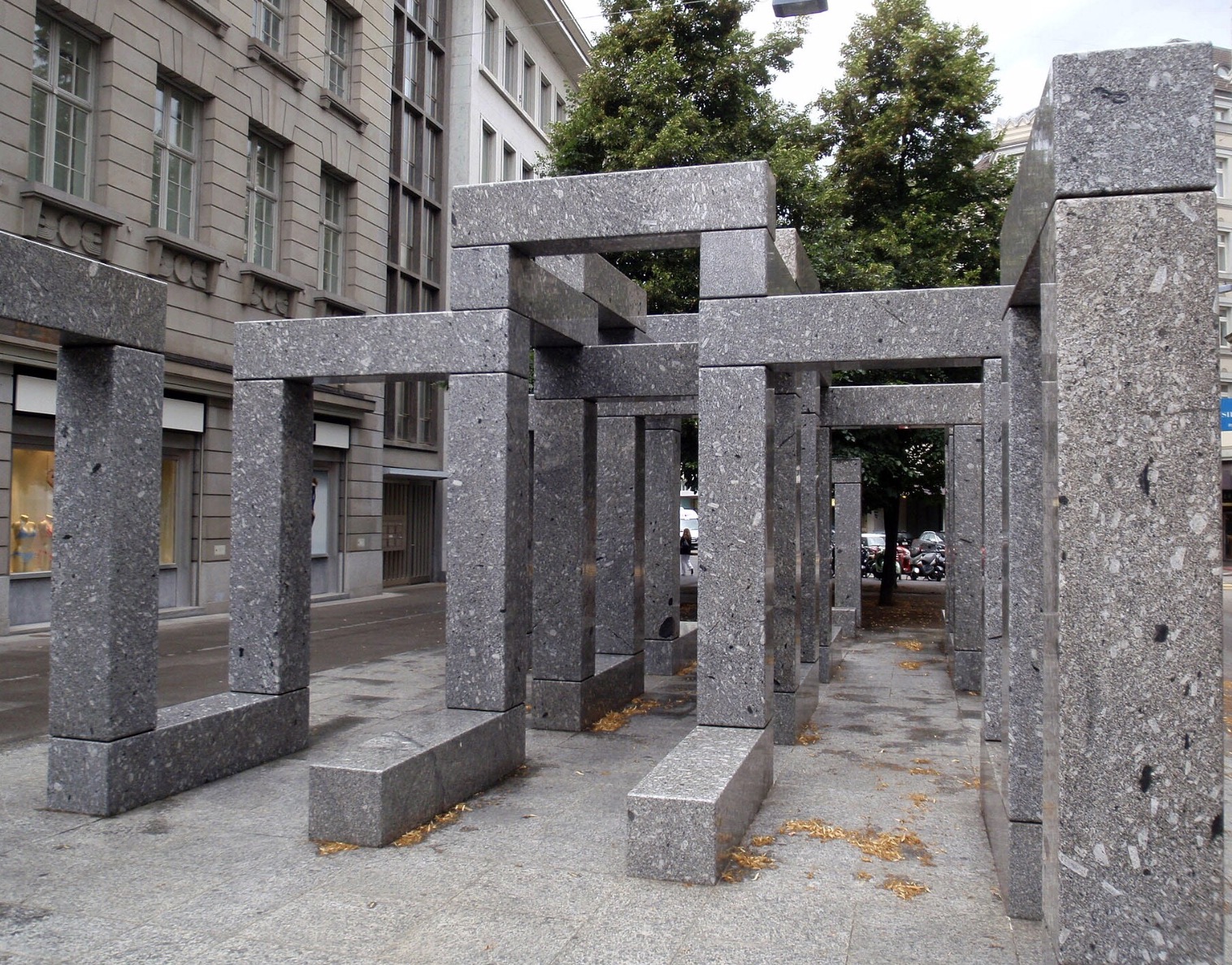
As a sculptor, he is famous for his exploration of the Möbius strip and other infinite loops, translating complex topological concepts into elegant stone and metal forms. His graphic design work, particularly his typography and poster designs, set the standard for the “Swiss Style” that dominated international design in the mid-20th century. Throughout his life, Bill maintained that art and design were tools for social progress, aiming to create a harmonious visual environment for a modern, rational society.
Active in others filds : Architecture, Industrial Design, Typography, Art Theory, Politics (Member of the Swiss National Council).