
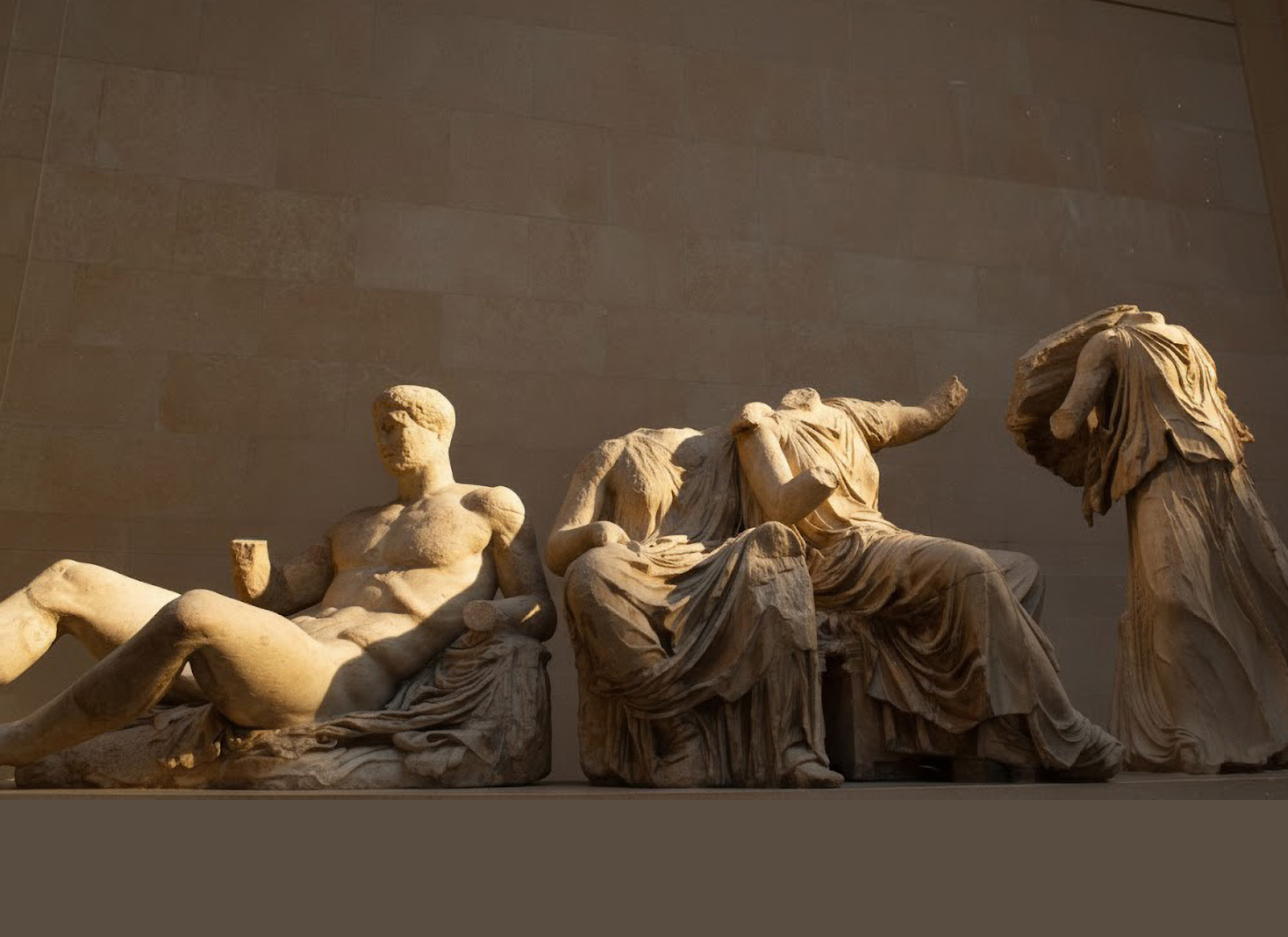

Pheidias (Father: Charmides of Athens)
Phidias (c. 480–430 BC) is widely regarded as the greatest sculptor of Classical Greece and the mastermind behind the visual splendor of the Athenian Acropolis. He lived during the “Golden Age” of Athens and was a close friend and advisor to the statesman Pericles, who appointed him as the artistic director (Episkopos) of the city’s massive building program.
Phidias is most famous for his colossal chryselephantine statues (made of gold and ivory). His two most celebrated works were the Athena Parthenos, which stood inside the Parthenon, and the seated Statue of Zeus at Olympia, which was named one of the Seven Wonders of the Ancient World. Though neither of these original statues survives, their appearance is known through descriptions by ancient historians and small-scale Roman copies.
As the supervisor of the Parthenon, Phidias is credited with designing the Parthenon Marbles (the frieze, metopes, and pediment sculptures). His style defined the “High Classical” aesthetic: a perfect balance between naturalism and idealism. He introduced the “wet drapery” technique, where clothing appears thin and clinging to the body, revealing the anatomical form beneath while creating a sense of rhythmic movement.
His life ended in controversy. Ancient accounts suggest he was accused by political rivals of Pericles of embezzling gold intended for the statue of Athena. Some sources claim he died in prison in Athens, while others suggest he fled to Olympia to finish the Statue of Zeus before being executed there. Regardless of his fate, his influence on Western art is immeasurable, setting the standard for the human figure in sculpture for centuries.
Active in others filds : Painting (early career), Architecture (as artistic director/supervisor), Metalworking.