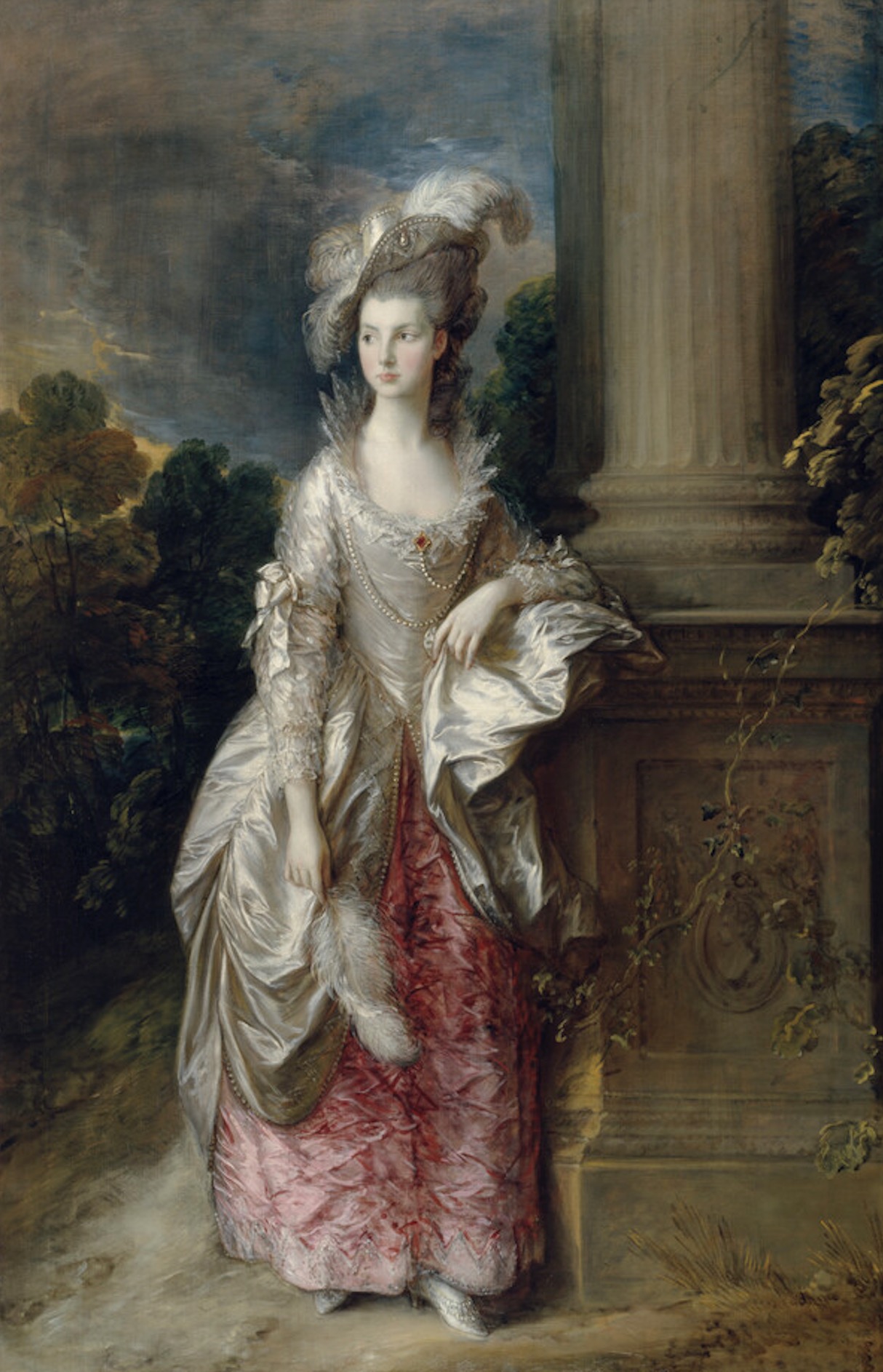
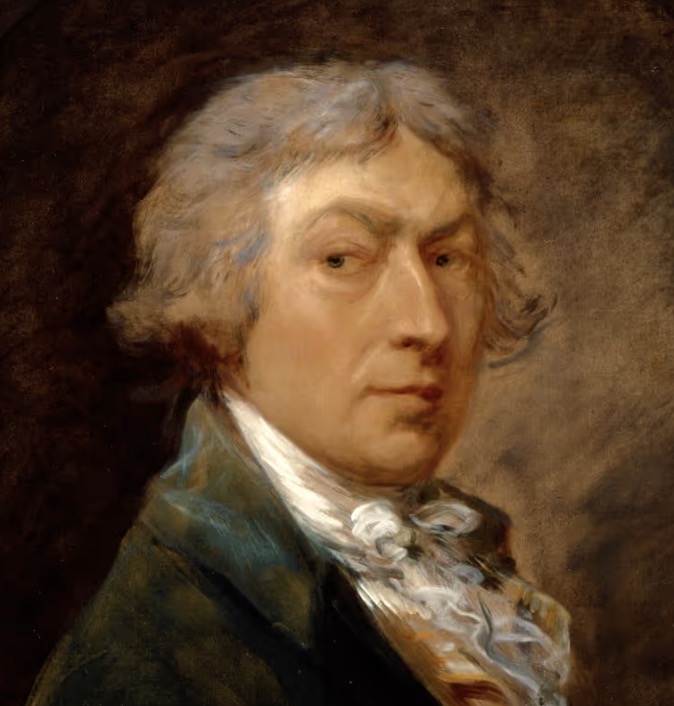




Thomas Gainsborough (Father: John Gainsborough, a weaver; Mother: Mary Burroughs; Spouse: Margaret Burr; Children: Mary and Margaret) (1727–1788) was one of the most significant British portrait and landscape painters of the 18th century. Alongside his great rival Sir Joshua Reynolds, he was a founding member of the Royal Academy of Arts in 1768 and became the dominant portraitist for British royalty and high society.
Born in Suffolk, Gainsborough showed artistic talent from a very young age and moved to London around the age of 13 to study under the French engraver Hubert-François Gravelot. This early exposure to the French Rococo style profoundly influenced his delicate, elegant approach to painting. Although he achieved his wealth and fame through portraiture, Gainsborough frequently expressed that his true passion was landscape painting. He famously complained about the tediousness of painting “faces” and longed to retire to the countryside to paint landscapes in peace.
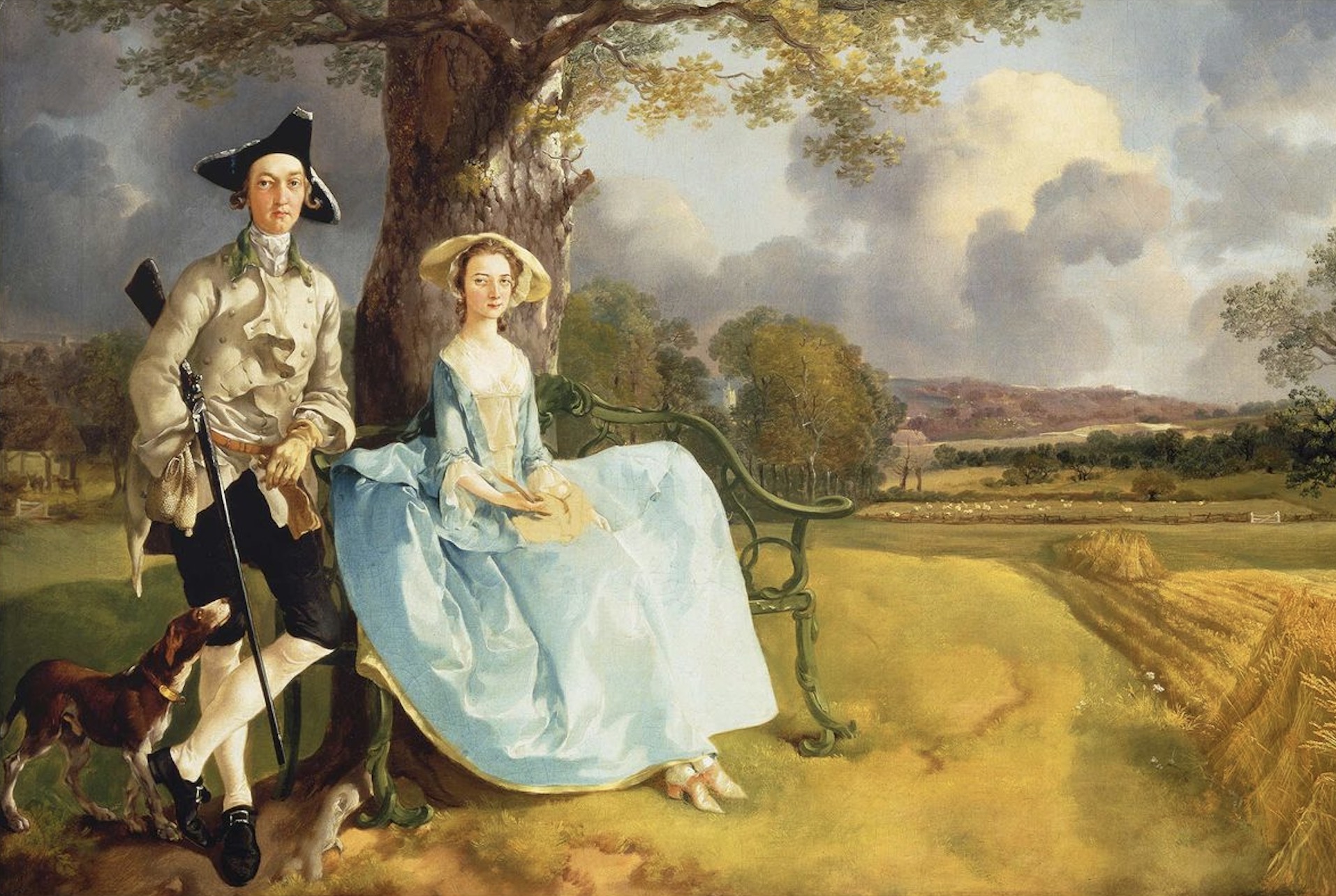
Gainsborough’s unique genius lay in his ability to merge his two disciplines. In early masterpieces like Mr and Mrs Andrews (c. 1750), he placed his wealthy sitters in an expansive, masterfully rendered natural setting rather than a traditional studio backdrop. His mature style is characterized by a light, fluid palette and rapid, feathery brushwork that captured the fleeting effects of light and atmosphere—a technique that anticipated the Impressionist movement more than a century later.
His most famous work, The Blue Boy (c. 1770), demonstrates his mastery of color, texture, and historical costume, serving as a homage to the 17th-century master Anthony van Dyck, whom Gainsborough deeply admired. In his later years, he also pioneered the “fancy picture,” a genre featuring romanticized scenes of peasant children in rustic settings. He passed away from cancer in 1788, with his longtime rival Reynolds acknowledging him as the greatest landscape painter of their era.
Active in others filds : Printmaking (Etching and Aquatint), Draftsmanship. He was also an avid and talented amateur musician.