


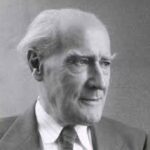


Andrew Newell Wyeth ( July 12, 1917 – January 16, 2009) was an American visual artist, primarily a realist painter, working predominantly in a regionalist style. He was one of the best-known U.S. artists of the middle 20th century.
In his art, Wyeth’s favorite subjects were the land and people around him, both in his hometown of Chadds Ford, Pennsylvania, and at his summer home in Cushing, Maine. Wyeth often said: “I paint my life.” One of the best-known images in 20th-century American art is his painting Christina’s World, currently in the collection of the Museum of Modern Art in New York City. This work executed in tempera was painted in 1948 when Wyeth was 31 years old.
In 1937, at age twenty, Wyeth had his first one-man exhibition of watercolors at the Macbeth Gallery in New York City. The entire inventory of paintings sold out, and his life path seemed certain. His style was different from his father’s: more spare, “drier,” and more limited in color range. He stated his belief that “the great danger of the Pyle school is picture-making.”[3] He did some book illustrations in his early career, but not to the extent that N.C. Wyeth did.[7]
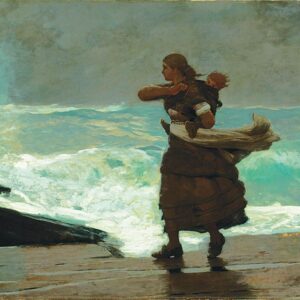
Wyeth was a visual artist, primarily classified as a realist painter, like Winslow Homer or Thomas Eakins. In a Life magazine article in 1965, Wyeth said that although he was thought of as a realist, he thought of himself as an abstractionist: “My people, my objects breathe in a different way: there’s another core—an excitement that’s definitely abstract. My God, when you really begin to peer into something, a simple object, and realize the profound meaning of that thing—if you have an emotion about it, there’s no end.”[10]

He worked predominantly in a regionalist style.[15] In his art, Wyeth’s favorite subjects were the land and people around him, both in his hometown of Chadds Ford, Pennsylvania, and at his summer home in Cushing, Maine.[7][16]
Dividing his time between Pennsylvania and Maine, Wyeth maintained a realist painting style for over seventy years. He gravitated to several identifiable landscape subjects and models. His solitary walks were the primary means of inspiration for his landscapes. He developed an extraordinary intimacy with the land and sea and strove for a spiritual understanding based on history and unspoken emotion. He typically created dozens of studies on a subject in pencil or loosely brushed watercolor before executing a finished painting, either in watercolor, drybrush (a watercolor style in which the water is squeezed from the brush), or egg tempera.[2][7][10]