


Exact birth name unknown (“Andrei” is his monastic name; his surname suggests a familial connection to craft or trade, but his specific family origin remains unrecorded).
Andrei Rublev (c. 1360–1430) is universally recognized as the greatest medieval Russian painter of Orthodox Christian frescoes and icons. His deeply spiritual and harmonious works defined the golden age of Russian iconography, transforming the severe, dramatic traditions of Byzantine art into a uniquely luminous and gentle Russian style.
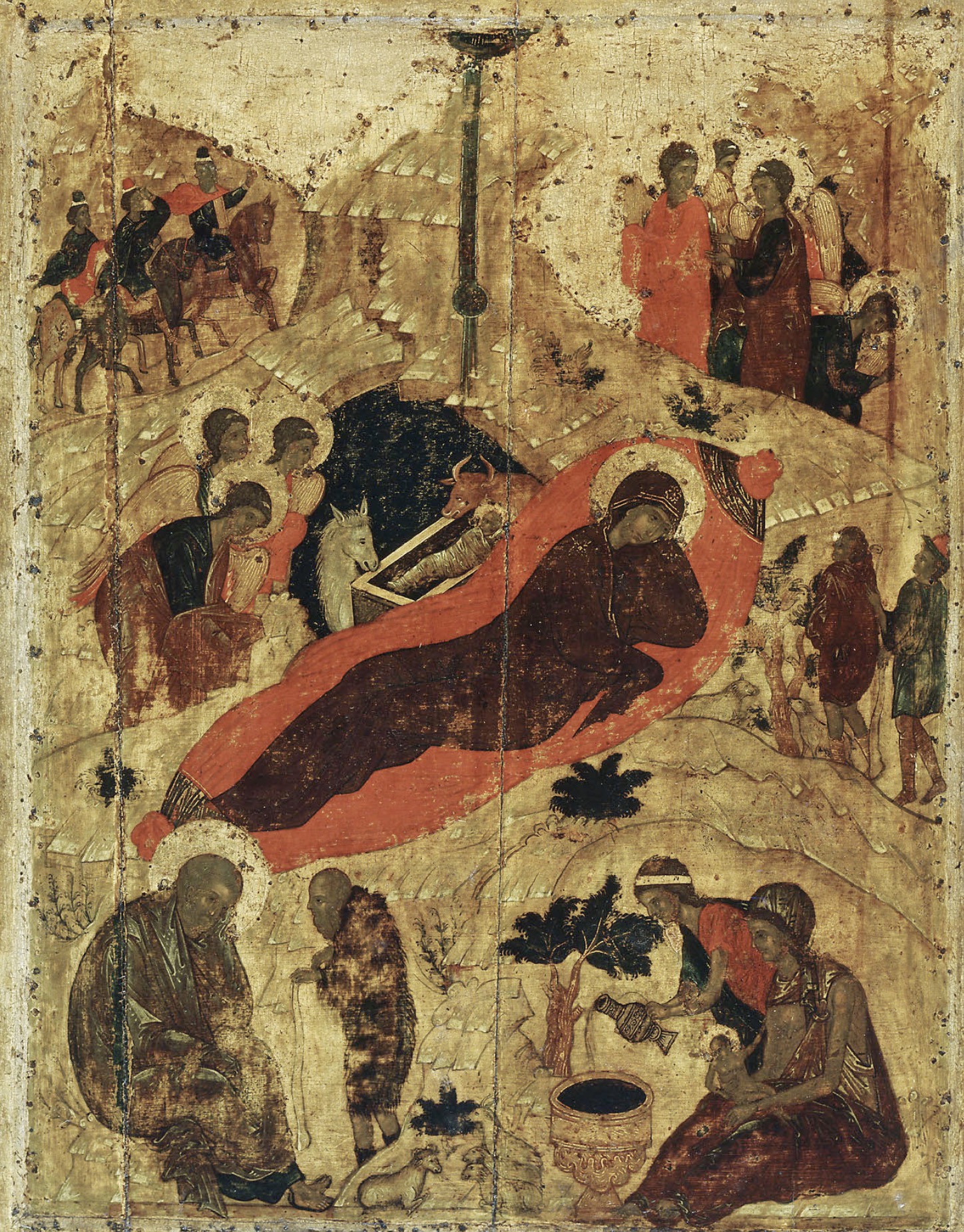
Very little concrete information survives about Rublev’s early life. He became a monk at the Trinity-St. Sergius Lavra near Moscow, living an ascetic life and studying under the spiritual guidance of Nikon of Radonezh. The first historical mention of his artistic career dates to 1405, when he was commissioned to decorate the Cathedral of the Annunciation in the Moscow Kremlin alongside the renowned master Theophanes the Greek and Prokhor of Gorodets. While deeply influenced by Theophanes, Rublev departed from his master’s tense, tragic depictions, choosing instead to infuse his figures with a profound sense of inner peace, divine love, and elegant tranquility.
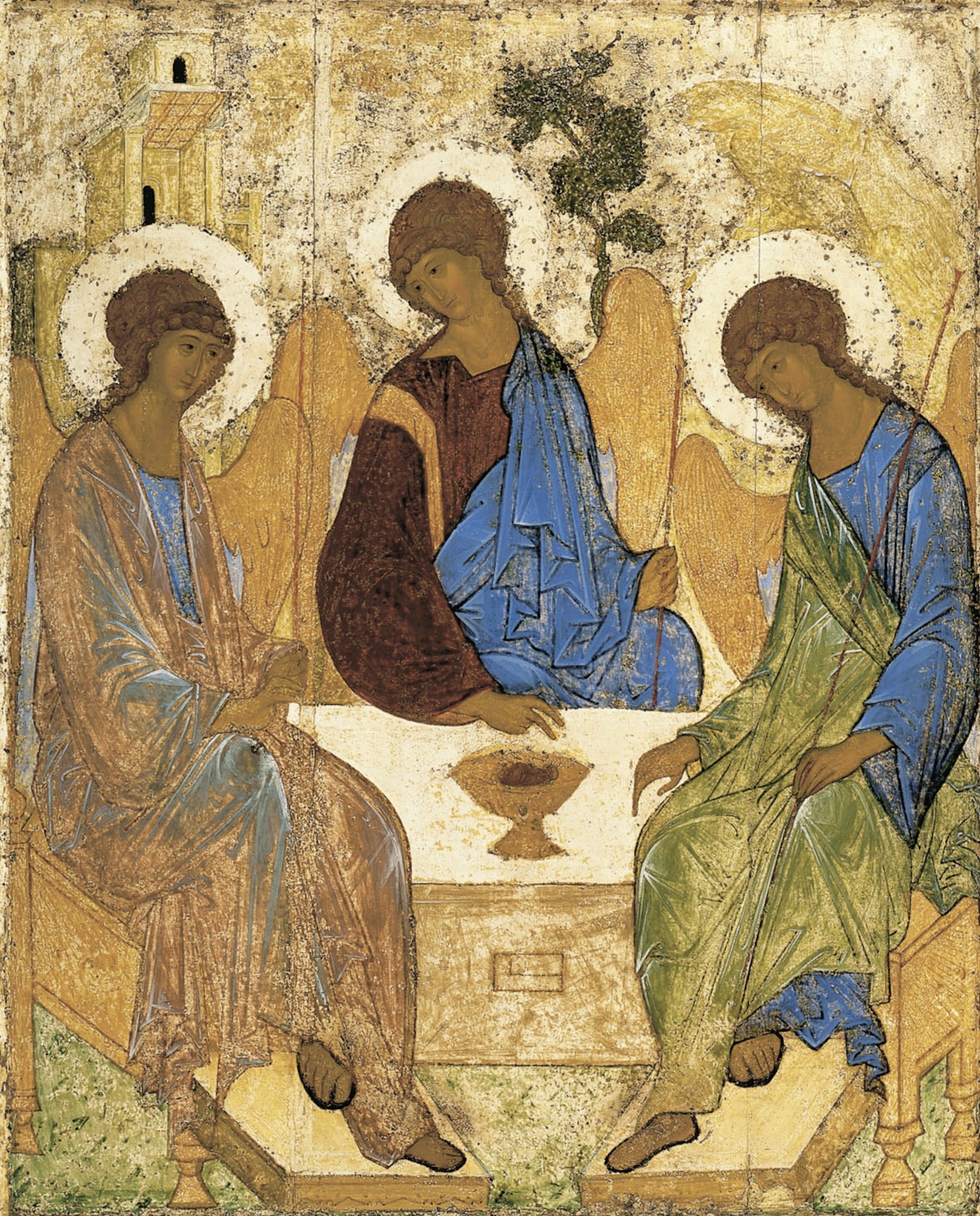
Rublev’s undisputed masterpiece is The Trinity (also known as The Hospitality of Abraham), painted between 1411 and 1427 for the Trinity Cathedral. This icon is celebrated for its exquisite geometric harmony, radiant circular composition, and the serene, unified expressions of the three angels. It is regarded as the pinnacle of Russian national art and a perfect visual translation of complex theological concepts into approachable, contemplative beauty.
Throughout his life, Rublev painted monumental frescoes and multi-tiered iconostases in major spiritual centers, including the Dormition Cathedral in Vladimir. He spent his final years at the Andronikov Monastery in Moscow, where he painted his last frescoes before his death.
In 1988, the Russian Orthodox Church canonized him as a saint in recognition of his pure life and his profound contribution to Christian art. Today, his legacy is preserved not only in churches but also at the Central Museum of Ancient Russian Culture and Art named after him, located on the grounds of the Andronikov Monastery where he is buried.
Active in others filds : Monasticism (Ascetic Monk of the Russian Orthodox Church).