Art Movements & Styles

SUB CATEGORIES
×

Rococo

Cubism represents the most radical break from traditional Western pictorial representation since the Renaissance. Developed primarily in Paris, it abandoned the single-viewpoint perspective that had dominated art for centuries. Instead, Cubist artists analyzed subjects from multiple angles, breaking them into geometric fragments and reassembling them within a shallow, ambiguous space.

For researchers and students, it is essential to distinguish between its two primary phases:

  • Analytic Cubism (1907–1912): Focused on breaking down forms into monochromatic, overlapping planes.

  • Synthetic Cubism (1912–1914): Introduced collage, vibrant colors, and simpler shapes, emphasizing the construction of new forms rather than the deconstruction of existing ones.
Sci-fi - Futurist

Science Fiction art is a visionary genre that depicts imagined technological advancements, space exploration, and futuristic civilizations. It is a “literature of ideas” rendered visually. Unlike pure fantasy, Sci-Fi art is grounded in extrapolation—taking current scientific trends and pushing them to their logical (or illogical) extremes.

The style is defined by its ability to balance the Technological Sublime (massive, awe-inspiring machines) with meticulous mechanical detail. It functions as a bridge between industrial design and fine art. Key sub-movements include:

  • Golden Age (1930s-50s): Optimistic, sleek, “Aero-styled” rockets and bright, primary-colored spacesuits.

  • New Wave/Cyberpunk (1970s-80s): Gritty, “used future” aesthetics, neon-noir lighting, and the fusion of biology with technology.

  • Hard Sci-Fi: Prioritizes physical accuracy, structural engineering, and realistic orbital mechanics in its visuals.

Surrealism

Surrealism is one of the most influential avant-garde movements of the 20th century, seeking to bridge the gap between dreams and reality. It emerged as a reaction to the “rationalism” that many artists believed had led to the horrors of World War I. Surrealism isn’t just a visual style; it is a means of exploring the unconscious mind.

Researchers and students should identify the two main stylistic branches:

  • Veristic (Representational) Surrealism: Uses academic, realistic techniques to depict “impossible” scenes with photographic precision (e.g., Dalí, Magritte). The shock comes from the illogical juxtaposition of recognizable objects.

  • Absolute (Automatic) Surrealism: Focuses on Automatism—allowing the hand to move randomly across the canvas without conscious control. This results in more abstract, biomorphic shapes (e.g., Joan Miró, André Masson).

Landscape

Landscape art focuses on the depiction of natural scenery such as mountains, valleys, trees, rivers, and forests. While nature has been a backdrop in art for millennia, “Landscape” as a standalone genre represents a shift in human consciousness—moving from nature as a setting for religious or heroic figures to nature as the primary subject.

Historically, the genre is divided into several distinct approaches:

  • The Classical/Ideal Landscape: Perfected in the 17th century, these are composed, balanced scenes often featuring Roman ruins to evoke a sense of timelessness and harmony.

  • The Topographical Landscape: Accurate, map-like recordings of specific places, common before the invention of photography.

  • The Sublime & Picturesque: A focus on the raw, often terrifying power of nature (The Sublime) versus the charming, irregular beauty of the countryside (The Picturesque).

  • The Impressionist Landscape: A revolutionary shift toward capturing the fleeting effects of light and atmosphere using broken brushstrokes and en plein air (outdoor) techniques.

Orientalism

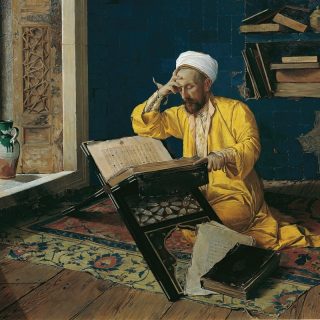
Orientalism in the visual arts refers to a specific movement in the 19th century where Western painters—primarily from France, Britain, and Germany—depicted the landscapes, people, and cultures of the Near East, Middle East, and North Africa. It is characterized by an Academic Realism so precise it often feels photographic, though the subjects were frequently romanticized or staged.

For researchers and students, it is vital to understand that Orientalism functioned as both an artistic style and a cultural lens. The movement is divided into two main artistic approaches:

  • The Ethnographic/Documentary Style: Artists who traveled extensively (like David Roberts) and sought to capture the architecture and ruins of Egypt and the Levant with archaeological accuracy.

  • The Romantic/Imaginary Style: Artists (like Jean-Léon Gérôme) who created highly detailed, “hyper-real” scenes of harems, bazaars, and desert life, often blending various cultures into a singular, exotic “Orient” that appealed to European fantasies.

Cubism

Cubism is arguably the most influential art movement of the 20th century, marking a definitive break from the traditional Renaissance window-on-the-world perspective. At its core, Cubism is an analytical approach to three-dimensional reality, where objects are analyzed, broken up, and reassembled in an abstracted form.

For researchers and students, it is essential to distinguish between its two primary phases:

  • Analytic Cubism (1907–1912): Characterized by a fragmented, “shattered” appearance with a monochromatic color palette. The goal was to represent all viewpoints of an object simultaneously.

  • Synthetic Cubism (1912–1914): Introduced collage elements (newspaper, sand, cloth) and brighter colors, focusing on building up new forms from diverse materials rather than breaking them down

Comic

Comic art is a sophisticated visual language that combines sequential imagery with textual elements (word balloons, onomatopoeia, and captions) to deliver a narrative. Unlike a single painting, comic art relies on the “gutter”—the space between panels—where the reader’s imagination bridges the gap between actions, a concept known as closure.

Technically, it is defined by its use of graphic shorthand. Because comics were historically printed on cheap newsprint, artists developed a style using high-contrast black inks and limited color palettes (like the Ben-Day dots process) to ensure clarity. Modern comic art has evolved into various sub-genres:

  • The Silver/Golden Age Style: Characterized by heroic proportions, bold primary colors, and heavy “Kirby Krackle” energy signatures.

  • Noir/Dark Age: Focused on heavy chiaroscuro (extreme light and shadow) and gritty realism.

  • Clear Line (Ligne Claire): Popularized by Franco-Belgian creators, emphasizing strong, continuous outlines and vivid, flat colors without hatching.

Fantasy art

Fantasy art is a broad and enduring genre of speculative fiction that depicts magical, supernatural, or mythological themes. Unlike “Realism,” which seeks to document the world as it is, Fantasy art uses the “Secondary World” concept—creating entirely new ecosystems, architectures, and biomes that operate under their own internal logic.

Historically, it evolved from folk tales and religious iconography into a massive commercial industry. It is characterized by Heroic Realism, where the human (or humanoid) figure is often idealized and placed in extreme, awe-inspiring environments. For students and researchers, the genre is often subdivided into:

  • High Fantasy: Epic scales, medieval-inspired aesthetics, and clear struggles between light and dark.

  • Dark Fantasy: Incorporates elements of horror, decay, and morally ambiguous “anti-heroes.”

  • Urban Fantasy: Merges magical elements with modern, gritty cityscapes.

Romanticism

Romanticism was an intellectual and artistic movement that emerged as a reaction against the scientific rationalism of the Enlightenment and the industrialization of the 18th century. It shifted the focus of art from objective “reason” to subjective emotion, the power of the individual, and the overwhelming awe of nature (The Sublime).

In visual arts, Romanticism is characterized by a move away from the rigid, “clean” lines of Neoclassicism toward a more painterly, expressive approach. Artists sought to capture the “uncontrollable”—stormy seas, misty mountains, ruins, and intense human psychological states (horror, passion, and insanity). It wasn’t about “romance” in the modern sense of dating; it was about the “romance” of the soul’s struggle against the infinite.

Marvel

The “Marvel Style” is less a single aesthetic and more an evolutionary lineage of visual storytelling that prioritize dynamic energy, anatomical exaggeration, and emotional relatability. Unlike the “stiff” heroism of earlier eras, the Marvel style—pioneered in the 1960s—introduced characters with flaws, reflected through expressive “acting” in the drawings.

A core technical component is the “Marvel Method”: a collaborative process where the artist (not the writer) plots the visual pacing and action based on a brief synopsis, giving the artist primary control over the “cinematography” of the page. Visually, it is defined by “Kirby Krackle” (clusters of black dots representing cosmic energy), foreshortened limbs that seem to “pop” out of the panel, and high-velocity action lines. From the primary-colored 1960s to the hyper-detailed, painted realism of the 1990s and 2000s, the style consistently balances superheroic scale with human vulnerability.

Expressionism

Expressionism is a modernist movement that originated in Northern Europe at the beginning of the 20th century. Its core principle is the prioritization of emotional experience over physical reality. Unlike Impressionism, which sought to capture the visual “impression” of light, Expressionism seeks to depict the “expression” of the artist’s inner world—often involving intense feelings of anxiety, fear, passion, or spiritual awakening.

For students and art centers, the style is defined by a radical distortion of form and the use of violent, non-naturalistic colors. It is not meant to be “beautiful” in the traditional sense; rather, it aims to be “honest” and “visceral.” The movement is typically divided into two influential German groups:

  • Die Brücke (The Bridge): Known for crude, jagged lines and a primitive, raw aesthetic.

  • Der Blaue Reiter (The Blue Rider): More abstract and focused on the spiritual and symbolic power of color.

Byzantine

Byzantine art refers to the body of Christian Greek artistic products of the Eastern Roman Empire. This style is the bridge between Classical Antiquity and the Middle Ages, shifting away from the 3D realism of the Greeks and Romans toward a highly symbolic, two-dimensional, and spiritual aesthetic.

For researchers and art centers, the defining characteristic is the “Eternal Presence.” Figures are depicted frontally with large, soul-searching eyes, existing in a timeless space represented by a flat gold background. This was not due to a lack of skill, but a deliberate theological choice: art was meant to be a “window to heaven” (Icon), not a reflection of the physical world. The architecture is equally revolutionary, perfecting the Pendentive—a constructive device permitting the placing of a circular dome over a square room.

Quick Look

Fine Art Directory ( Highlight )

Frans Hals

Shopping Cart

Need Help?

Questions ! Comments ? You Tell Us We Listen .

Feel free to contact us

Add Your Heading Text Here

Login

Shopping Cart