
SUB CATEGORIES
×

Art Movement & Style

Renaissance

A comprehensive guide to the visual principles, history, and pioneers of this movement. Curated for researchers and students seeking a structured analysis of artistic styles.

Full General Specifications

The Renaissance (meaning “Rebirth”) was a fervent period of European cultural, artistic, political, and economic “rebirth” following the Middle Ages. It marked the transition from medievalism to modernity. Artistically, it moved away from the flat, symbolic iconography of the Gothic period toward a profound Naturalism based on the observation of the physical world.

For researchers and students, the Renaissance is typically analyzed in three distinct phases:

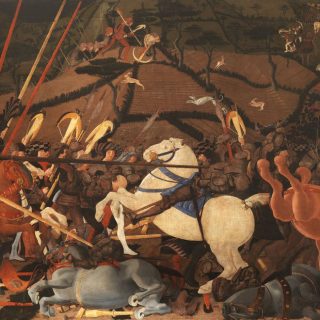
  • Early Renaissance (1400–1490): The discovery of linear perspective and the revival of classical Roman forms.

  • High Renaissance (1490–1527): The peak of technical mastery, focusing on “Divine Proportion,” harmony, and the genius of the “Universal Man” (Polymath).

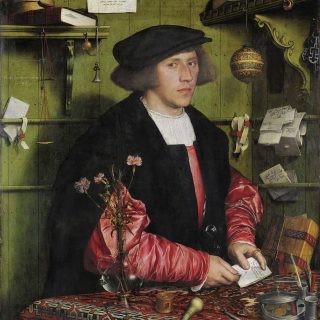
  • Northern Renaissance: Occurring in the Netherlands and Germany, focusing on extreme detail, oil painting techniques, and domestic realism rather than the idealized forms of Italy.

Related Random Renaissance Artwork

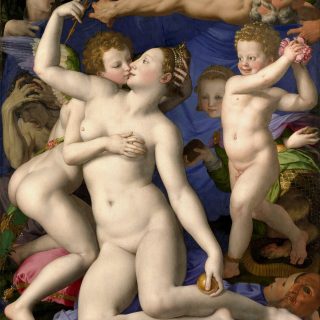
Agnolo di Cosimo

Classification

  • Category: Painting, Sculpture, Architecture, Printmaking.

  • Era/Period: 14th to 17th Century (Peak: 1490–1520).

  • Origin Location: Florence, Italy.

Visual & Technical Specs

  • Key Visual Characteristics: Linear perspective (vanishing points), Chiaroscuro (strong contrast between light and dark), Sfumato (soft, smoky transitions between colors), pyramidal composition, and anatomical accuracy.

  • Color Palette: Rich, natural pigments. Ultramarine blue (from Lapis Lazuli), Vermilion red, and earth-toned ochres. High Renaissance works prioritized “Colorito” (the mastery of coloring) to create depth.

  • Mediums & Tools: Fresco (painting on wet plaster), Oil on Canvas (popularized during this era), Tempera (egg-based), and marble for sculpture.

Pioneers & Key Works

  • Founders/Key Artists: Leonardo da Vinci, Michelangelo, Raphael, Donatello, Albrecht Dürer (Northern), Filippo Brunelleschi (Architecture).

  • Masterpieces:

    1. Mona Lisa (Leonardo da Vinci) – The pinnacle of Sfumato.

    2. The School of Athens (Raphael) – The ultimate example of linear perspective.

    3. David (Michelangelo) – Mastery of human anatomy and “Contrapposto” (natural standing pose).

    4. The Birth of Venus (Botticelli) – Revival of classical mythology.

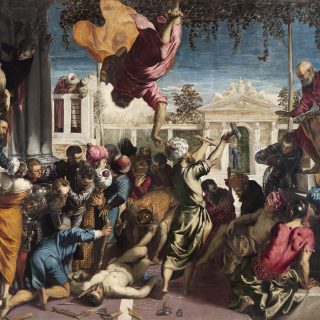
  • Influential Schools/Groups: The Florentine School, The Venetian School (emphasizing light and color).

Philosophy & Context

  • The “Why”: The movement was driven by Humanism—the belief that human beings are the center of their own universe and that classical Greek and Roman knowledge should be revived. The goal was to reconcile religious themes with scientific logic and physical beauty.

  • Historical Context: This era coincided with the invention of the Gutenberg printing press, the Age of Discovery (exploration), and the patronage of the Medici family, who funded artists to showcase political and religious power.

Modern Influence: Cinema, TV & CGI

  • 2D, 3D, CGI, VFX: Renaissance lighting (specifically Rembrandt lighting and Chiaroscuro) is the foundation of modern cinematography. In CGI, “Global Illumination” algorithms strive to replicate the natural bounce-light captured by Renaissance masters.

  • Modern Legacy: The concept of the “Triple-A” artist or “Technical Director” in VFX mirrors the Renaissance “Polymath” who must understand both the math of the software and the aesthetics of the art.

  • Default Answer: N/A

Modern Influence: AI & Hybrid Media

  • Modern Legacy: AI models are exceptionally “over-trained” on Renaissance data because of its high aesthetic value. It is the most common style used for “Style Transfer” (taking a modern photo and making it look like a Da Vinci painting).

  • AI Prompting Keywords: High Renaissance painting, sfumato technique, chiaroscuro lighting, pyramidal composition, oil on canvas, crackled glaze texture, anatomical perfection, divine proportion, Raphael-esque, golden ratio.

Shopping Cart

Need Help?

Questions ! Comments ? You Tell Us We Listen .

Feel free to contact us

Add Your Heading Text Here

Login

Shopping Cart