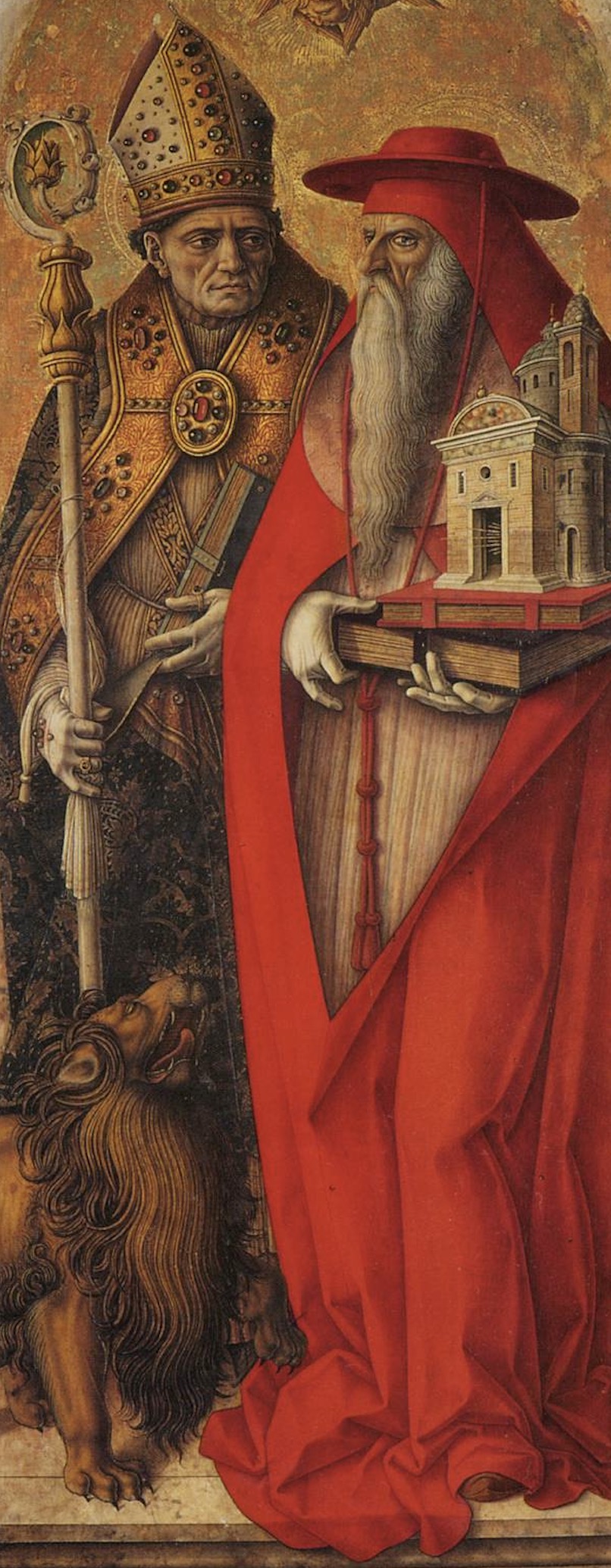
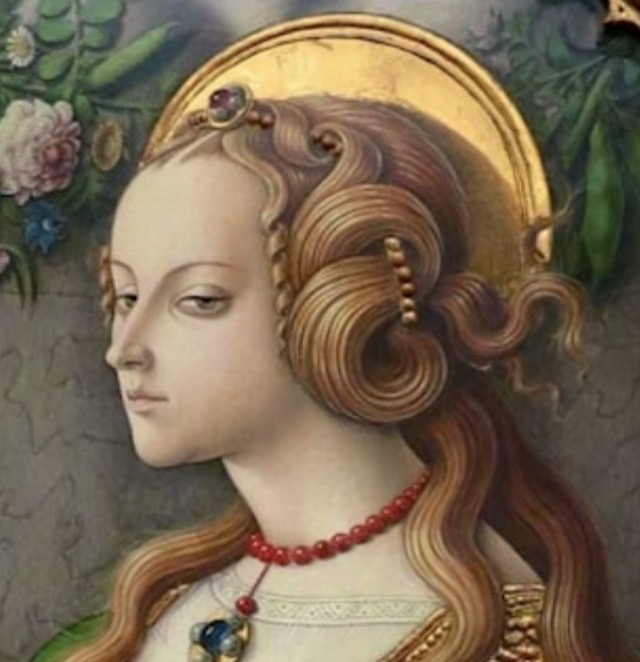
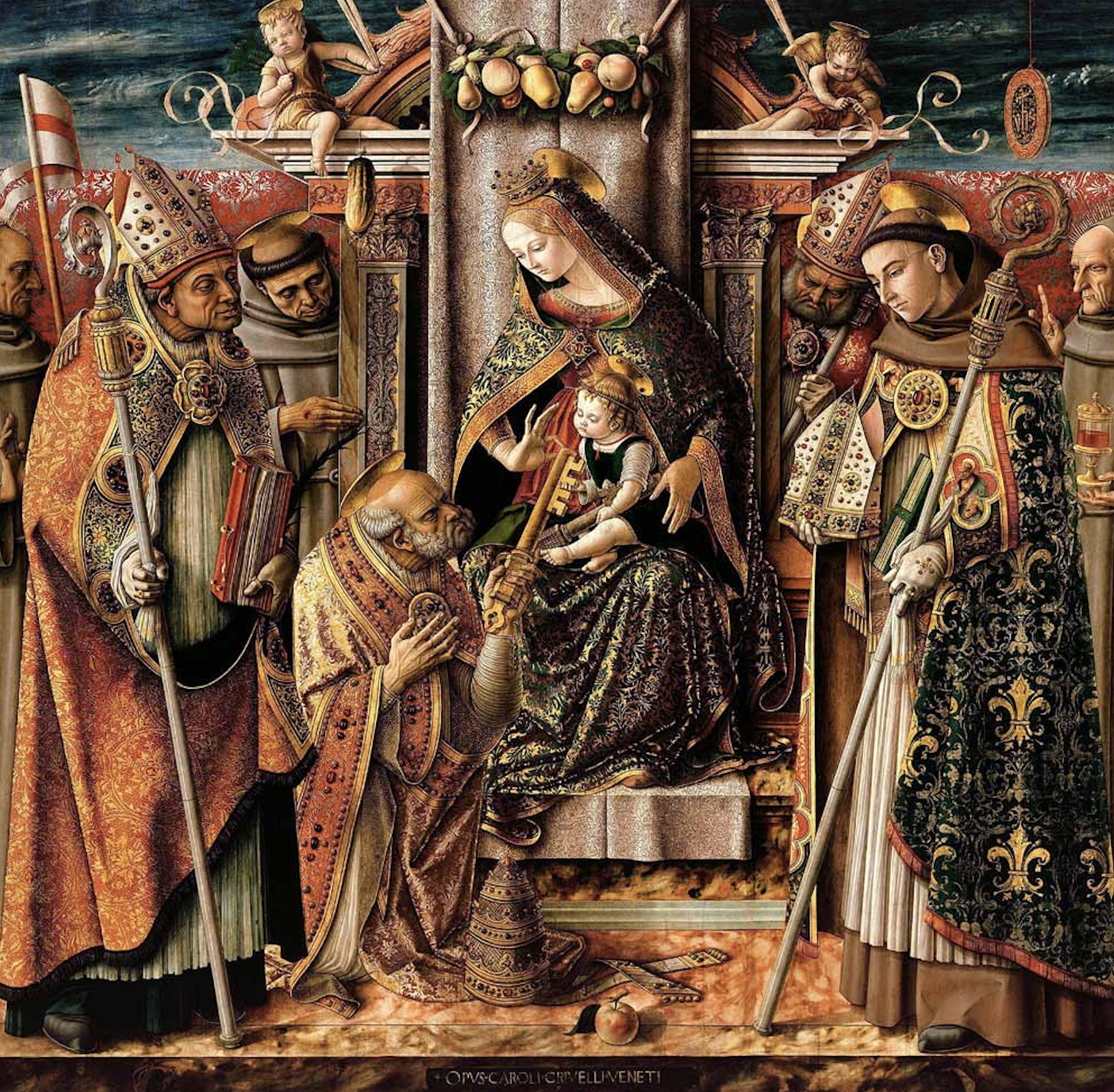


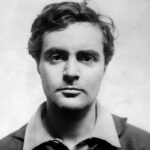
Carlo Crivelli (Father: Jacopo Crivelli, a painter; Brother: Vittorio Crivelli, also a painter) (c. 1430–1495) was a Venetian painter of the Quattrocento whose work is among the most unique and recognizable of the Italian Renaissance. While his contemporaries in Florence were moving toward naturalism and soft perspective, Crivelli maintained and heightened a late Gothic sensibility, characterized by sharp outlines, intense decorative detail, and a distinct, almost surrealist hyper-realism.
Born into a family of painters in Venice, Crivelli’s early training likely occurred under Antonio Vivarini and Giovanni d’Alemagna. In 1457, his career in Venice was cut short after he was imprisoned and subsequently banished for an affair with a married woman. He spent the remainder of his life in the March of Ancona, far from the artistic mainstream of Venice or Rome, which allowed him to develop his idiosyncratic style in isolation.
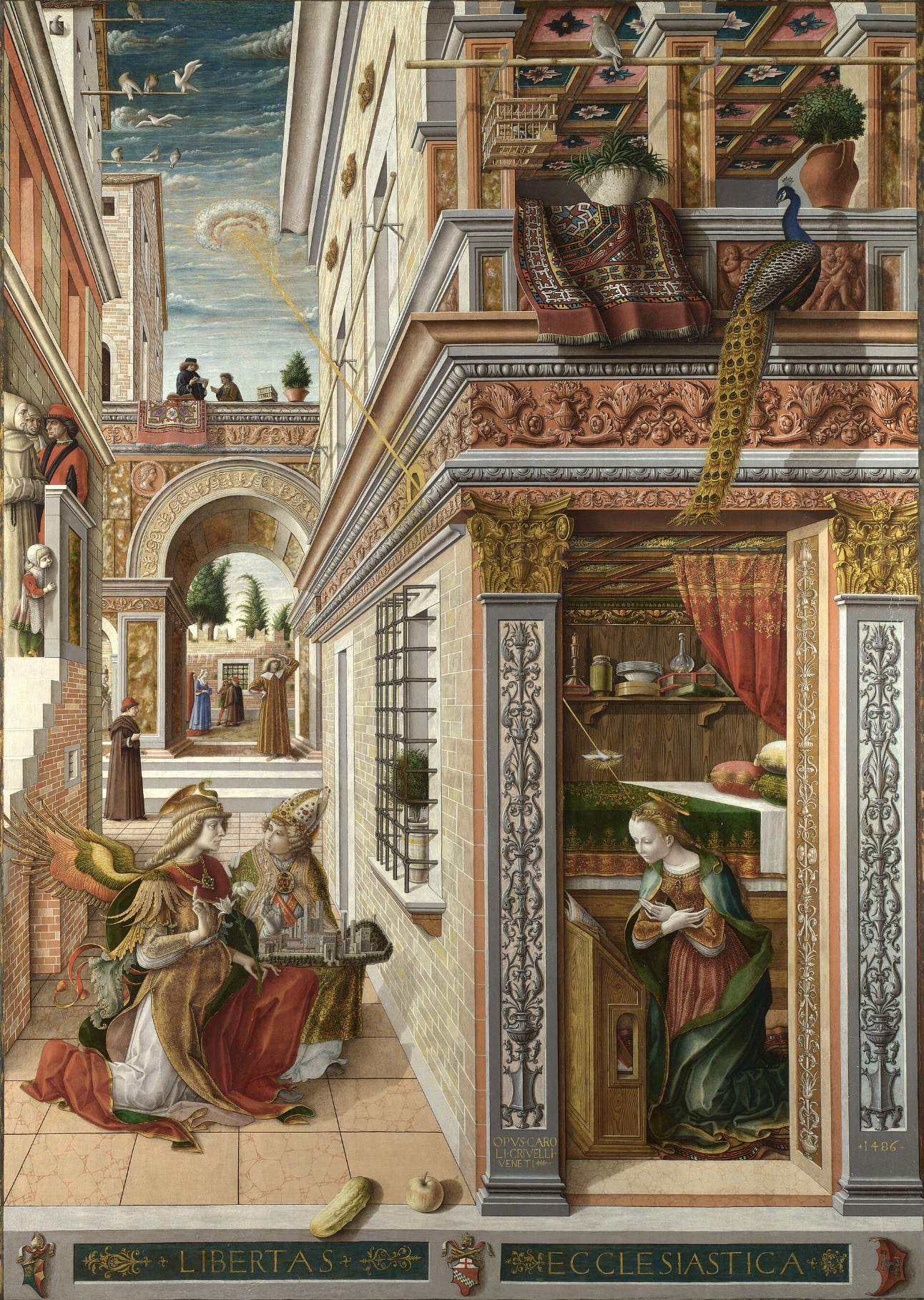
Crivelli’s art is famous for its Trompe-l’œil effects. He often painted realistic fruits (particularly cucumbers and apples), jewels, and insects that appear to sit on top of the painting or hang off the frame. His use of gold leaf and pastiglia (raised plaster) gave his altarpieces a three-dimensional, jewel-like quality. His figures are often characterized by slender, elongated hands and expressive, sometimes agonized, facial features.
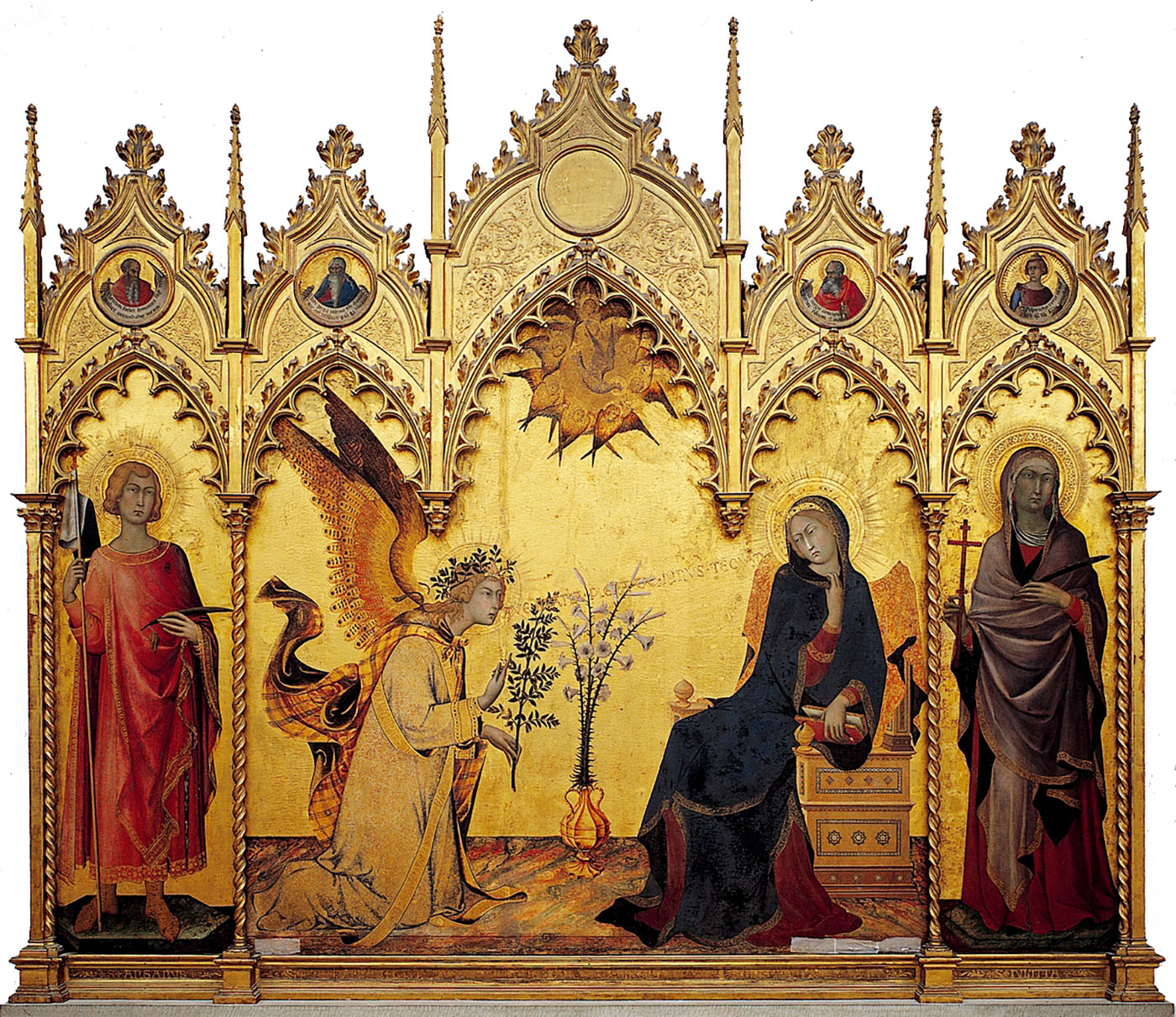
His masterpiece, The Annunciation, with Saint Emidius (1486), showcases his absolute mastery of linear perspective and architectural detail, combined with his love for opulent surface decoration. Despite being overshadowed by the “High Renaissance” for centuries, modern art historians re-evaluated Crivelli in the 19th and 20th centuries, celebrating him as a master of meticulous craftsmanship and symbolic complexity.
Active in others filds : N/A (Exclusively dedicated to painting and altarpiece design).