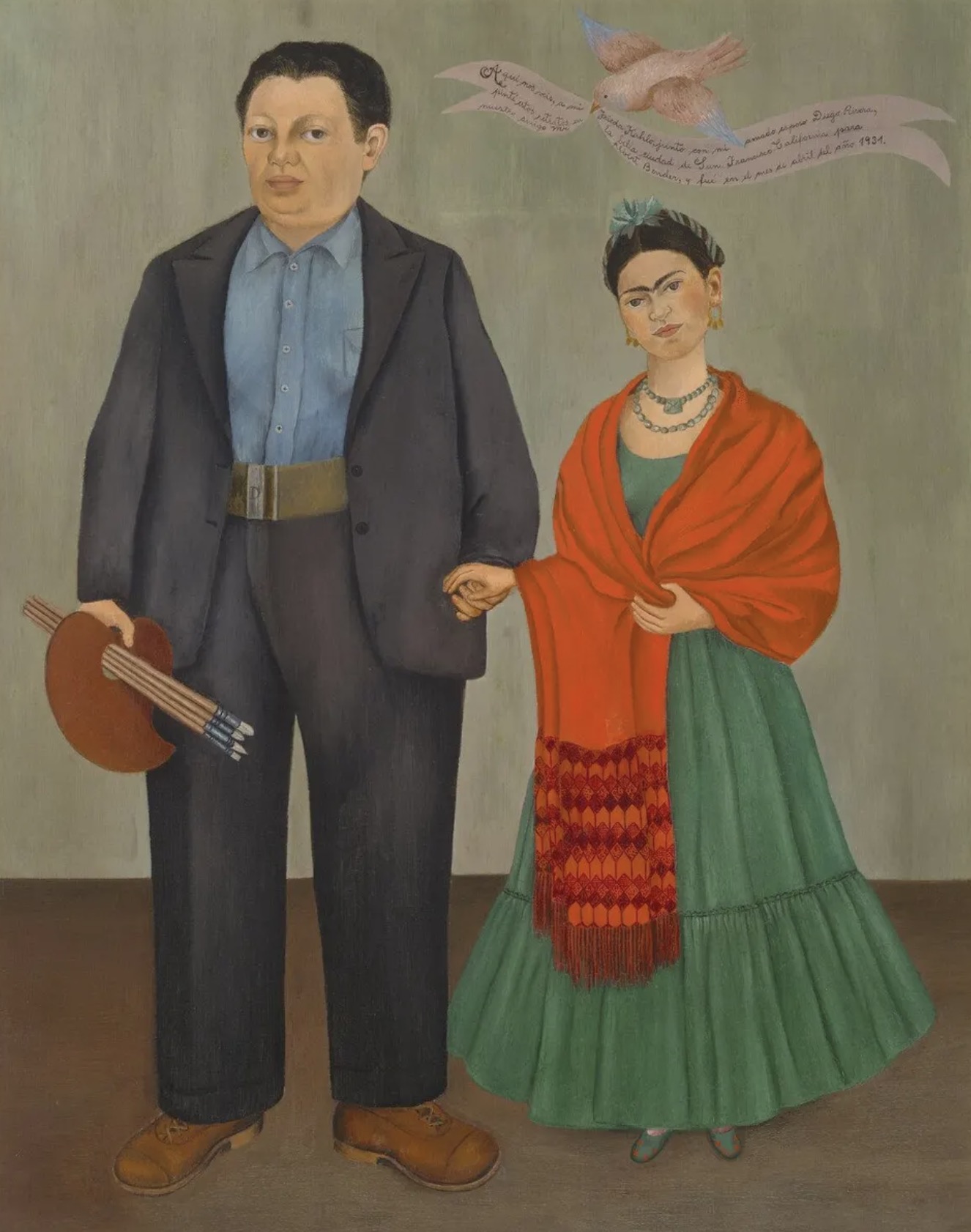
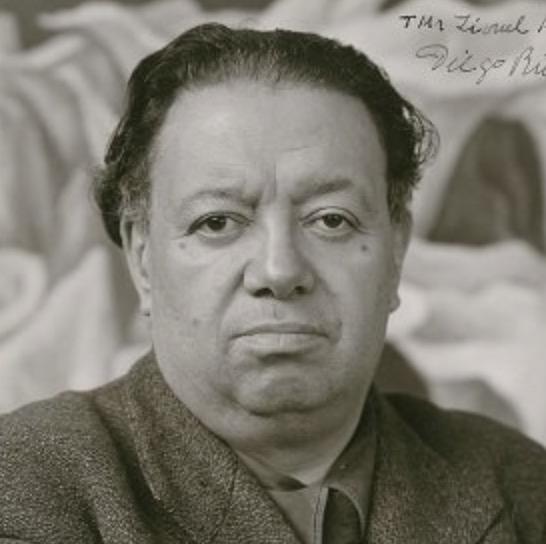


Diego María de la Concepción Juan Nepomuceno Estanislao de la Rivera y Barrientos Acosta y Rodríguez (Parents: Diego Rivera Acosta and María del Pilar Barrientos; Spouses: Angelina Beloff, Guadalupe Marín, Frida Kahlo , Emma Hurtado)
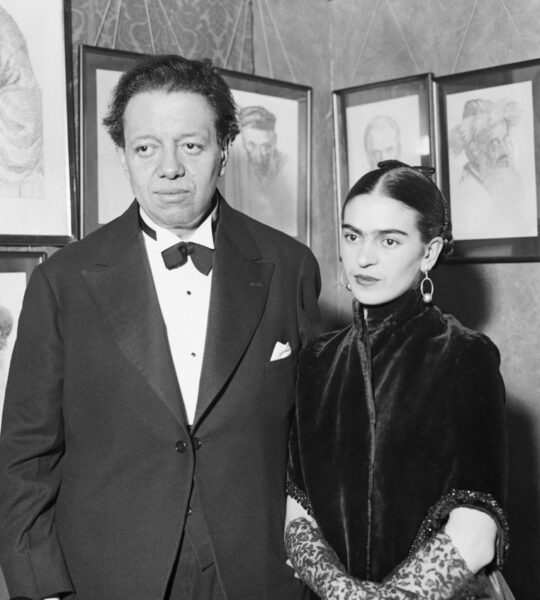
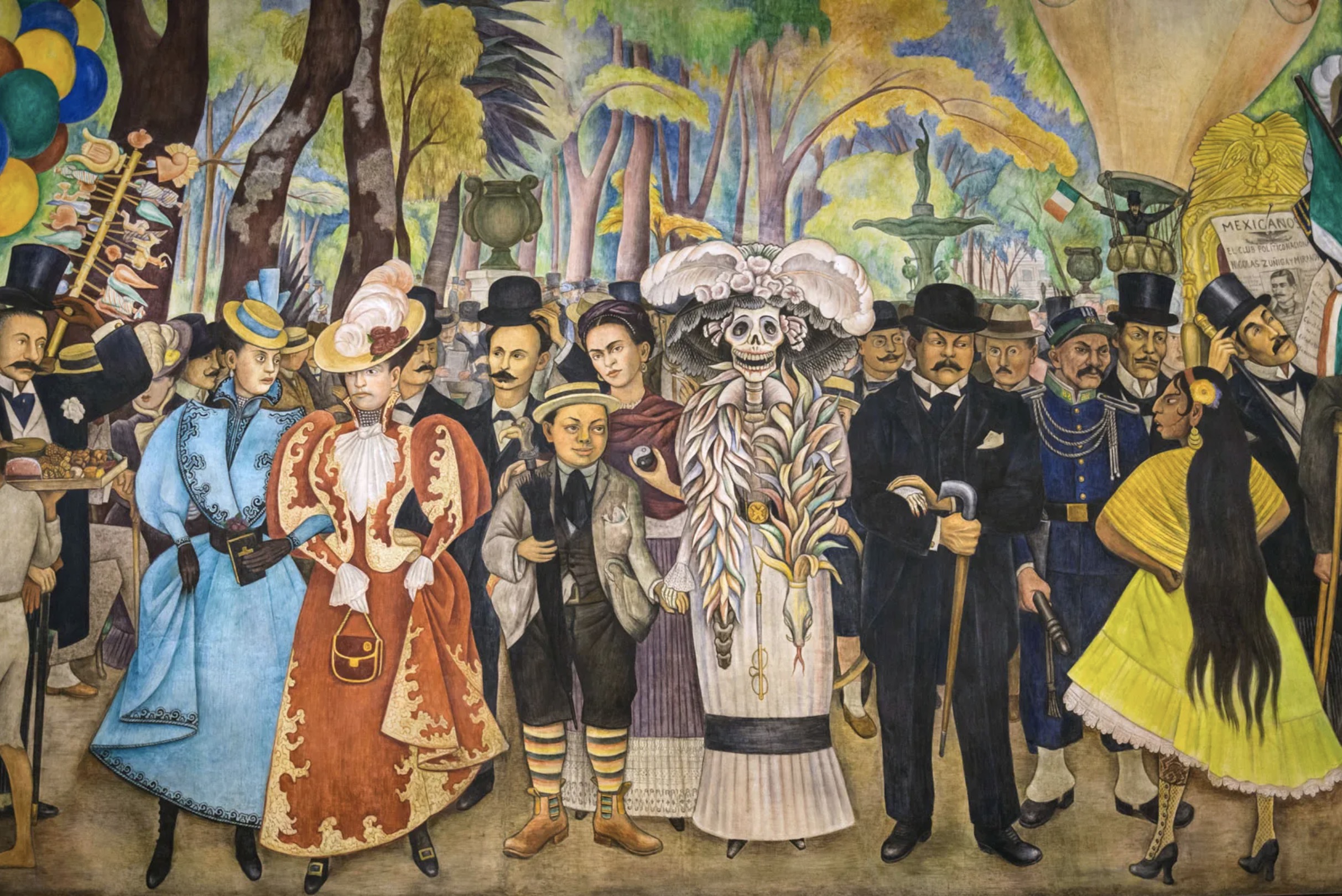
Diego Rivera (1886–1957) was a monumental figure in 20th-century art, best known for his massive frescoes that helped establish the Mexican Mural Movement. His work sought to create a national art that was accessible to all people, often depicting the history, struggles, and daily life of the Mexican working class and indigenous populations.
After showing early talent at the Academy of San Carlos, Rivera traveled to Europe in 1907. He spent over a decade abroad, primarily in Paris, where he became a key figure in the avant-garde circle. During this period, he experimented extensively with Cubism, befriending artists like Pablo Picasso. However, following the Russian Revolution and the end of the Mexican Revolution, Rivera underwent a stylistic shift. He felt that easel painting was elitist and turned his attention toward public art.
Upon returning to Mexico in 1921, he joined a government-sponsored mural program. Along with José Clemente Orozco and David Alfaro Siqueiros (known as “Los Tres Grandes”), he began painting vast cycles in public buildings. His most ambitious projects include the murals at the National Palace in Mexico City and the Secretariat of Public Education. His style became a fusion of European Renaissance fresco techniques, modernist simplified forms, and ancient pre-Columbian aesthetics.
In the 1930s, his fame spread to the United States, where he painted iconic works such as the Detroit Industry Murals. His career was marked by significant controversy due to his outspoken political beliefs; most notably, his mural for the Rockefeller Center, Man at the Crossroads, was destroyed because it featured a portrait of Vladimir Lenin.
Rivera remained a central and often volatile figure in the art world until his death, leaving behind a legacy that redefined the role of the artist as a social storyteller and public educator.
Active in others filds : Art Education, Collector of Pre-Columbian Art, Political Activism, Graphic Arts.