



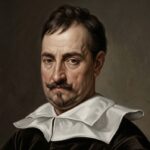


Doménikos Theotokópoulos (Partner: Jerónima de Las Cuevas; Son: Jorge Manuel Theotocópuli, an architect and painter)
Doménikos Theotokópoulos, universally known as El Greco (“The Greek”), was a master painter, sculptor, and architect of the Spanish Renaissance. His highly dramatic and expressionistic style was met with puzzlement by his contemporaries but gained profound appreciation in the 20th century, making him a prophet of modernism.
Born in Crete, which was then a territory of the Republic of Venice, El Greco initially trained as an icon painter in the Post-Byzantine tradition. In his mid-twenties, he traveled to Venice to absorb the lessons of High Renaissance masters, becoming deeply influenced by the rich colors of Titian and the dynamic, swirling compositions of Tintoretto. He subsequently moved to Rome, where he opened a workshop, but his outspoken criticism of Michelangelo’s artistic abilities made him unpopular among the local art establishment.
In 1577, El Greco migrated to Toledo, Spain, where he would spend the rest of his life and produce his most celebrated works. It was here that he fully developed his mature, visionary style. His art is characterized by elongated, twisting figures, irrational perspective, and unnatural, vivid colors (acidic yellows, vivid greens, and piercing blues)—qualities that firmly align him with Mannerism but also anticipate modern Expressionism.
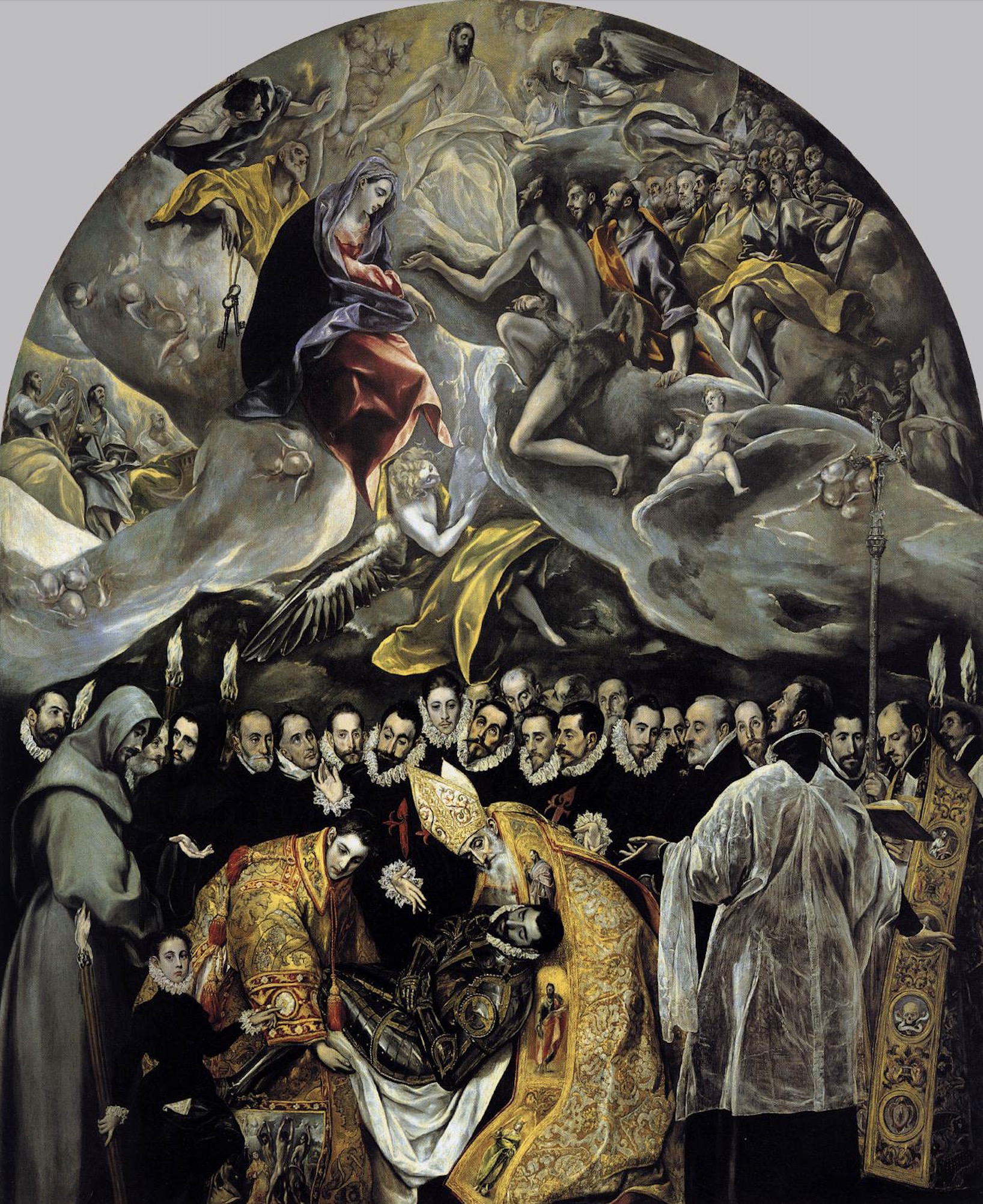
His undisputed masterpiece, The Burial of the Count of Orgaz (1586–1588), perfectly illustrates his dual vision of the earthly and celestial realms, divided distinctly on the canvas. Another iconic work, View of Toledo (c. 1596–1600), is one of the first pure landscapes in Western art, depicting the city under a moody, turbulent, and almost apocalyptic sky.
Despite achieving success in Toledo, El Greco’s deeply spiritual and eccentric work was largely ignored or dismissed as madness for nearly three centuries after his death. He was famously “rediscovered” by Romantic artists in the 19th century and became a crucial direct inspiration for modern masters like Paul Cézanne, Pablo Picasso (particularly during his Blue Period and in Les Demoiselles d’Avignon), and the German Expressionists.
Active in others filds : Architecture (Altarpiece and Chapel Design), Sculpture.