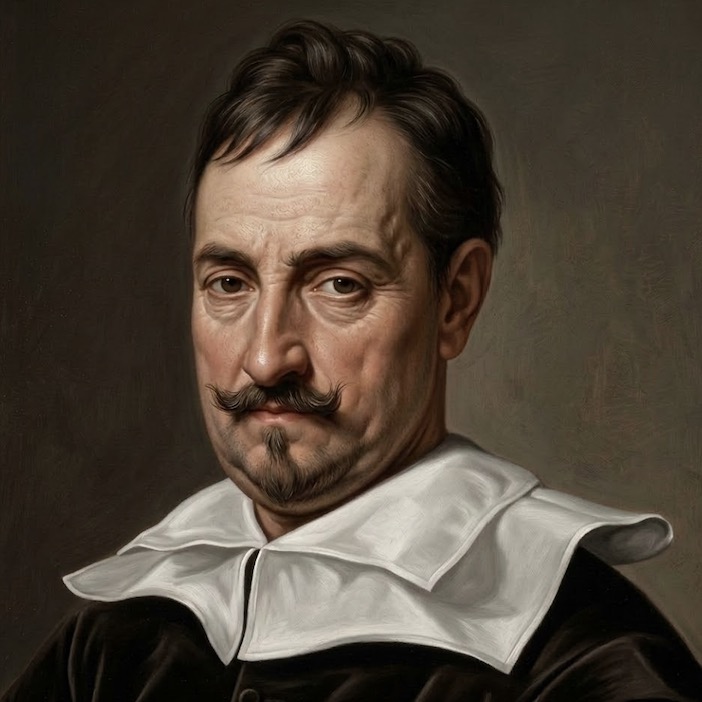

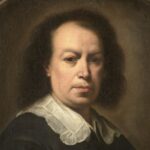

Francisco de Zurbarán (Parents: Luis de Zurbarán, a haberdasher, and Isabel Márquez; Spouses: María Páez, Beatriz de Morales, Leonor de Torder; Children: Several, most notably Juan de Zurbarán, who also became a prominent painter)
Francisco de Zurbarán (1598–1664) was a defining master of the Spanish Golden Age, celebrated for his profound religious paintings and his exceptional mastery of chiaroscuro. Frequently referred to as the “Spanish Caravaggio,” Zurbarán specialized in painting monks, nuns, martyrs, and exquisitely detailed still lifes, bringing an intense, austere spirituality to his subjects.
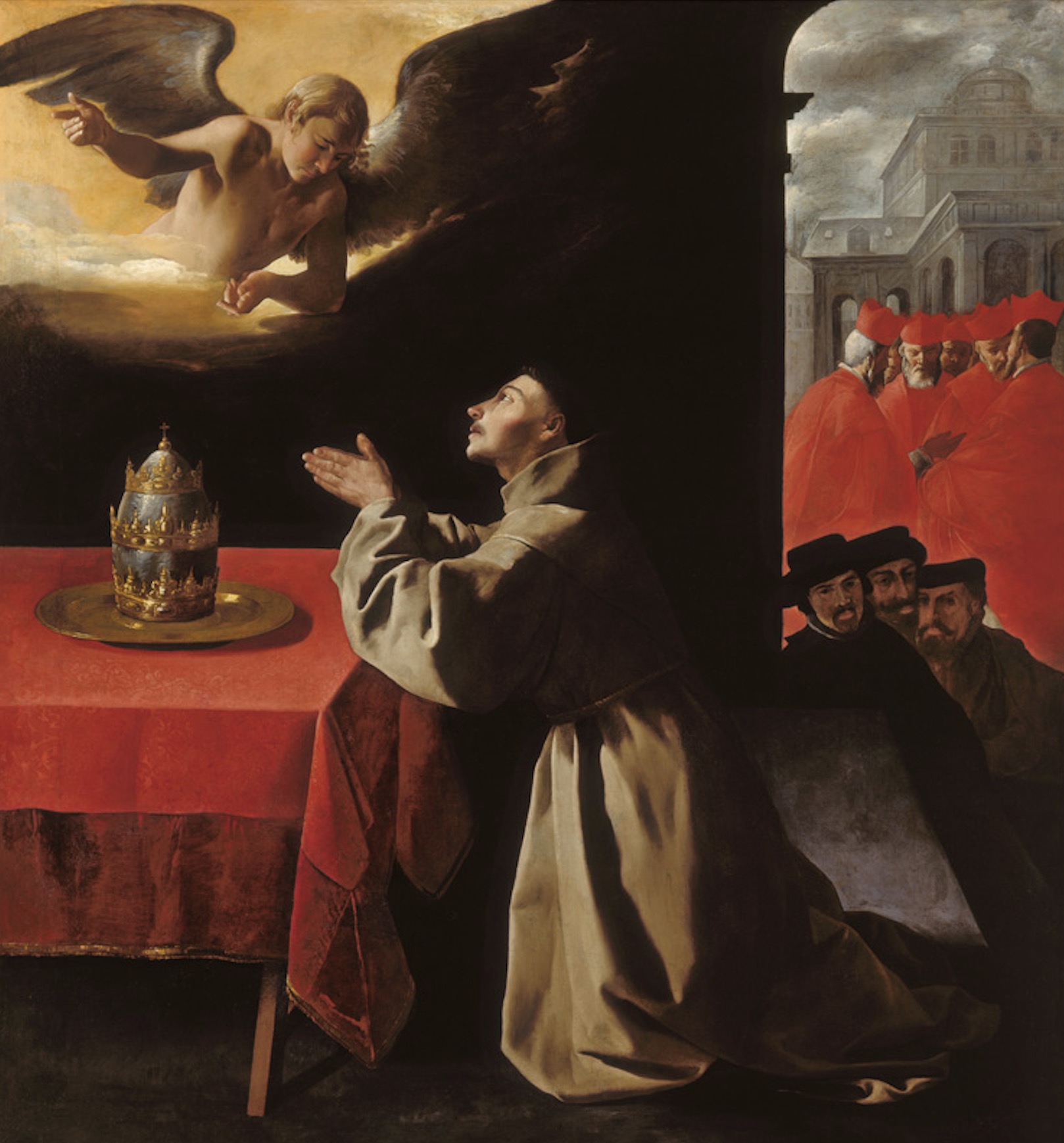
In 1614, Zurbarán moved to Seville to apprentice under Pedro Díaz de Villanueva. By the late 1620s, he had established his own thriving workshop in Seville, which was the artistic capital of Spain at the time. His mature style was characterized by stark, dramatic lighting—where deeply shadowed backgrounds dramatically offset brightly illuminated figures in the foreground (Tenebrism). This technique lent his subjects a sculptural, almost three-dimensional quality and an air of quiet mysticism.
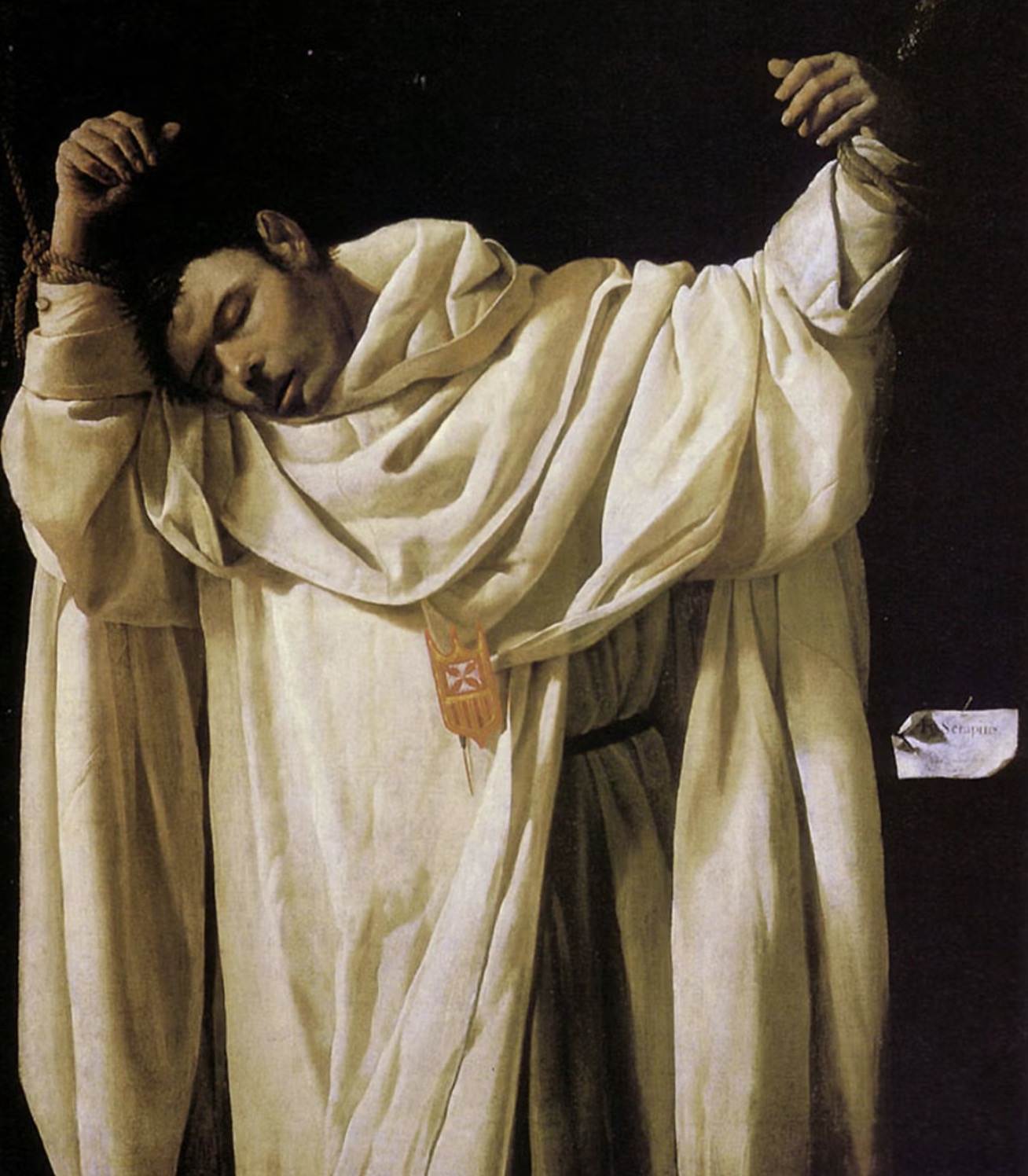
Zurbarán became the painter of choice for the monastic orders of Spain, receiving massive commissions from the Carthusians, Capuchins, Dominicans, and Hieronymites. His ability to render the heavy, coarse textures of monastic robes with hyper-realistic precision became a hallmark of his career. One of his most iconic works is Saint Serapion (1628), which depicts the martyred saint in a brilliant white habit against an engulfing dark void, capturing both physical weight and spiritual transcendence.
Beyond portraiture and religious narratives, Zurbarán was a master of the bodegón (Spanish still life). His still lifes, such as the famous Agnus Dei (The Lamb of God), are imbued with deep religious symbolism, treating everyday objects or sacrificial animals with the same solemn reverence as his human subjects.
In the late 1640s, tastes in Seville began to shift. The public began to favor the softer, sweeter, and more sentimental style of his younger contemporary, Bartolomé Esteban Murillo. As commissions dried up, Zurbarán attempted to adapt his style to be softer and more atmospheric, but he struggled to regain his former prominence. He eventually moved to Madrid in 1658 in search of work, where he died in relative obscurity and poverty in 1664. Today, he is recognized as one of the most powerful and uncompromising visual theologians of the Baroque era.