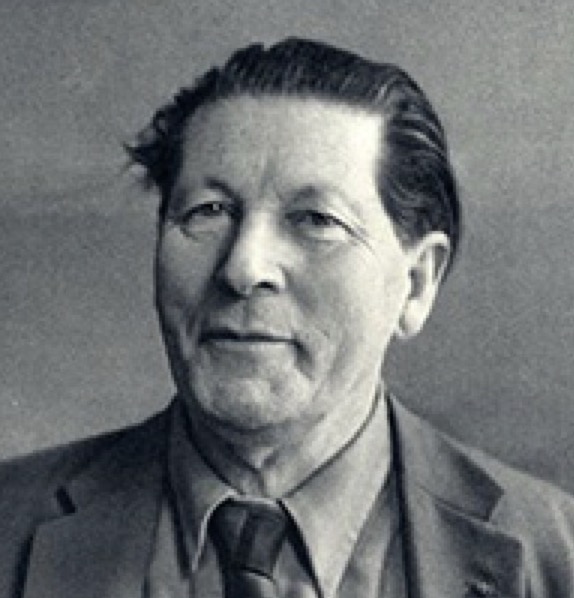
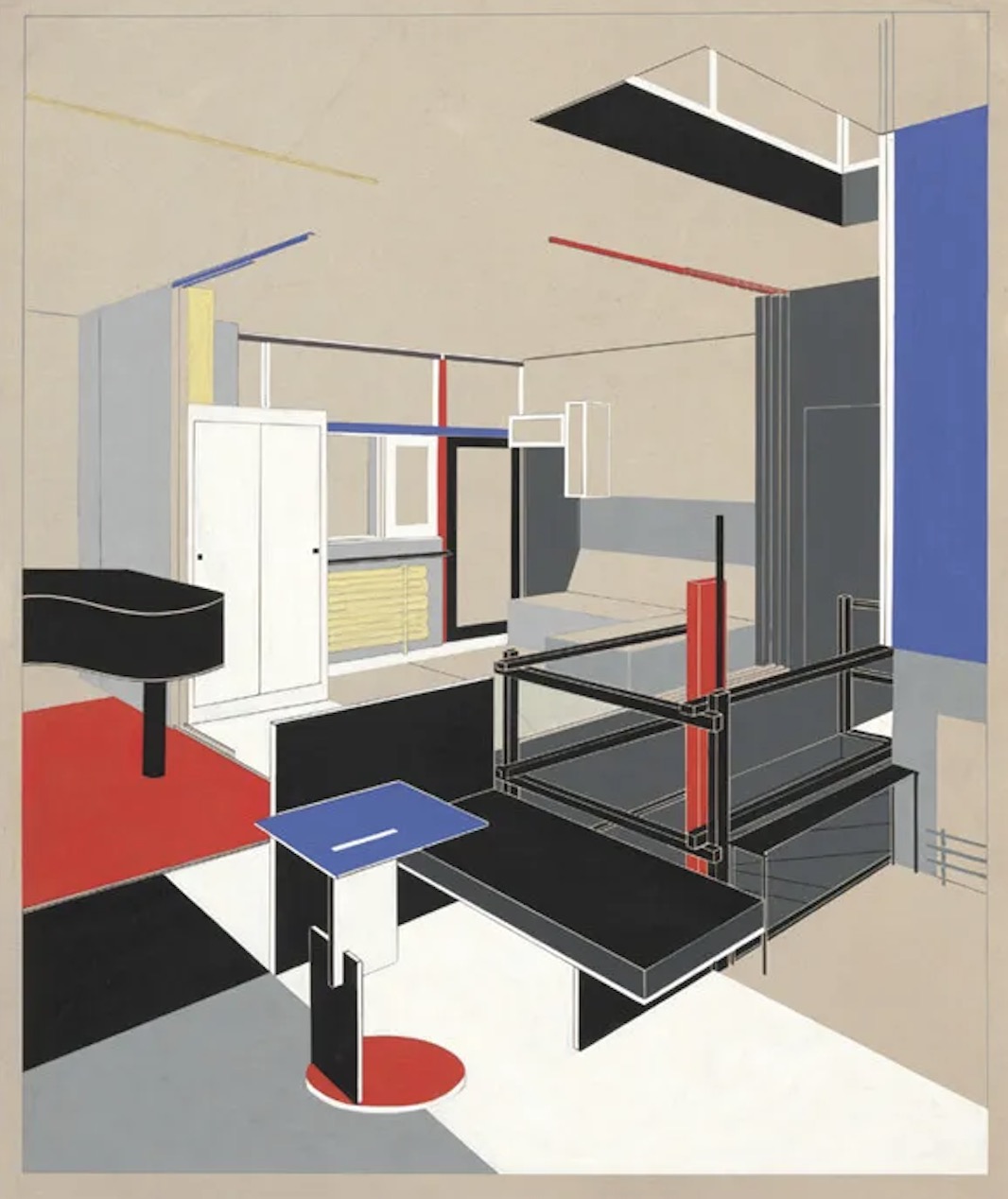





Gerrit Thomas Rietveld (Father: Johannes Cornelis Rietveld, a cabinetmaker) (1888–1964) was a pioneering Dutch architect and furniture designer. He is internationally celebrated as one of the principal members of De Stijl (The Style), a highly influential Dutch artistic movement that advocated for pure abstraction and universality by reducing art to its bare essentials: straight horizontal and vertical lines, and a palette of primary colors along with black and white.
Born in Utrecht, Rietveld began his career at the age of 11, working as an apprentice in his father’s carpentry and joinery workshop. By 1917, he had opened his own furniture shop. That same year, he designed his world-renowned Red and Blue Chair. Originally crafted from unpainted wood, Rietveld applied the iconic primary colors and black framework in 1923, effectively creating a three-dimensional, physical manifestation of Piet Mondrian’s Neo-Plastic paintings.
In 1924, he received a commission from Truus Schröder-Schräder to design a house. The resulting Rietveld Schröder House in Utrecht is universally recognized as the only true De Stijl building in existence and is now a UNESCO World Heritage site. Its revolutionary open-plan interior, featuring sliding partitions that allowed spaces to fluidly transform, radically challenged traditional domestic architecture.
By 1928, Rietveld had broken away from the strict confines of De Stijl and aligned himself with the Nieuwe Zakelijkheid (New Objectivity) movement. He shifted his focus toward more functionalist, affordable, and socially conscious architecture. He remained a prolific architect for the rest of his life. One of his final major commissions was the design of the Van Gogh Museum in Amsterdam, a project that was completed in 1973, nearly a decade after his death.
Active in others filds : Furniture Design, Industrial Design, Exhibition Design.