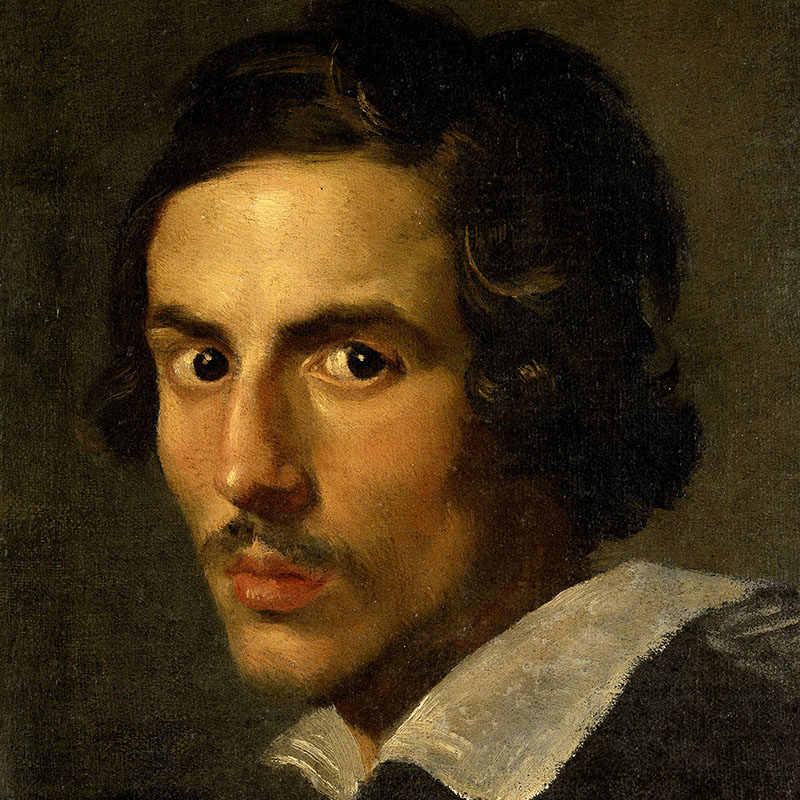




Giovanni Lorenzo Bernini (Father: Pietro Bernini, a Mannerist sculptor; Mother: Angelica Galante; Spouse: Caterina Tezio; Brother: Luigi Bernini)
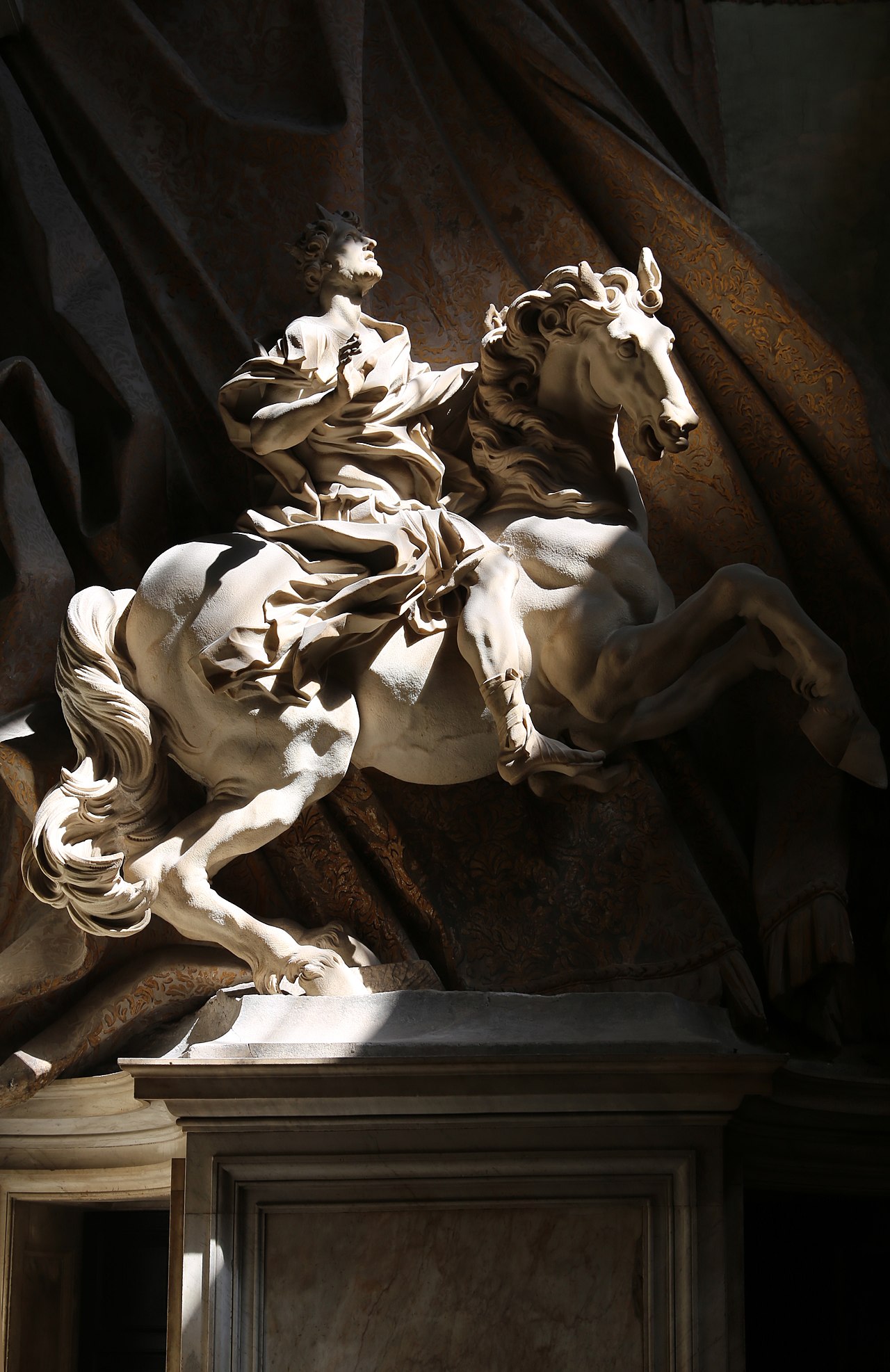
Gian Lorenzo Bernini (1598–1680) was an Italian sculptor and architect who is universally credited with creating the Baroque style of sculpture. A defining figure of 17th-century Rome, his ability to capture fleeting moments of intense emotion and dynamic movement in solid marble revolutionized the visual arts.
A child prodigy, Bernini received his early training from his father, Pietro, a successful Mannerist sculptor. By his late teens, his extraordinary talent caught the attention of Cardinal Scipione Borghese, who commissioned a series of life-sized mythological and biblical groups. Masterpieces like David (1623–1624) and Apollo and Daphne (1622–1625) showcased his unprecedented ability to render the softness of human flesh and the kinetic energy of bodies in mid-motion.
Under the patronage of Pope Urban VIII, Bernini became the dominant artistic force in Rome. He was appointed Chief Architect of St. Peter’s Basilica, where he created the massive bronze Baldacchino (canopy) over the high altar. His career suffered a brief setback during the papacy of Innocent X, exacerbated by structural issues with a bell tower he designed for St. Peter’s—a failure that his bitter rival, the architect Francesco Borromini, used against him. However, Bernini spectacularly redeemed himself with the dramatic Fountain of the Four Rivers (1648–1651) in the Piazza Navona.
Bernini’s ultimate genius lay in the bel composto—the seamless integration of sculpture, painting, and architecture into a unified, theatrical whole. The greatest realization of this concept is the Ecstasy of Saint Teresa (1647–1652) in the Cornaro Chapel. The artwork utilizes hidden windows to cast natural light onto the marble, enhancing the mystical and highly charged emotional state of the saint.
In his later years, Bernini masterminded the urban design of Rome itself, most notably designing the sweeping, embracing colonnades of St. Peter’s Square (Piazza San Pietro). He remained tirelessly active until his death at age 81, leaving an indelible mark on Rome and defining the aesthetic of the Catholic Counter-Reformation.
Active in others filds : Architecture, Painting, Playwriting, Theatrical Set Design, Urban Planning.