

Hans Holbein (Father: Hans Holbein the Elder, a renowned painter; Mother: Anna Burgkmair; Brother: Ambrosius Holbein; Spouse: Elsbeth Binzenstock)
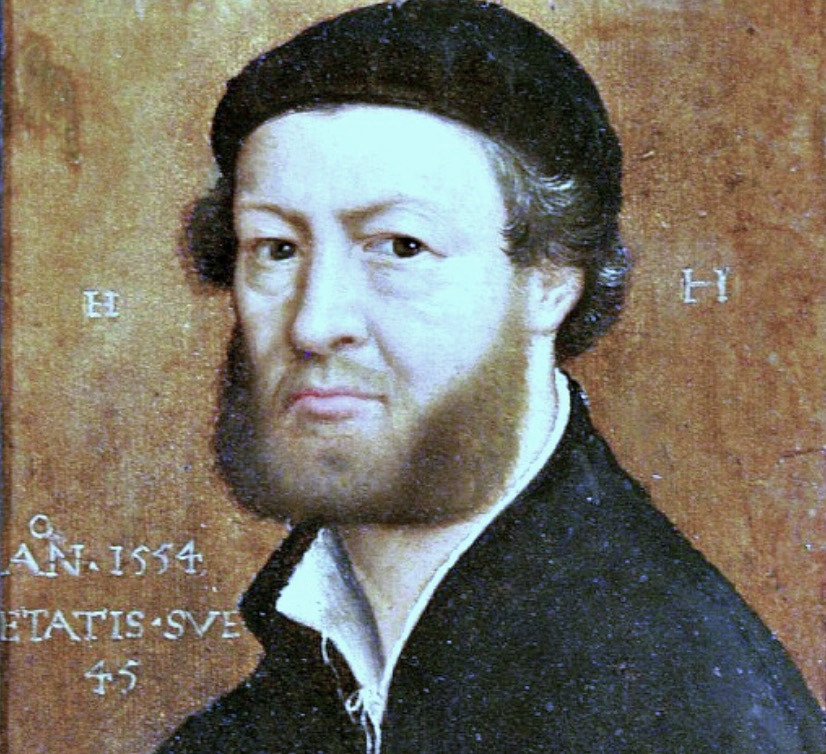
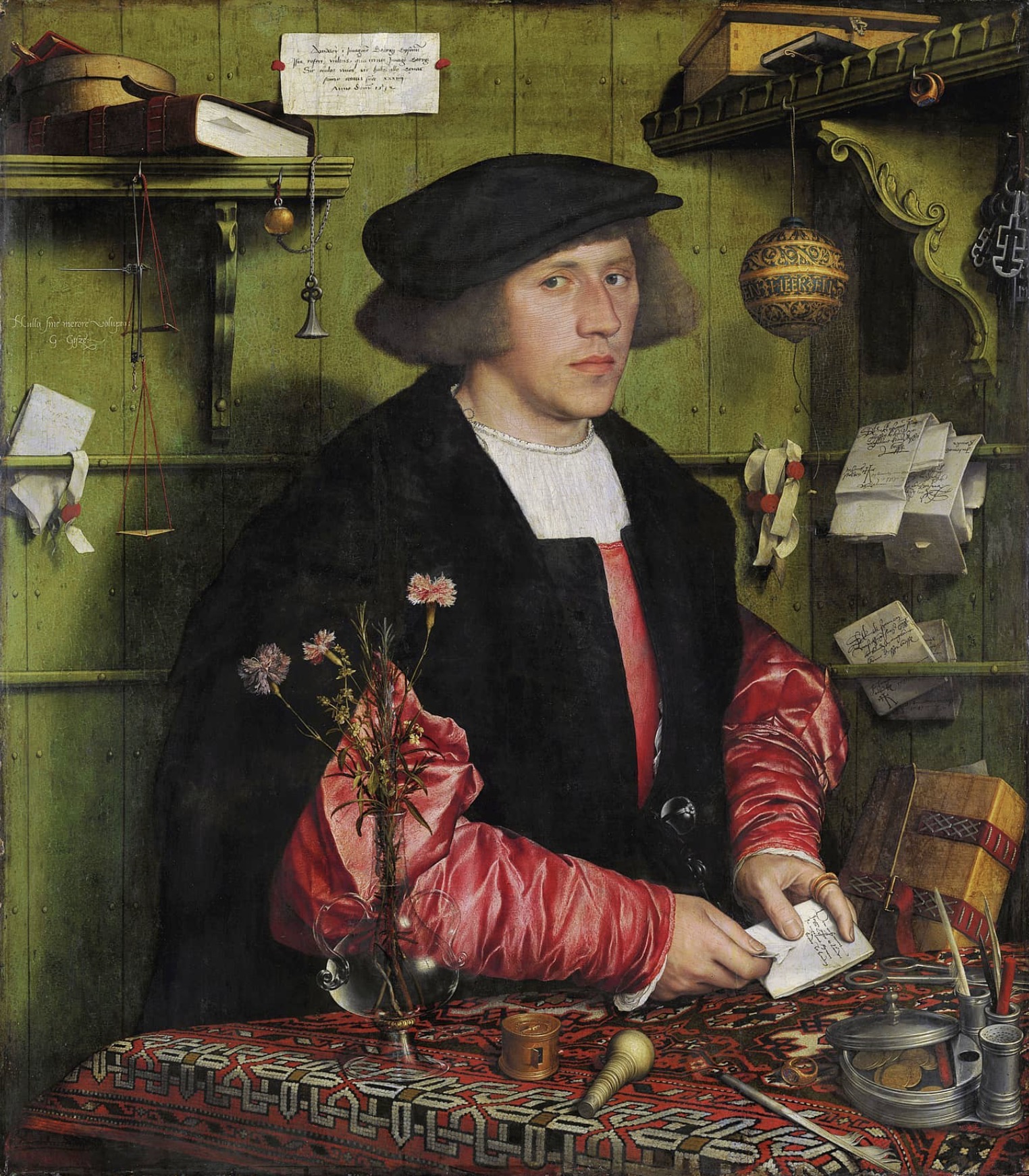
Hans Holbein the Younger (c. 1497–1543) was one of the most accomplished portraitists of the 16th century and a leading figure of the Northern Renaissance. Known for his startlingly lifelike precision, he served as the King’s Painter to Henry VIII of England, capturing the faces of the Tudor court with a psychological depth and technical mastery that remains unsurpassed.
Born in Augsburg into a family of artists, Holbein moved to Basel, Switzerland, in his teens. There, he established himself as a versatile artist, producing murals, religious works, and book illustrations—most notably for Erasmus of Rotterdam’s The Praise of Folly. His friendship with Erasmus eventually led him to England in 1526, carrying a letter of introduction to Sir Thomas More.
Holbein’s style is defined by a “merciless” realism. He did not flatter his subjects; instead, he used a combination of delicate chalk drawings and oil-on-panel techniques to render skin textures, luxurious fabrics, and jewelry with photographic detail. His masterpiece, The Ambassadors (1533), is world-famous not only for its double portraiture but for its complex symbolism and the “anamorphic” skull stretched across the foreground, which only becomes visible when viewed from a specific angle.
As a court painter, his iconic portrait of Henry VIII created the definitive visual image of the monarch that persists in history books today. Despite the religious upheavals of the Reformation, which limited the demand for religious art, Holbein adapted by focusing on secular portraiture and jewelry design. He died in London in 1543 during an outbreak of the plague while at the height of his creative powers.
Active in others filds : Jewelry Design, Metalwork Design (for royal cups and daggers), Book Illustration (Woodcuts such as The Dance of Death), Costume Design.