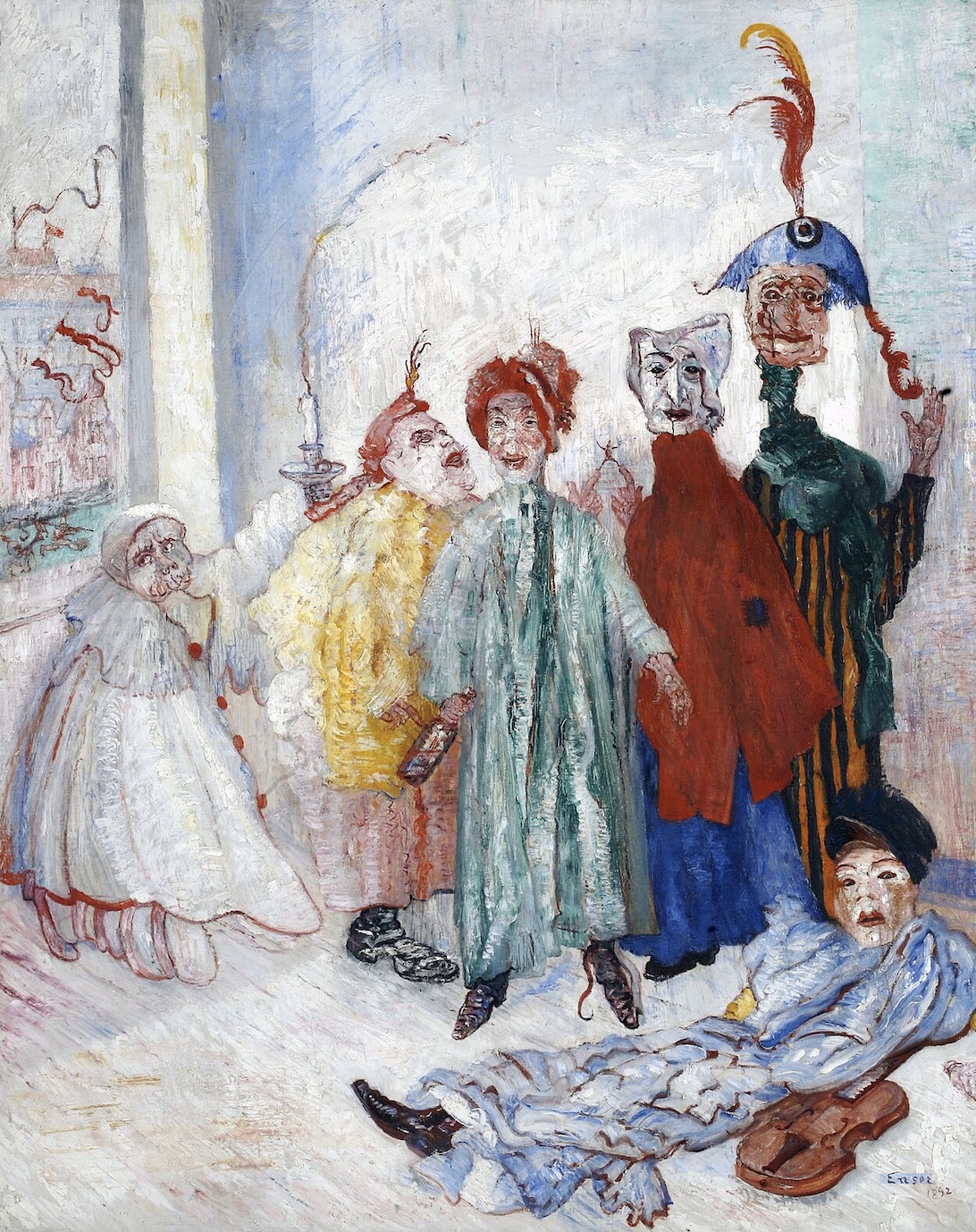
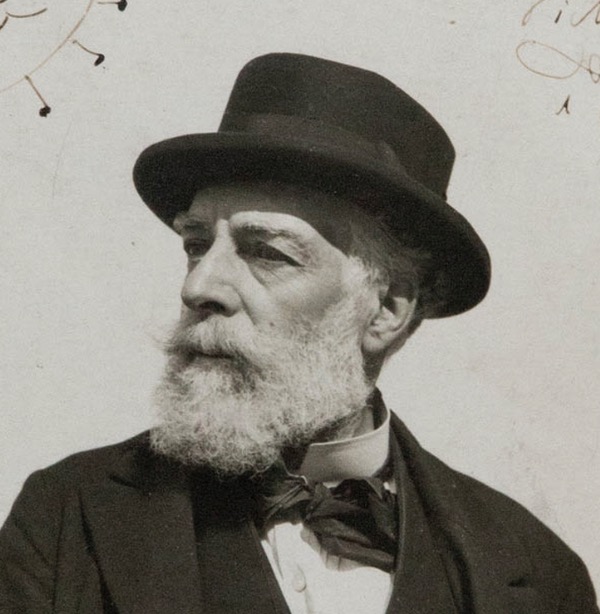




James Sidney Edouard Ensor | James Sidney Edouard, Baron Ensor (Father: James Frederic Ensor; Mother: Maria Catherina Haegheman) (1860–1949) was a Belgian painter and printmaker whose innovative, often macabre works had a profound influence on the development of Expressionism and Surrealism. Spending almost his entire life in the coastal town of Ostend, Ensor drew deep inspiration from the souvenir and curiosity shop run by his parents, which was filled with carnival masks, seashells, and local oddities.
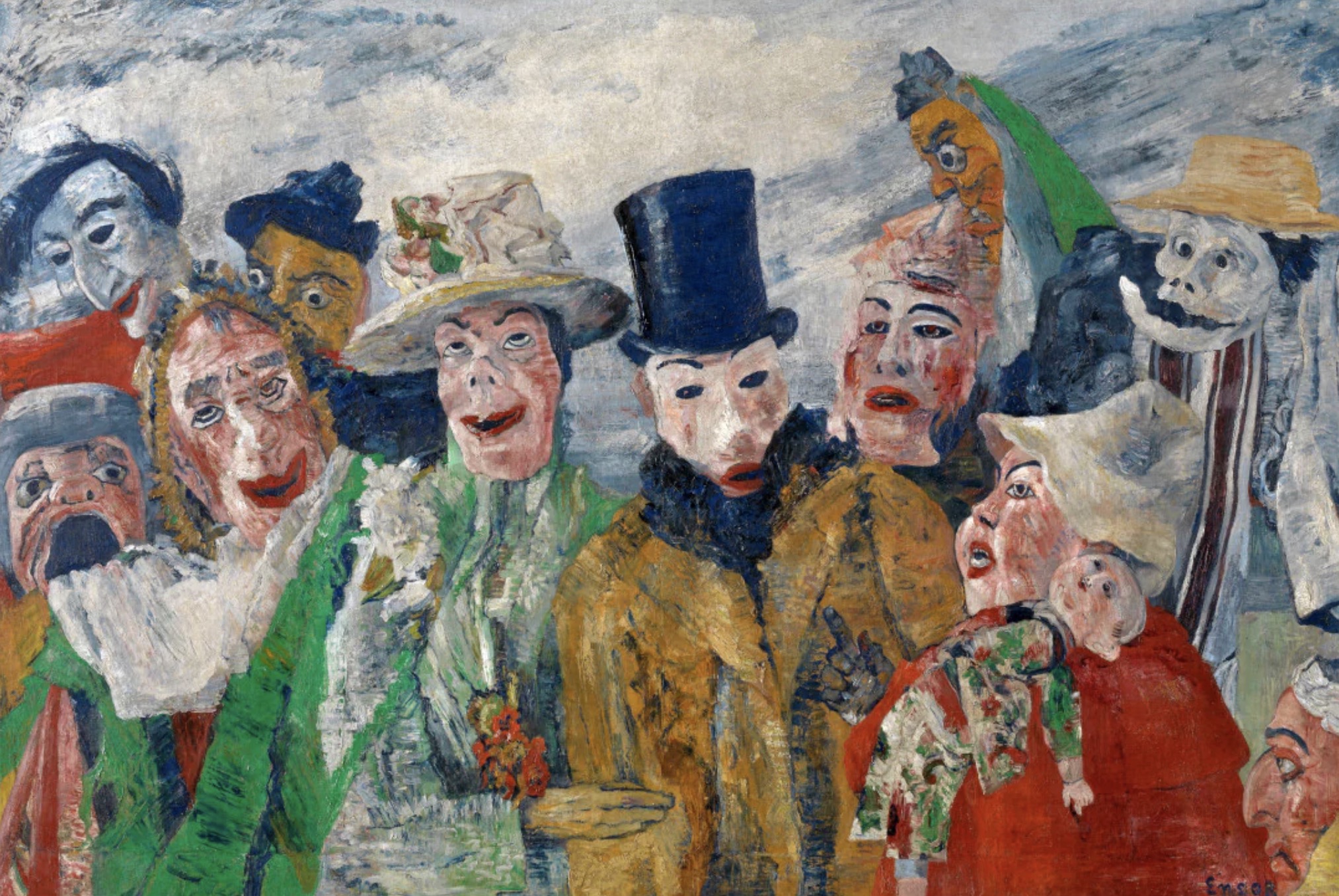
Ensor’s early career in the late 1870s and early 1880s was characterized by dark, realistic domestic interiors and portraits. However, his style shifted dramatically in the mid-1880s. Feeling alienated by the traditional art establishment, he became a founding member of the Brussels avant-garde group Les XX (The Twenty). During this period, he began incorporating the brightly colored, grotesque masks and skeletons that would become his signature motifs. He used these bizarre, theatrical elements as vehicles to satirize the bourgeoisie, religious hypocrisy, and the political establishment.
His undisputed masterpiece is Christ’s Entry Into Brussels in 1889 (painted in 1888). This monumental, densely packed canvas depicts a chaotic, carnival-like parade in which the figure of Christ is nearly lost amidst a sea of grotesque masks and modern political banners. The painting’s chaotic composition, aggressive brushwork, and harsh, unmixed colors were so shocking that even his progressive colleagues in Les XX refused to exhibit it, and it remained in Ensor’s studio for decades.
By the turn of the 20th century, Ensor’s most groundbreaking period had passed, though he finally began to receive the mainstream recognition he had long craved. In 1929, he was named a Baron by King Albert I of Belgium. Today, Ensor is celebrated as a visionary rebel who boldly bridged the gap between 19th-century Symbolism and 20th-century modernism.
Active in others filds : Music Composition (composed music for ballets and played the harmonium), Writing, Set Design.