




Paul Cézanne (Father: Louis-Auguste Cézanne, a banker; Mother: Anne-Elisabeth Honorine Aubert; Spouse: Marie-Hortense Fiquet; Son: Paul Cézanne Jr.)
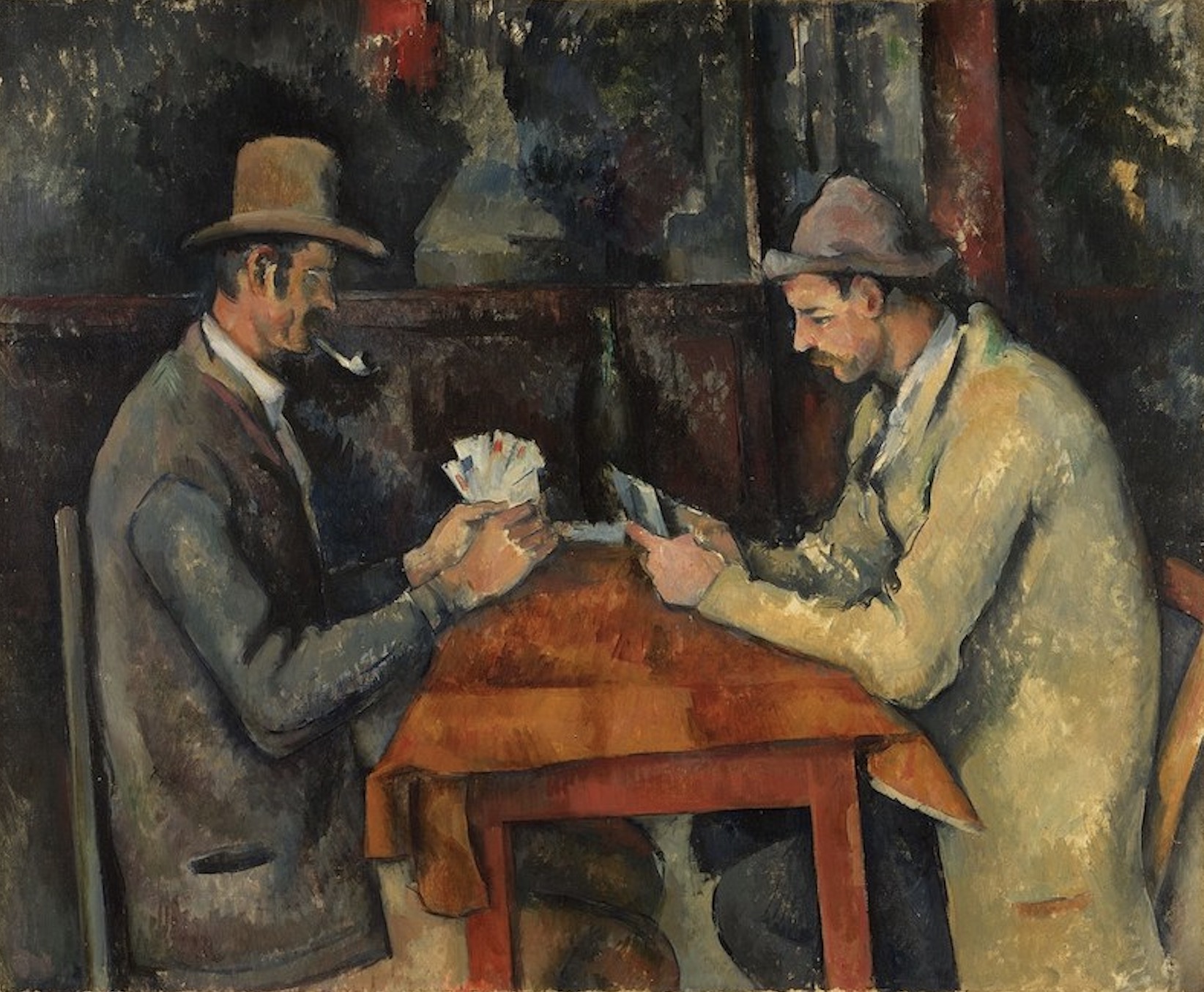
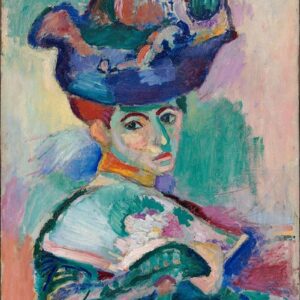
Paul Cézanne (1839–1906) was a French Post-Impressionist painter whose work laid the structural foundations for the transition from the 19th-century conception of artistic endeavor to the radically different world of 20th-century modern art. Both Pablo Picasso and Henri Matisse are said to have remarked that Cézanne “is the father of us all.”
Born in Aix-en-Provence to a wealthy family, Cézanne initially studied law to appease his father. However, heavily encouraged by his close childhood friend, the writer Émile Zola, he abandoned his legal studies and moved to Paris in 1861 to pursue painting.
Cézanne’s early works were dark, romantic, and heavily impastoed. Through his association with Camille Pissarro, he began to adopt the brighter palette and plein-air (outdoor) techniques of the Impressionists. Yet, Cézanne ultimately felt dissatisfied with Impressionism’s focus on the fleeting effects of light. He famously stated his desire to “make of Impressionism something solid and lasting like the art in the museums.”
His mature style represents a profound analytical breakthrough. Instead of using traditional linear perspective, Cézanne built form and space through planes of color. He advised artists to treat nature in terms of basic geometric shapes: the cylinder, the sphere, and the cone. This structural approach is highly evident in his meticulous still lifes of apples and his obsessive, repetitive studies of his local landscape, most notably the mountain Mont Sainte-Victoire.
In his final decade, he worked on a series of monumental figure compositions, culminating in The Bathers (Les Grandes Baigneuses). This masterpiece merged the classical tradition of nudes in a landscape with his radical geometric structuring, creating a rhythmic harmony between the human figures and the surrounding trees.
Though he faced intense critical derision and exhibited little during his lifetime, retreating to the south of France to work in isolation, his posthumous retrospective in Paris in 1907 had a seismic impact on the avant-garde. It directly inspired Georges Braque and Pablo Picasso to develop Cubism, forever altering the trajectory of Western art.
Active in others filds : Drawing / Drafting.