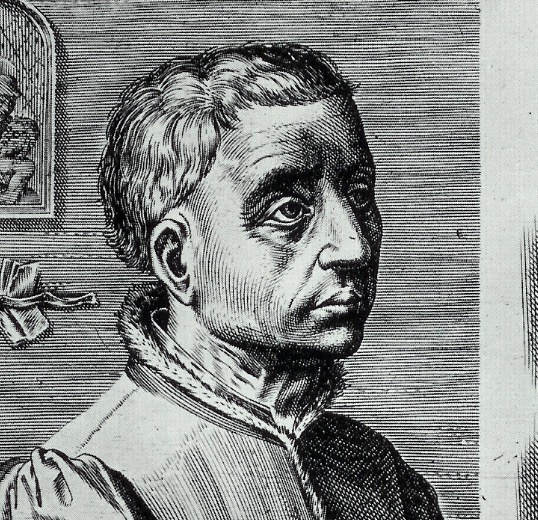



Rogier de le Pasture (Father: Henri de le Pasture, a knife manufacturer; Mother: Agnes de Watrelos; Spouse: Elisabeth Goffaert; Children: Cornelius, Margaretha, Pieter, and Jan, who also became a painter)
Rogier van der Weyden (c. 1399/1400–1464) was one of the three great masters of the Early Netherlandish Renaissance, alongside Jan van Eyck and Robert Campin. Renowned for his deeply emotional and dramatically composed religious panel paintings, as well as his aristocratic portraits, his work resonated across 15th-century Europe, heavily influencing both Northern and Italian art.
Born Rogier de le Pasture in the French-speaking city of Tournai, he began his formal artistic training relatively late. In 1427, he apprenticed under Robert Campin (often identified as the Master of Flémalle), a pioneer of realistic oil painting. By 1432, van der Weyden had qualified as an independent master in the local painters’ guild. In 1435, he relocated to Brussels, translated his name into the Dutch “van der Weyden,” and was appointed as the official painter to the city, a prestigious and lucrative position he held until his death.
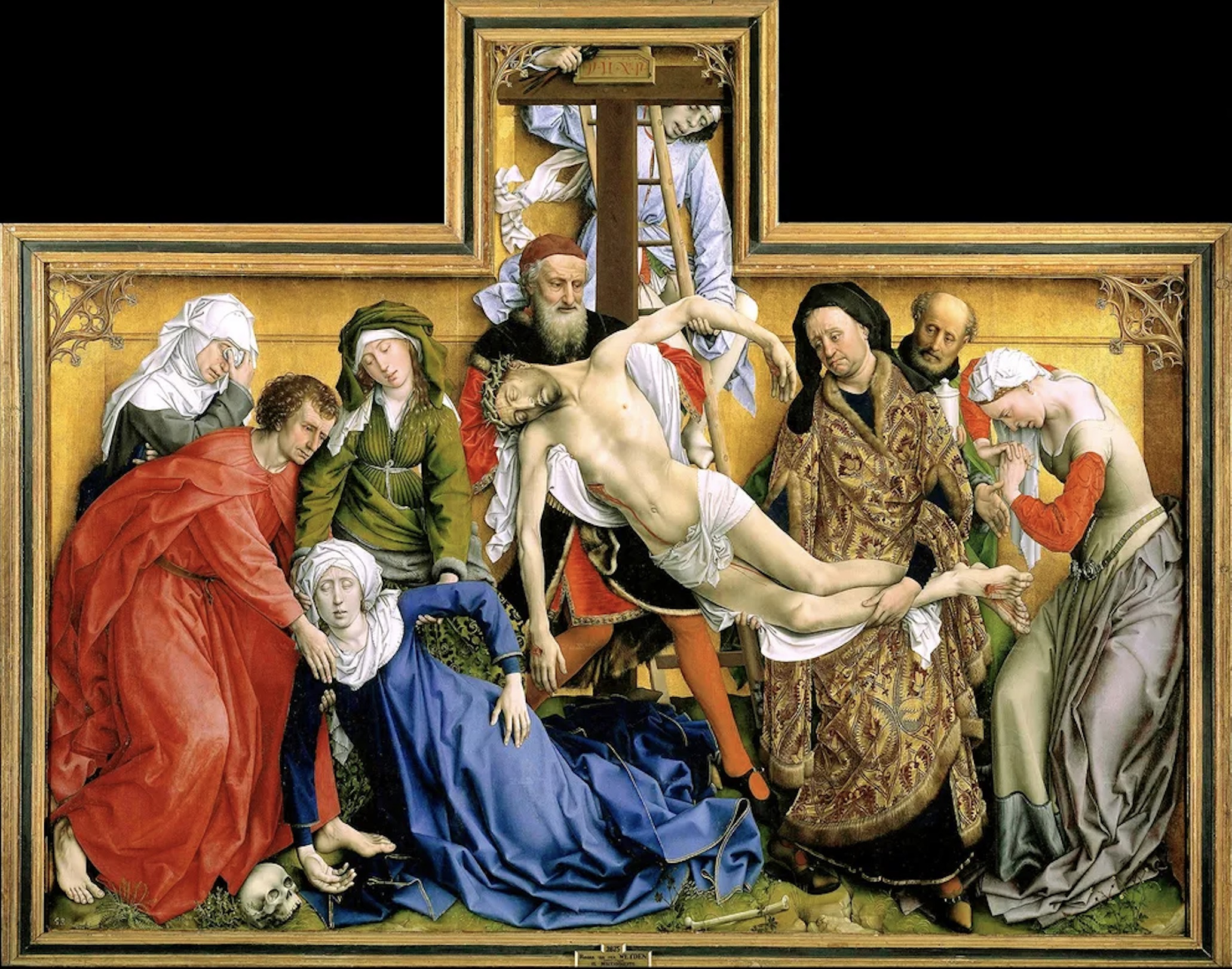
While Jan van Eyck was celebrated for his detached, microscopic observation of the natural world, van der Weyden revolutionized Northern art by infusing it with profound human emotion, pathos, and stylized elegance. His undisputed masterpiece, The Descent from the Cross (c. 1435), exemplifies this. Placed within a shallow, golden, shrine-like box, the life-sized figures are arranged in a dynamic, undulating composition of interlocking bodies, their faces expressing raw, tearful grief.
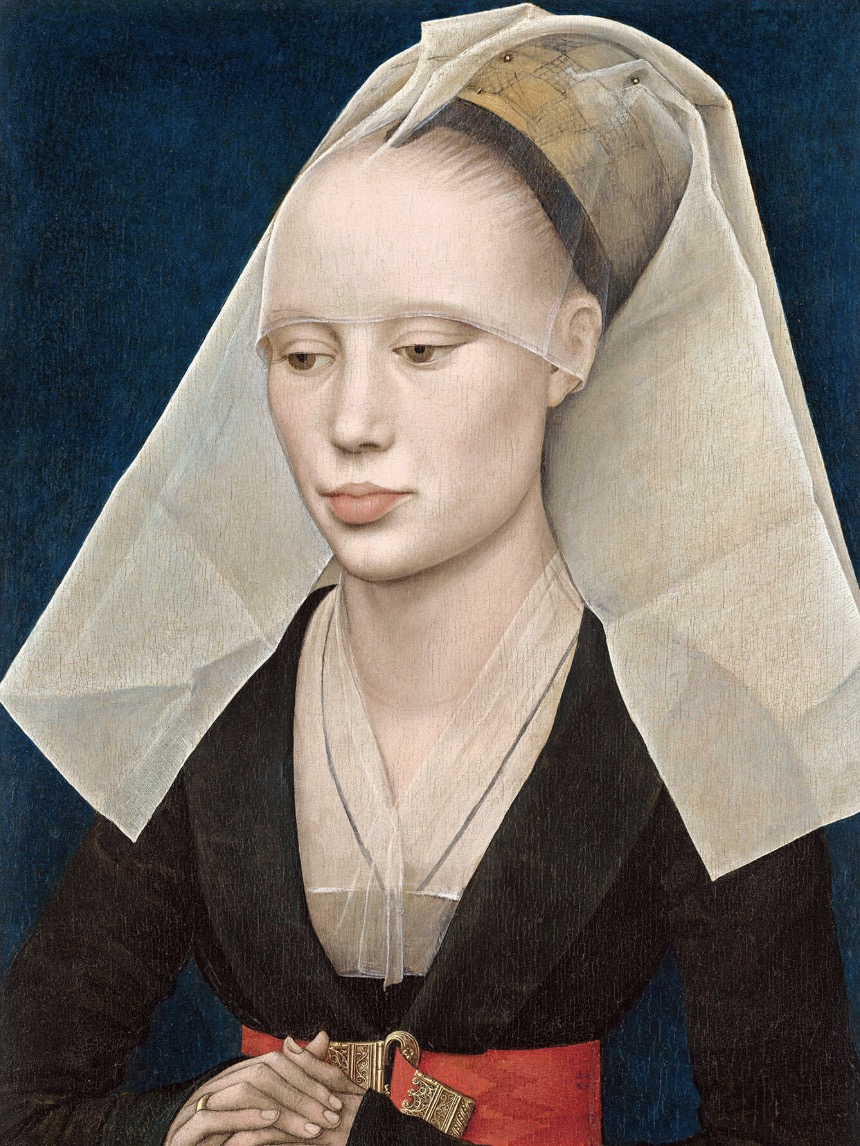
Van der Weyden was also highly sought after as a portraitist by the Burgundian court and Italian bankers. In works like Portrait of a Lady, he developed a signature style of portraying sitters in a three-quarter profile, often slightly idealizing their features to emphasize piety, intellectual refinement, and aristocratic grace.
His deeply expressive visual vocabulary became the dominant standard for Northern European religious painting for generations, directly shaping the work of later masters such as Hans Memling (who may have worked in his studio) and the engraver Martin Schongauer.
Active in others filds : Manuscript Illumination Design, Tapestry Design, Polychrome Sculpture Painting.