Cgitems Logo
Entering
Figurative Art
Loading Encyclopedia...
Connecting to Cgitems Server...
Thanks for your patience
Figurative Art - CGItems
☆
  • UK - English UK - English
  • France - Français France - Français
  • Germany - Deutsch Germany - Deutsch
  • Netherlands - Nederlands Netherlands - Nederlands
  • Norway - Norsk Norway - Norsk
  • Denmark - Dansk Denmark - Dansk
  • Finland - Suomi Finland - Suomi
  • Vietnam - Tiếng Việt Vietnam - Tiếng Việt
  • Italy - Italiano Italy - Italiano
  • Sweden - Svenska Sweden - Svenska
  • Brazil - Português Brazil - Português
  • Greece - Ελληνικά Greece - Ελληνικά
  • Thailand - ไทย Thailand - ไทย
  • Iran - فارسی Iran - فارسی
  • Arab - العربية Arab - العربية
  • Spain - Español Spain - Español
  • China - 中文 China - 中文
  • Turkey - Türkçe Turkey - Türkçe
  • Russia - Русский Russia - Русский
  • South Korea - 한국어 South Korea - 한국어
  • Japan - 日本語 Japan - 日本語
  • India - हिन्दी India - हिन्दी

Visual Art Encyclopedia & Galleria

Art Movement , Style & Technique

Figurative Art

SUB CATEGORIES
×

Figurative Art

Figurative Art

A comprehensive guide to the visual principles, history, and pioneers of this movement. Curated for researchers and students seeking a structured analysis of artistic styles & Technique .

Available Art Style & Movement

Select Art Style...
  • Abstract
  • Abstract Expressionism
  • Academic Art
  • Aestheticism
  • Architectural Movements
  • Art Deco
  • Art Nouveau
  • Baroque
  • Bauhaus
  • Byzantine
  • Cartoon
  • CGI
  • Chiaroscuro
  • Chiaroscuro Noir
  • Classical Architecture
  • Classicism
  • Comic
  • Conceptual
  • Contemporary
  • Cubism
  • Dada
  • Early Renaissance
  • Expressionism
  • Fantasy Art
  • Fashion
  • Fashion Design
  • Fashion Illustration
  • Fashion Photography
  • Fauvism
  • Figurative Art
  • Figurative Photography
  • Fresco
  • Gothic
  • Haute Couture
  • High Renaissance
  • Hybrid
  • Illustration
  • Impressionism
  • Landscape
  • Line art
  • Manga
  • Mannerism
  • Marvel
  • Matte Painting
  • Miniature
  • Minimalism
  • Modern Architecture
  • Modernism
  • Muralism
  • Naturalism
  • Neoclassicism
  • Orientalism
  • Photography
  • Pop Art
  • Pre-Raphaelite
  • Realism
  • Regionalism
  • Relief 
  • Renaissance
  • Rococo
  • Romanticism
  • SCI-FI
  • Sculpting
  • Street Art
  • Surrealism
  • Symbolism
  • Tempera
  • Tenebrism
  • Tonalism
  • VFX
  • Victorian
General Specifcations for Figurative Art

Figurative art (or Figurativism) encompasses any form of visual artwork—paintings, sculptures, graphic arts, or digital media—that retains strong, recognizable references to real-world objects, subjects, and specifically the human body. Unlike pure abstraction (which operates entirely through non-representational form, color, and line), figurative art uses spatial illusion, anatomical proportions, lighting, and narrative structures to visually anchor the subject in recognizable reality.

Historically, figurative art served as the central engine of human artistic production—from paleolithic cave paintings and classical marble portraiture to high-Renaissance humanism and modern psychological expressionism. In modern art theory, “figurative” does not merely denote photo-realism; rather, it describes a spectrum that ranges from strict naturalism to distorted, stylized, or expressive representational form. The core requirement is that the human or physical figure remains the primary structural and narrative axis of the artwork.

Related to Figurative Art

Note : The images below might not strictly correspond to the style and technique of Figurative Art, but rather represent an artist who also includes this approach in their portfolio.

Bob Dylan

Classification

  • Category: Representational Art, Painting, Sculpture, Drawing, Digital Character Concept Art.

  • Era/Period: Prehistoric Antiquity to Present (with major 20th-century revivals balancing modern abstraction).

  • Origin Location: Global (developed independently across ancient Mesopotamia, Egypt, Greece, China, India, and Mesoamerica).

Visual & Technical Specs

  • Key Technical Characteristics:

    • Anatomical Construction: Structural reliance on gesture, skeletal structure, muscle grouping, and volumetric form.

    • Volumetric Rendering: Use of light and shade (Chiaroscuro, Sfumato, or dynamic directional lighting) to map 3D volume on a 2D surface.

    • Narrative Focus: Human pose, expression, and spatial interaction convey psychological, historical, or mythological themes.

    • Spatial Illusion: Application of linear, atmospheric, or foreshortened perspective to anchor figures within an environment.

  • Synthetic Color & Material Specs:

    • Color Palette: Unrestricted; ranges from historical naturalistic flesh tones (earths, ochres, vermilions) to hyper-vivid, expressive, non-naturalistic color blocks.

    • Mediums & Tools: Oil, acrylic, tempera, marble, bronze, clay, charcoal, digital tablet painting, 3D digital sculpting (ZBrush).

Pioneers & Key Works

Historical Pioneers (Classical to Pre-20th Century)

  1. Phidias (Classical Greek Sculpture)

  2. Polykleitos (Greek Canon of Proportions)

  3. Giotto di Bondone (Proto-Renaissance Realism)

  4. Masaccio (Renaissance Linear Perspective & Form)

  5. Leonardo da Vinci (High Renaissance Sfumato & Anatomy)

  6. Michelangelo Buonarroti (Anatomical Expressionism & Sculpture)

  7. Raphael (Raffaello Sanzio) (Harmonic Classical Composition)

  8. Caravaggio (Michelangelo Merisi) (Tenebrism & Dramatic Realism)

  9. Rembrandt van Rijn (Psychological Portraiture & Chiaroscuro)

  10. Diego Velázquez (Imperial Portraiture & Painterly Realism)

  11. Peter Paul Rubens (Flemish Baroque)

  12. Gian Lorenzo Bernini (Baroque Marble Realism)

  13. Jacques-Louis David (Neoclassical Figuration)

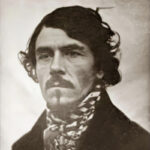
  14. Eugene Delacroix (Romantic Expressionist Figuration)

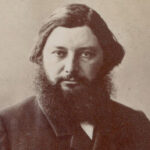
  15. Gustave Courbet (19th-Century Realism)

  16. Edouard Manet (Modernist Transitional Figuration)

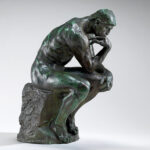
  17. Auguste Rodin (Expressive Modern Sculpture)

  18. Edgar Degas (Figurative Movement & Dynamics)

  19. Ilya Repin (Russian Narrative Realism)

  20. John Singer Sargent (Virtuoso Portraiture)

  21. Pablo Picasso (Cubist & Neoclassical Figuration)

20th-Century Revivalists & Modern Figurative Masters

(Artists who championed, reclaimed, or re-invented the human form amidst the rise of pure Abstraction and Conceptualism)

  1. Francis Bacon (Existential & Visceral Figuration)

  2. Lucian Freud (Psychological & Impasto Nude Portraiture)

  3. David Park (Founder of the Bay Area Figurative Movement)

  4. Richard Diebenkorn (Bay Area Figurative & Spatial Abstraction)

  5. Elmer Bischoff (Bay Area Painterly Figuration)

  6. Alberto Giacometti (Post-War Existentialist Sculptural Figuration)

  7. Philip Guston (Neo-Expressionist Rejection of Abstraction)

  8. Georg Baselitz (German Neo-Expressionism)

  9. Jenny Saville (Contemporary Visceral & Volumetric Flesh Studies)

  10. Paula Rego (Narrative & Psychological Storytelling)

Masterpieces

  1. David (Michelangelo, 1504)

  2. Mona Lisa (Leonardo da Vinci, 1506)

  3. The Calling of Saint Matthew (Caravaggio, 1600)

  4. Las Meninas (Diego Velázquez, 1656)

  5. The Burghers of Calais (Auguste Rodin, 1889)

  6. Les Demoiselles d’Avignon (Pablo Picasso, 1907)

  7. Three Studies for Figures at the Base of a Crucifixion (Francis Bacon, 1944)

  8. Man Pointing (Alberto Giacometti, 1947)

  9. Kids on Bikes (David Park, 1950)

  10. Benefits Supervisor Sleeping (Lucian Freud, 1995)

Philosophy & Context

  • The “Why”: Figurative art exists because the human form is the ultimate mirror for the human condition. It allows creators to convey emotion, mortality, power, vulnerability, and narrative identity. While abstract art focuses on pure form or spiritual emotion, figurative art grounds philosophy in physical embodiment.

  • Historical Context: From ancient ritualistic depictions of gods and rulers to modern explorations of psychological trauma, figuration constantly adapts. In the 20th century, when pure abstract expressionism dominated the Western art world, artists like David Park and Francis Bacon revolted, proving that the human figure remained the most potent vehicle for complex visual ideas.

Modern Influence: Cinema, TV & CGI

  • 2D, 3D, CGI, VFX: Modern 3D digital character art, digital sculpting (ZBrush/Mudbox), character rigging, and performance-capture VFX are direct technological evolutions of classical figurative art. Principles established by classical sculptors and painters—such as muscle tension, skeletal proportions, skin translucency (subsurface scattering), and silhouette recognition—form the core technical foundation for 3D character artists, digital double creation, and cinematic creature design.

  • Modern Legacy: Cinematic character design in franchises like Avatar, The Lord of the Rings (Gollum), and high-end digital human doubles rely on academic figurative anatomy combined with real-time shader pipelines.

Modern Influence: AI & Hybrid Media

  • AI & Hybrid Workflows: Generative AI models are trained heavily on classical and modern figurative artwork. Deep learning networks rely on anatomical structural dataset tagging (pose estimation, skeletal tracking) to synthesize digital figures.

  • AI Prompting Keywords: figurative art, anatomical precision, painterly brushwork, dynamic pose, volumetric lighting, chiaroscuro, Lucian Freud impasto, expressive figure, gesture sketch, sculptural form, naturalistic proportions.

For a complete look at how figurative art evolved into modern 3D workflows, check out this breakdown on the history and mechanics of figurative art. It explores the Bay Area Figurative Movement and how modern painters brought human forms back into abstract spaces.

Explore More

Minimalism 1

Some Other Art Styles

Art Styles by random seed

Orientalism

Orientalism in the visual arts refers to a highly prominent 19th-century movement where Western European painters—primarily from France, Great Britain, Germany, and Austria—depicted the landscapes, cultures, people, and daily life of the Near East, Middle East, and North Africa. Far from a uniform genre, Orientalism operated on a vast spectrum between exacting, scientific ethnography and purely theatrical, romanticized fantasy.

For researchers, students, and art historians, understanding the dual nature of this style is critical:

  • The Realist / Documentary Approach: Artists like David Roberts and John Frederick Lewis traveled extensively, living within the communities they painted. They acted almost as visual archaeologists, documenting Islamic architecture, bustling bazaars, and ancient ruins with remarkable topographic precision. Because sketching crowds openly was often culturally sensitive or forbidden, these artists routinely relied on hidden cameras, clandestine rooftop vantage points, or staged private sittings to achieve hyper-accurate lighting and fabric drapery.

  • The Studio Studio / Fantasy Approach: Conversely, masters like Jean-Auguste-Dominique Ingres never set foot in the East. Instead, they relied heavily on published travelogues, photographs, and studios back in Paris or London that were packed with imported props (such as silks, carpets, hookahs, and weaponry). They created highly polished, Academic Realism scenes of harems, snake charmers, and baths—frequently blending Turkish, Egyptian, and Moroccan motifs into a generalized, exotic construct designed to satisfy Western curiosity and societal desires.

Conceptual Art

Conceptual Art (or Conceptualism) is a movement that prizes the idea or concept behind the work over the finished physical object or the technical skill required to make it. In this style, the “art” is the mental process and the proposition rather than the painting, sculpture, or installation itself. It was a radical shift that essentially argued that if an artist “thinks” of a work, it exists, whether or not it is physically executed.

For researchers and students, it is characterized by its “dematerialization” of the art object. It often utilizes everyday materials, text, photography, and performance to document an idea. The aesthetic is frequently “anti-visual” or clinical, mimicking the appearance of information, data, or instructional manuals to distance the work from traditional notions of beauty or craftsmanship.

Academic Art

Academic Art—also known as Academicism or Academism—refers to the style of painting and sculpture produced under the direct influence of European official art academies, most notably the Académie des Beaux-Arts in Paris. It represents the peak of institutionalized craftsmanship, where technical mastery, rigorous adherence to classical rules, and deep philosophical themes were valued above spontaneous emotional expression or raw realism.

For researchers and students, Academic Art is defined by its strict adherence to the Hierarchy of Genres, which placed History Painting (mythological, biblical, and historical narratives) at the absolute top, followed by portraiture, genre painting, landscape, and still life at the bottom. The creative process was methodical: students spent years drawing from plaster casts and live models, progressing from charcoal sketches (académies) to oil studies, and finally to the grand, highly polished final canvas (le fini) where all visible brushstrokes were meticulously smoothed away to create a seamless, quasi-photorealistic illusion.

Line art

Line Art is one of the most fundamental, ancient, and enduring forms of visual communication. By definition, it consists of distinct straight or curved lines placed against a (usually plain) background, completely omitting strong gradations of shade (chiaroscuro) or color to represent two-dimensional or three-dimensional objects. It relies entirely on the eye’s ability to interpret structural boundaries, edges, and form through contour alone.

For researchers, designers, and students, Line Art is not merely a single “style” but a foundational discipline that spans millennia and branches into distinct technical variations:

  • Pure Contour Drawing: Focuses solely on the external edge of an object, using a continuous, unweighted line to define the boundary between form and space.

  • Weighted/Varied Line Art: Utilizes changes in line thickness (tapering and swelling) to suggest depth, light source, shadow, and structural mass without using actual gradients.

  • Cross-Hatching and Stippling: Techniques where form, density, and value are built up using clusters of parallel lines (hatching), intersecting lines (cross-hatching), or dots (stippling).

  • Technical & Blueprint Line Art: Orthographic projections, architectural schematics, and vector-based diagrams where line weight dictates structural hierarchy, material thickness, or hidden lines rather than artistic expression.

This drawing is Pablo Picasso's 1920 portrait of the composer Igor Stravinsky
This drawing is Pablo Picasso’s 1920 portrait of the composer Igor Stravinsky

Because it strips away the “distraction” of color and rendering, Line Art forces an emphasis on composition, gesture, silhouette, and absolute precision. A single misplaced line can alter the entire anatomy or perspective of a piece.

Landscape

Landscape art focuses on the depiction of natural scenery such as mountains, valleys, trees, rivers, and forests. While nature has been a backdrop in art for millennia, “Landscape” as a standalone genre represents a shift in human consciousness—moving from nature as a setting for religious or heroic figures to nature as the primary subject.

Historically, the genre is divided into several distinct approaches:

  • The Classical/Ideal Landscape: Perfected in the 17th century, these are composed, balanced scenes often featuring Roman ruins to evoke a sense of timelessness and harmony.

  • The Topographical Landscape: Accurate, map-like recordings of specific places, common before the invention of photography.

  • The Sublime & Picturesque: A focus on the raw, often terrifying power of nature (The Sublime) versus the charming, irregular beauty of the countryside (The Picturesque).

  • The Impressionist Landscape: A revolutionary shift toward capturing the fleeting effects of light and atmosphere using broken brushstrokes and en plein air (outdoor) techniques.

Street Art

Street Art is an expansive visual art movement created in public spaces, historically executed outside the context of traditional art venues. What began as a rebellious, underground graffiti subculture—characterized by tagging and claiming urban territory—has evolved into a globally recognized, highly diverse art form. Unlike traditional gallery art, Street Art is inherently ephemeral, often subject to weathering, removal by authorities, or being painted over by other artists.

The movement encompasses a wide range of practices, from freehand aerosol murals and intricate stencil work to wheatpasting, sticker bombing (slaps), and mosaic installations. Street Art challenges the boundaries of property, legality, and public discourse, turning city walls into open-air canvases. While early graffiti was primarily typographic and focused on the artist’s moniker, modern street art is highly illustrative, often tackling political, social, or environmental issues through subversion, dark humor, and pop-culture appropriation.


CGItem Street Girl - Street Art
Street Art Girl (leda)
Reset to Default
+ FAVORITES ✎
✕
⋮ ☆ Figurative Art
✕
HELP AGENT
PLEASE WAIT, LOADING...
×
MCA

--
Analyzing image & extracting data...

Link Copied!

General Inquiry

Have a question or feedback regarding portfolios? Drop us a line.

Strictly plain English text structure only.

Attachments Inventory

Max 500KB per file. Max 10 images.

Delivery Confirmed

Thank you. Your message and data structural packages have been safely transferred to our desk.

Artist Name Artwork Details
Search with Google Lens
Print...