Cgitems Logo
Entering
Figurative Art
Loading Encyclopedia...
Connecting to Cgitems Server...
Thanks for your patience
Figurative Art - CGItems
☆
  • UK - English UK - English
  • France - Français France - Français
  • Germany - Deutsch Germany - Deutsch
  • Netherlands - Nederlands Netherlands - Nederlands
  • Norway - Norsk Norway - Norsk
  • Denmark - Dansk Denmark - Dansk
  • Finland - Suomi Finland - Suomi
  • Vietnam - Tiếng Việt Vietnam - Tiếng Việt
  • Italy - Italiano Italy - Italiano
  • Sweden - Svenska Sweden - Svenska
  • Brazil - Português Brazil - Português
  • Greece - Ελληνικά Greece - Ελληνικά
  • Thailand - ไทย Thailand - ไทย
  • Iran - فارسی Iran - فارسی
  • Arab - العربية Arab - العربية
  • Spain - Español Spain - Español
  • China - 中文 China - 中文
  • Turkey - Türkçe Turkey - Türkçe
  • Russia - Русский Russia - Русский
  • South Korea - 한국어 South Korea - 한국어
  • Japan - 日本語 Japan - 日本語
  • India - हिन्दी India - हिन्दी

Visual Art Encyclopedia & Galleria

Art Movement , Style & Technique

Figurative Art

SUB CATEGORIES
×

Figurative Art

Figurative Art

A comprehensive guide to the visual principles, history, and pioneers of this movement. Curated for researchers and students seeking a structured analysis of artistic styles & Technique .

Available Art Style & Movement

Select Art Style...
  • Abstract
  • Abstract Expressionism
  • Academic Art
  • Aestheticism
  • Architectural Movements
  • Art Deco
  • Art Nouveau
  • Baroque
  • Bauhaus
  • Byzantine
  • Cartoon
  • CGI
  • Chiaroscuro
  • Chiaroscuro Noir
  • Classical Architecture
  • Classicism
  • Comic
  • Conceptual
  • Contemporary
  • Cubism
  • Dada
  • Early Renaissance
  • Expressionism
  • Fantasy Art
  • Fashion
  • Fashion Design
  • Fashion Illustration
  • Fashion Photography
  • Fauvism
  • Figurative Art
  • Figurative Photography
  • Fresco
  • Gothic
  • Haute Couture
  • High Renaissance
  • Hybrid
  • Illustration
  • Impressionism
  • Landscape
  • Line art
  • Manga
  • Mannerism
  • Marvel
  • Matte Painting
  • Miniature
  • Minimalism
  • Modern Architecture
  • Modernism
  • Muralism
  • Naturalism
  • Neoclassicism
  • Orientalism
  • Photography
  • Pop Art
  • Pre-Raphaelite
  • Realism
  • Regionalism
  • Relief 
  • Renaissance
  • Rococo
  • Romanticism
  • SCI-FI
  • Sculpting
  • Street Art
  • Surrealism
  • Symbolism
  • Tempera
  • Tenebrism
  • Tonalism
  • VFX
  • Victorian

General Specifcations for Figurative Art

Figurative art (or Figurativism) encompasses any form of visual artwork—paintings, sculptures, graphic arts, or digital media—that retains strong, recognizable references to real-world objects, subjects, and specifically the human body. Unlike pure abstraction (which operates entirely through non-representational form, color, and line), figurative art uses spatial illusion, anatomical proportions, lighting, and narrative structures to visually anchor the subject in recognizable reality.

Historically, figurative art served as the central engine of human artistic production—from paleolithic cave paintings and classical marble portraiture to high-Renaissance humanism and modern psychological expressionism. In modern art theory, “figurative” does not merely denote photo-realism; rather, it describes a spectrum that ranges from strict naturalism to distorted, stylized, or expressive representational form. The core requirement is that the human or physical figure remains the primary structural and narrative axis of the artwork.

Related to Figurative Art

Note : The images below might not strictly correspond to the style and technique of Figurative Art, but rather represent an artist who also includes this approach in their portfolio.

Giotto di Bondone

Classification

  • Category: Representational Art, Painting, Sculpture, Drawing, Digital Character Concept Art.

  • Era/Period: Prehistoric Antiquity to Present (with major 20th-century revivals balancing modern abstraction).

  • Origin Location: Global (developed independently across ancient Mesopotamia, Egypt, Greece, China, India, and Mesoamerica).

Visual & Technical Specs

  • Key Technical Characteristics:

    • Anatomical Construction: Structural reliance on gesture, skeletal structure, muscle grouping, and volumetric form.

    • Volumetric Rendering: Use of light and shade (Chiaroscuro, Sfumato, or dynamic directional lighting) to map 3D volume on a 2D surface.

    • Narrative Focus: Human pose, expression, and spatial interaction convey psychological, historical, or mythological themes.

    • Spatial Illusion: Application of linear, atmospheric, or foreshortened perspective to anchor figures within an environment.

  • Synthetic Color & Material Specs:

    • Color Palette: Unrestricted; ranges from historical naturalistic flesh tones (earths, ochres, vermilions) to hyper-vivid, expressive, non-naturalistic color blocks.

    • Mediums & Tools: Oil, acrylic, tempera, marble, bronze, clay, charcoal, digital tablet painting, 3D digital sculpting (ZBrush).

Pioneers & Key Works

Historical Pioneers (Classical to Pre-20th Century)

  1. Phidias (Classical Greek Sculpture)

  2. Polykleitos (Greek Canon of Proportions)

  3. Giotto di Bondone (Proto-Renaissance Realism)

  4. Masaccio (Renaissance Linear Perspective & Form)

  5. Leonardo da Vinci (High Renaissance Sfumato & Anatomy)

  6. Michelangelo Buonarroti (Anatomical Expressionism & Sculpture)

  7. Raphael (Raffaello Sanzio) (Harmonic Classical Composition)

  8. Caravaggio (Michelangelo Merisi) (Tenebrism & Dramatic Realism)

  9. Rembrandt van Rijn (Psychological Portraiture & Chiaroscuro)

  10. Diego Velázquez (Imperial Portraiture & Painterly Realism)

  11. Peter Paul Rubens (Flemish Baroque)

  12. Gian Lorenzo Bernini (Baroque Marble Realism)

  13. Jacques-Louis David (Neoclassical Figuration)

  14. Eugene Delacroix (Romantic Expressionist Figuration)

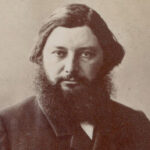
  15. Gustave Courbet (19th-Century Realism)

  16. Edouard Manet (Modernist Transitional Figuration)

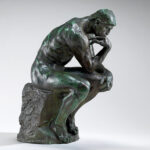
  17. Auguste Rodin (Expressive Modern Sculpture)

  18. Edgar Degas (Figurative Movement & Dynamics)

  19. Ilya Repin (Russian Narrative Realism)

  20. John Singer Sargent (Virtuoso Portraiture)

  21. Pablo Picasso (Cubist & Neoclassical Figuration)

20th-Century Revivalists & Modern Figurative Masters

(Artists who championed, reclaimed, or re-invented the human form amidst the rise of pure Abstraction and Conceptualism)

  1. Francis Bacon (Existential & Visceral Figuration)

  2. Lucian Freud (Psychological & Impasto Nude Portraiture)

  3. David Park (Founder of the Bay Area Figurative Movement)

  4. Richard Diebenkorn (Bay Area Figurative & Spatial Abstraction)

  5. Elmer Bischoff (Bay Area Painterly Figuration)

  6. Alberto Giacometti (Post-War Existentialist Sculptural Figuration)

  7. Philip Guston (Neo-Expressionist Rejection of Abstraction)

  8. Georg Baselitz (German Neo-Expressionism)

  9. Jenny Saville (Contemporary Visceral & Volumetric Flesh Studies)

  10. Paula Rego (Narrative & Psychological Storytelling)

Masterpieces

  1. David (Michelangelo, 1504)

  2. Mona Lisa (Leonardo da Vinci, 1506)

  3. The Calling of Saint Matthew (Caravaggio, 1600)

  4. Las Meninas (Diego Velázquez, 1656)

  5. The Burghers of Calais (Auguste Rodin, 1889)

  6. Les Demoiselles d’Avignon (Pablo Picasso, 1907)

  7. Three Studies for Figures at the Base of a Crucifixion (Francis Bacon, 1944)

  8. Man Pointing (Alberto Giacometti, 1947)

  9. Kids on Bikes (David Park, 1950)

  10. Benefits Supervisor Sleeping (Lucian Freud, 1995)

Philosophy & Context

  • The “Why”: Figurative art exists because the human form is the ultimate mirror for the human condition. It allows creators to convey emotion, mortality, power, vulnerability, and narrative identity. While abstract art focuses on pure form or spiritual emotion, figurative art grounds philosophy in physical embodiment.

  • Historical Context: From ancient ritualistic depictions of gods and rulers to modern explorations of psychological trauma, figuration constantly adapts. In the 20th century, when pure abstract expressionism dominated the Western art world, artists like David Park and Francis Bacon revolted, proving that the human figure remained the most potent vehicle for complex visual ideas.

Modern Influence: Cinema, TV & CGI

  • 2D, 3D, CGI, VFX: Modern 3D digital character art, digital sculpting (ZBrush/Mudbox), character rigging, and performance-capture VFX are direct technological evolutions of classical figurative art. Principles established by classical sculptors and painters—such as muscle tension, skeletal proportions, skin translucency (subsurface scattering), and silhouette recognition—form the core technical foundation for 3D character artists, digital double creation, and cinematic creature design.

  • Modern Legacy: Cinematic character design in franchises like Avatar, The Lord of the Rings (Gollum), and high-end digital human doubles rely on academic figurative anatomy combined with real-time shader pipelines.

Modern Influence: AI & Hybrid Media

  • AI & Hybrid Workflows: Generative AI models are trained heavily on classical and modern figurative artwork. Deep learning networks rely on anatomical structural dataset tagging (pose estimation, skeletal tracking) to synthesize digital figures.

  • AI Prompting Keywords: figurative art, anatomical precision, painterly brushwork, dynamic pose, volumetric lighting, chiaroscuro, Lucian Freud impasto, expressive figure, gesture sketch, sculptural form, naturalistic proportions.

For a complete look at how figurative art evolved into modern 3D workflows, check out this breakdown on the history and mechanics of figurative art. It explores the Bay Area Figurative Movement and how modern painters brought human forms back into abstract spaces.

Explore More

Minimalism 1

Some Other Art Styles

Art Styles by random seed

Modernism

Cubism represents the most radical break from traditional Western pictorial representation since the Renaissance. Developed primarily in Paris, it abandoned the single-viewpoint perspective that had dominated art for centuries. Instead, Cubist artists analyzed subjects from multiple angles, breaking them into geometric fragments and reassembling them within a shallow, ambiguous space.

For researchers and students, it is essential to distinguish between its two primary phases:

  • Analytic Cubism (1907–1912): Focused on breaking down forms into monochromatic, overlapping planes.

  • Synthetic Cubism (1912–1914): Introduced collage, vibrant colors, and simpler shapes, emphasizing the construction of new forms rather than the deconstruction of existing ones.

Victorian

The Victorian era (spanning Queen Victoria’s reign from 1837 to 1901) represents a transformative period in visual history, marked by rapid industrialization, imperial expansion, technological leaps, and intense social stratification. Visually, “Victorian Style” is not a single aesthetic, but an umbrella movement characterized by eclecticism, ornate historical revivals, high ornamental density, and narrative moralism.

Across various visual disciplines, the style manifests through distinct sub-movements and mediums:

  • Painting & Illustration: Ranging from narrative genre scenes of high society and moral dilemmas to the luminous, medievalist rebellion of the Pre-Raphaelite Brotherhood (PRB) and the mood-focused Aesthetic Movement.

  • Architecture: Characterized by dramatic historicism—predominantly Gothic Revival, Queen Anne Style, and Italianate, alongside structural iron-and-glass engineering (such as Joseph Paxton’s Crystal Palace).

  • Interior Design: Heavily layered and ornamental, featuring dark wood paneling, flock wallpaper (pioneered by William Morris), tufted velvet upholstery, brass, stained glass, and clashing floral patterns.

  • Fashion: Highly structured silhouettes reflecting social status; defined by tight corsetry, massive crinolines (later evolving into bustles), rich silks, lace collars, mourning wear, and early synthetic aniline dyes (mauveine).

  • Photography: The birthplace of early commercial and fine-art photography, evolving from daguerreotypes and salted paper prints to wet-plate collodion portraits, combination printing, and early photojournalism.

Marvel

The “Marvel Style” is less a single aesthetic and more an evolutionary lineage of visual storytelling that prioritize dynamic energy, anatomical exaggeration, and emotional relatability. Unlike the “stiff” heroism of earlier eras, the Marvel style—pioneered in the 1960s—introduced characters with flaws, reflected through expressive “acting” in the drawings.

A core technical component is the “Marvel Method”: a collaborative process where the artist (not the writer) plots the visual pacing and action based on a brief synopsis, giving the artist primary control over the “cinematography” of the page. Visually, it is defined by “Kirby Krackle” (clusters of black dots representing cosmic energy), foreshortened limbs that seem to “pop” out of the panel, and high-velocity action lines. From the primary-colored 1960s to the hyper-detailed, painted realism of the 1990s and 2000s, the style consistently balances superheroic scale with human vulnerability.

High Renaissance

The High Renaissance represents the absolute peak of artistic achievement, mathematical harmony, and humanistic idealization in Western art. Centered primarily in Rome and Venice after originating in Florence, this short-lived period refined the technical breakthroughs of the Early Renaissance—such as linear perspective and anatomical accuracy—into a unified aesthetic of perfect balance, ideal proportion, and monumental scale.

For researchers, students, and digital artists, the High Renaissance is defined by three fundamental pillars:

  • Disegno vs. Colore: The divide between Florence/Rome (emphasizing precise line, structural drawing, and anatomical geometry) and Venice (emphasizing atmospheric color, tone, and expressive brushwork).

  • Atmospheric Mastery: The refinement of Sfumato (delicate, imperceptible blending of tones without sharp borders) and Chiaroscuro (dramatic contrast between light and dark to build 3D mass).

  • Idealized Naturalism: Moving past stiff realism to create forms that represent perfect, divine versions of human anatomy and natural environments, heavily influenced by Classical Greco-Roman antiquity.

Muralism

Muralism is a monumental, public-facing art movement defined by the creation of massive paintings directly executed on or permanently affixed to architectural surfaces (walls, ceilings, or structural facades). While mural-making dates back to prehistoric caves and Renaissance frescoes, “Modern Muralism”—sparked primarily by the Mexican Mural Movement in the 1920s—transformed the medium into a powerful vehicle for social, political, and historical narrative.

Unlike easel paintings, which are transportable and often treated as private commodities, modern muralism is intrinsically civic and democratic. It was designed to bypass the elite, exclusive spaces of museums and commercial galleries, taking art directly to the working-class public in municipal buildings, schools, and outdoor plazas.

For researchers, students, and CGI artists, Muralism must be understood as an architectural collaborator. A successful muralist does not merely use a wall as a flat canvas; they analyze the architectural volume, viewer sightlines, scale, and environmental lighting of the space.

Muralism Artwork By Diego Rivera,
“Dream of a Sunday Afternoon in Alameda Central Park” (Sueño de una tarde dominical en la Alameda Central) by Diego Rivera, created between 1946 and 1947.

Historically, the movement combined classical European fresco techniques with bold modernist styles like Cubism, Expressionism, and native indigenous folk art aesthetics to create highly legible, heroic, and dynamic visual spectacles.


Miniature

Miniature painting is a highly disciplined, small-scale art form characterized by extreme precision, vibrant mineral pigments, and a rejection of Western three-dimensional perspective. While each region has its own identity, they share a “flat” or isometric perspective, where the importance of a subject is dictated by its placement or color rather than its distance from the viewer.

  • Persian (Iranian) Miniature: Known for the “Herat” and “Safavid” schools. It features lyrical compositions, intricate “Tazhib” (illumination), and a focus on epic poetry (Shahnameh) and mysticism.

  • Indian (Mughal/Rajput) Miniature: A fusion of Persian technique and Indian flora/fauna. It introduced more naturalism, portraiture, and the “Ragmala” (musical modes) paintings.

  • East Asian (China/Japan) Influence: While often appearing as scrolls, the “miniature” element exists in Album Leaves and Fan Paintings. They emphasize calligraphic line work, the “spirit resonance” of brushstrokes, and the philosophical use of “negative space” (Ma).

Reset to Default
+ FAVORITES ✎
✕
⋮ ☆ Figurative Art
✕
HELP AGENT
PLEASE WAIT, LOADING...
×
MCA

--
Analyzing image & extracting data...

Link Copied!

General Inquiry

Have a question or feedback regarding portfolios? Drop us a line.

Strictly plain English text structure only.

Attachments Inventory

Max 500KB per file. Max 10 images.

Delivery Confirmed

Thank you. Your message and data structural packages have been safely transferred to our desk.

Artist Name Artwork Details
Search with Google Lens
Print...