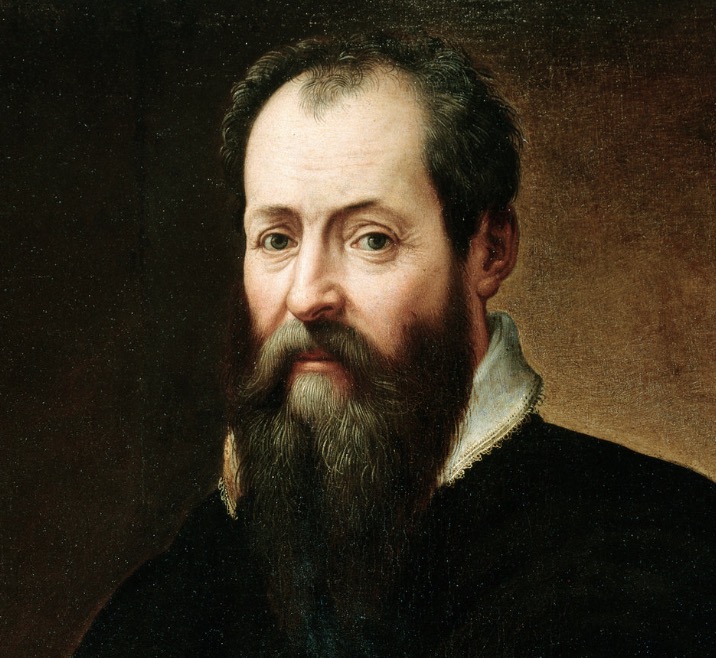


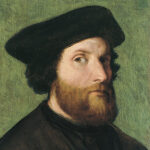
Giorgio Vasari (Father: Antonio Vasari, a potter; Spouse: Niccolosa Bacci)
iorgio Vasari (1511–1574) was an Italian painter, architect, writer, and historian, best known today as the “father of art history.” While a prolific artist in his own right, his enduring legacy lies in his writing, which shaped the historical understanding of the Renaissance.
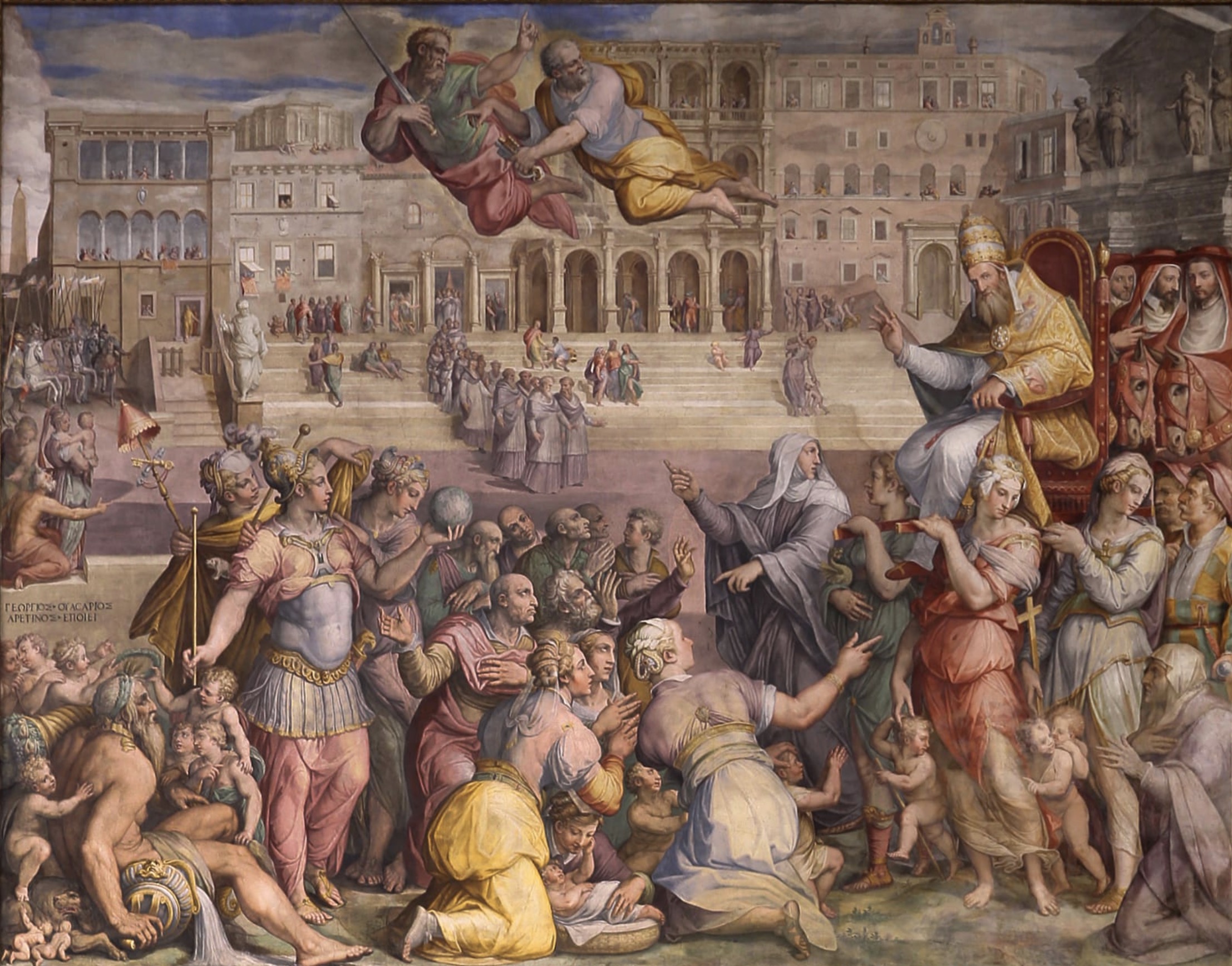
Born in Arezzo, Vasari was recommended at an early age to the master Guglielmo da Marsiglia. In 1524, he moved to Florence, where he befriended Michelangelo, whose work would influence him profoundly. As a painter, Vasari was a successful Mannerist, known for complex compositions and artificial colors. He was highly productive, executing major fresco cycles in the Palazzo Vecchio in Florence (notably the Hall of the Five Hundred) and the Sala Regia in the Vatican.
However, Vasari’s most monumental contribution is his book, The Lives of the Most Excellent Painters, Sculptors, and Architects (Le Vite de’ più eccellenti pittori, scultori, e architettori), first published in 1550 and expanded in 1568. This work is the ideological foundation of art historical writing. It compiled biographies of artists from Cimabue to Michelangelo, establishing the concept of the “Renaissance” (rinascita) as a progression of art from medieval “barbarism” to the perfection of classical antiquity.
As an architect, Vasari’s work was arguably superior to his painting. His masterpiece is the Uffizi Gallery (1560–1580) in Florence, originally built as administrative offices (“uffizi”) for the Medici grand dukes. He also designed the Vasari Corridor, a long, enclosed elevated passageway connecting the Palazzo Vecchio with the Palazzo Pitti, allowing the Medici to move freely and safely between their residence and the government palace.
Vasari was also instrumental in founding the Accademia delle Arti del Disegno (Academy of the Arts of Drawing) in Florence in 1563, with the Grand Duke and Michelangelo as heads of the institution, elevating the status of artists from craftsmen to intellectuals.
Active in others filds : Art History (Writer/Biographer), Courtier.