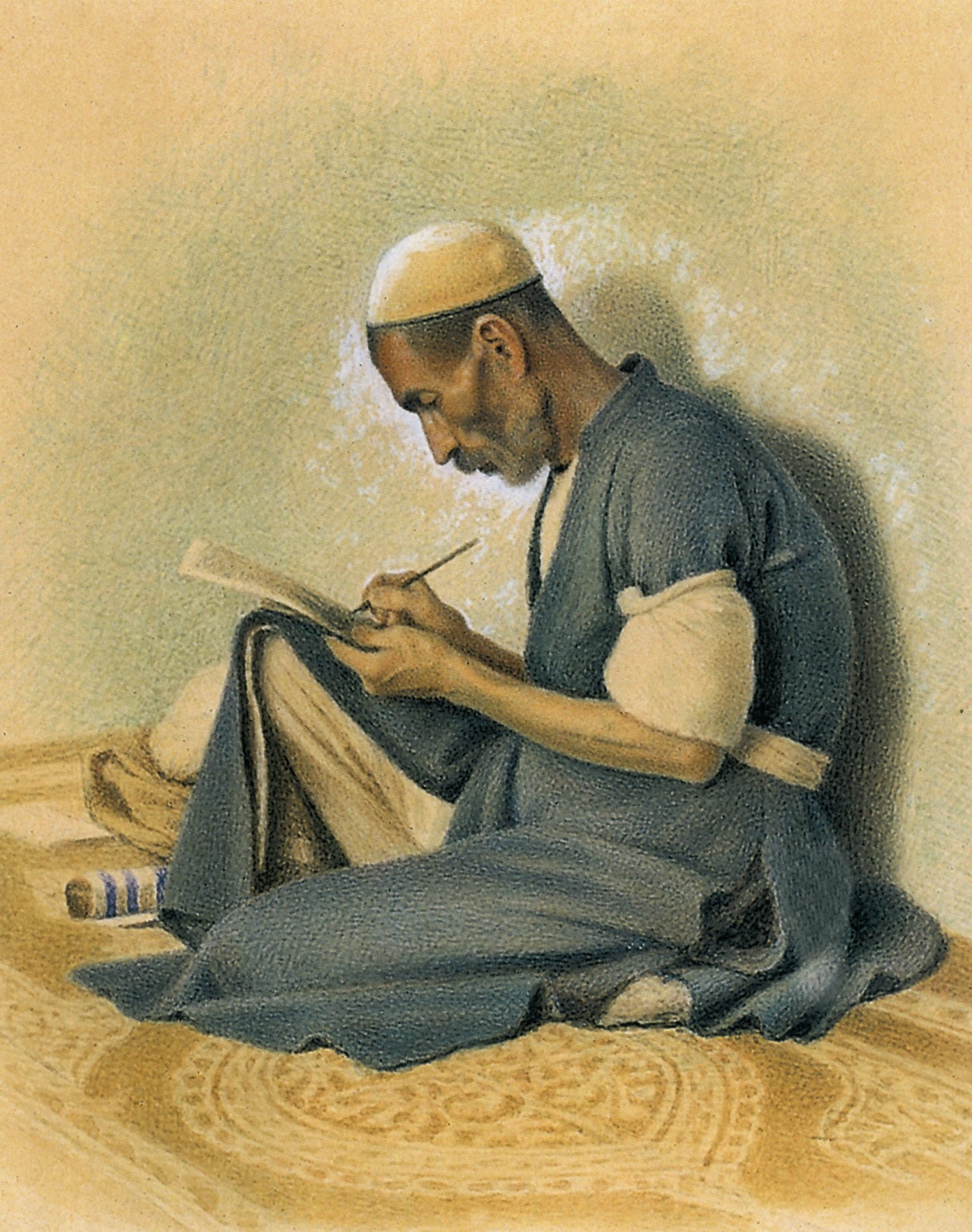
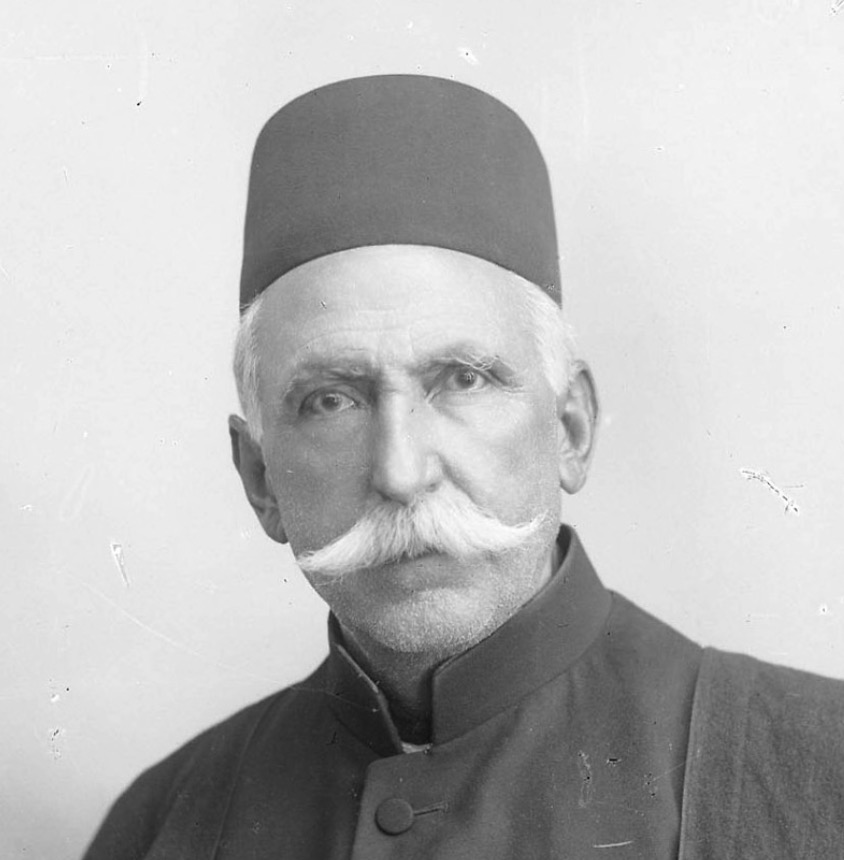


Mohammad Ghaffari (Father: Mirza Bozorg Ghaffari Kashani; Uncle: Abolhassan Ghaffari, known as Sani-ol-Molk)
Mohammad Ghaffari (1848–1940), universally known by his honorific title Kamal-ol-Molk (“Perfection of the Realm”), is arguably the most famous and influential figure in modern Iranian art history. He is widely credited with breaking the centuries-old tradition of Persian miniature painting and introducing Western classical realism to Iran.
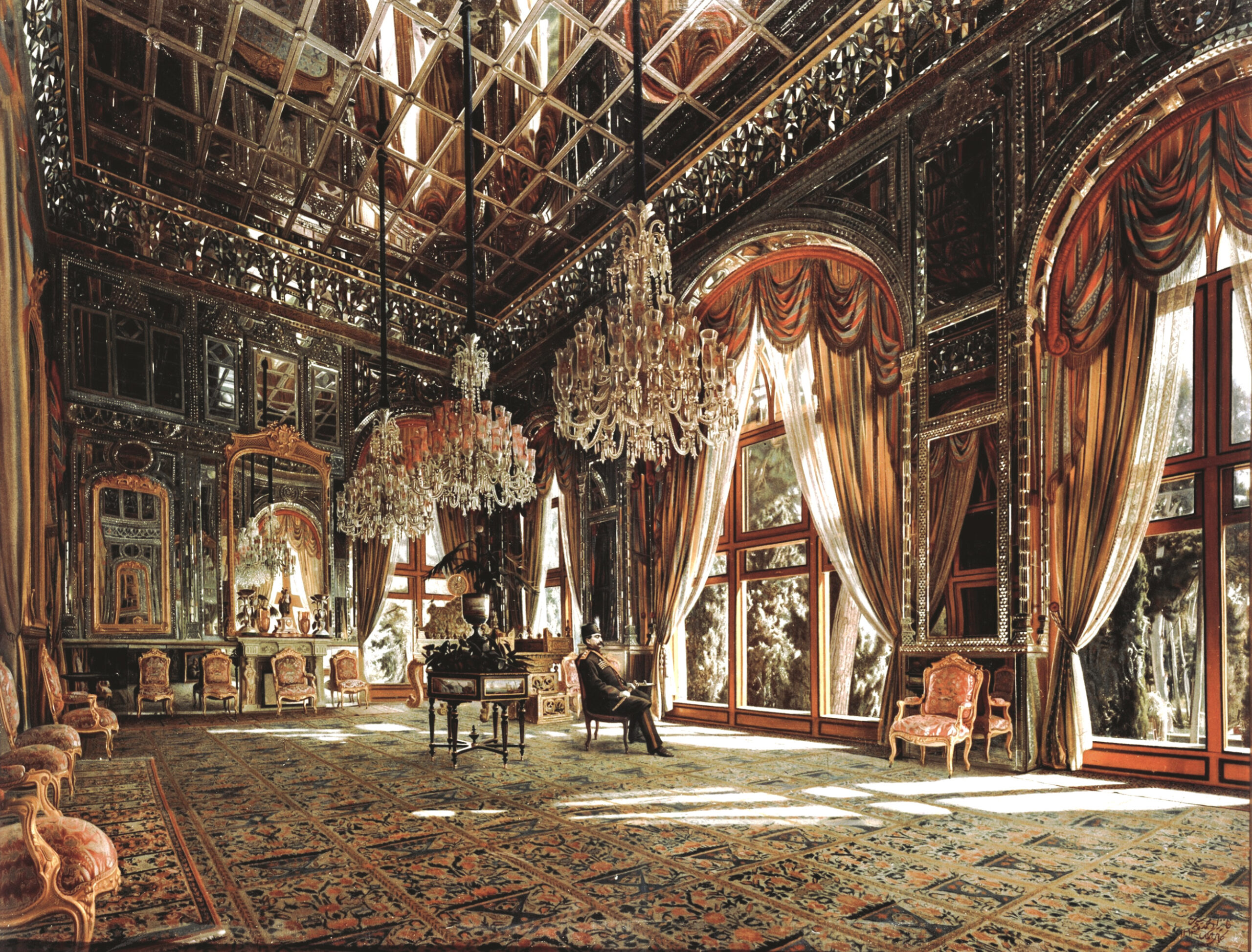
Born in Kashan into a family with a deep, multi-generational artistic lineage, he traveled to Tehran as a young man to study at the Dar-ul-Funun school. His exceptional talent quickly caught the eye of Naser al-Din Shah Qajar during a royal visit to the school. The Shah invited him to the court, where he was eventually given the title “Kamal-ol-Molk” and became the chief court painter. During this period, he created some of his most celebrated masterpieces, including the astonishingly detailed Mirror Hall (Talar-e Aineh), which took several years to complete and perfectly captured the opulence of the Golestan Palace.
Following the assassination of Naser al-Din Shah, Kamal-ol-Molk left Iran in 1898 for Europe to study the works of classical Western masters. He spent years in Paris, Florence, and Versailles, meticulously copying the works of artists like Rembrandt, Raphael, and Titian to master European techniques of perspective, light, and anatomy.
Upon returning to Iran, he founded the Sanat-e Mostazrafeh Art School (School of Fine Arts) in Tehran. This institution revolutionized Iranian art education, training a new generation of Iranian masters in academic realism, sculpting, and carpet weaving.
Later in life, Kamal-ol-Molk refused to paint the portrait of the new monarch, Reza Shah Pahlavi, or cooperate with his government. As a result of this political friction, he was exiled to the village of Hosseinabad in Nishapur. Tragically, he lost the sight in one of his eyes during an incident in exile, ending his painting career. He died in 1940 and was buried in Nishapur, near the tomb of the poet Attar.
Active in others filds : Art Education (Founder and Director of the Sanat-e Mostazrafeh Art School).