
Fresco
A comprehensive guide to the visual principles, history, and pioneers of this movement. Curated for researchers and students seeking a structured analysis of artistic styles & Technique .
Available Art Style & Movement
Abstract
Abstract Expressionism
Academic Art
Aestheticism

Architectural Movements
Art Deco
Art Nouveau
Baroque
Bauhaus

Byzantine

Cartoon

CGI
Chiaroscuro
Chiaroscuro Noir
Classical Architecture
Classicism

Comic
Conceptual
Contemporary
Cubism

Dada
Early Renaissance

Expressionism

Fantasy Art
Fashion
Fashion Design
Fashion Illustration
Fashion Photography

Fauvism

Figurative Art

Figurative Photography
Fresco

Gothic
Haute Couture
High Renaissance
Hybrid
Illustration

Impressionism

Landscape
Line art

Manga
Mannerism

Marvel
Matte Painting

Miniature
Minimalism
Modern Architecture
Modernism

Muralism

Naturalism

Neoclassicism

Orientalism

Photography

Pop Art
Pre-Raphaelite

Realism
Regionalism
Relief
Renaissance

Rococo

Romanticism

SCI-FI

Sculpting
Street Art
Surrealism
Symbolism
Tempera
Tenebrism

Tonalism

VFX
Victorian
General Specifcations for Fresco
Fresco is an ancient and highly durable mural painting technique executed upon freshly laid, or “wet,” lime plaster. The term translates directly from the Italian word for “fresh.” In true fresco (buon fresco), water is used as the binding vehicle for dry-powder pigment. As the plaster dries and sets through a chemical reaction with the air (carbonation), the pigment becomes completely fused with the wall itself, rather than resting on top of it as a surface layer. This integration makes fresco one of the most permanent forms of wall decoration, capable of surviving for centuries.
Because the plaster dries relatively quickly, the artist must work in small, daily sections known as giornate (a day’s work). It requires immense precision, speed, and confident brushwork, as mistakes cannot simply be painted over—the section must be chiseled out and re-plastered.
The monumental scale of the Sistine Chapel ceiling demonstrates the physical and artistic demands of the fresco technique.
Related to Fresco
Note : The images below might not strictly correspond to the style and technique of Fresco, but rather represent an artist who also includes this approach in their portfolio.
Classification
-
Category: Mural Painting / Architectural Art.
-
Era/Period: Antiquity (Minoan, Roman, Egyptian) through the Renaissance, with a major revival in the 20th Century.
-
Origin Location: Early examples found in Ancient Egypt and Minoan Crete; perfected and popularized in Italy during the Renaissance.
Visual & Technical Specs
-
Key Visual Characteristics: Matte finish without the glare of oil paint, luminous but slightly subdued earthy colors, and distinct visible seams or outlines where daily plaster sections (giornate) meet. Artists often scraped indentations into the wet plaster to increase the illusion of depth or outline central figures.
-
Techniques:
-
Buon fresco (True fresco): Painted on wet plaster.
-
Fresco a secco (Dry fresco): Pigments mixed with a binder (like egg or glue) applied to dry plaster. Less durable, often used for final details or colors (like blue) that react poorly with wet lime.
-
Mezzo-fresco: Painted on nearly dry plaster so the pigment only penetrates slightly.
-
-
Synthetic: Traditional fresco strictly avoids synthetic materials. It relies on natural, alkali-resistant earth pigments (ochres, siennas, umbers) because synthetic or acidic pigments are destroyed by the highly alkaline lime plaster.
Pioneers & Key Works
Pioneers (Historical & Renaissance):
-
Michelangelo Buonarroti
-
Raphael Sanzio
-
Domenico Ghirlandaio
-
Andrea Mantegna
-
Leonardo da Vinci (experimental secco)
-
Pietro Perugino
-
Luca Signorelli
-
Pinturicchio
-
Andrea del Castagno
20th-Century Revivalists (Mexican Muralism & Beyond):
-
José Clemente Orozco
-
David Alfaro Siqueiros
-
Fernando Leal
-
Jean Charlot
-
Juan O’Gorman
-
Rufino Tamayo
-
Pedro Coronel
-
Xavier Guerrero
-
José Chávez Morado
Masterpieces:
-
The Sistine Chapel Ceiling & The Last Judgment (Michelangelo, 1508–1512, 1536-1541)
-
The School of Athens (Raphael, 1509–1511)
-
The Last Supper (Leonardo da Vinci, 1495–1498 – technically an experimental dry fresco)
-
Scrovegni Chapel Frescoes (Giotto, c. 1305)
-
Detroit Industry Murals (Diego Rivera, 1932–1933)
Diego Rivera and other 20th-century revivalists utilized the ancient technique to portray modern industry, political revolution, and national identity on a grand scale.
Philosophy & Context
-
The “Why”: Historically, fresco was driven by architecture and religion. Large, blank cathedral walls provided canvases to instruct illiterate populations on biblical narratives. It was a public art form designed for collective viewing rather than private ownership.
-
In the 20th century, the Mexican Muralists revived fresco to serve a similar communal purpose, bypassing elitist galleries to bring art, political ideology, and indigenous history directly to the public on the walls of government buildings and schools.
Modern Influence: Cinema, TV & CGI
-
2D, 3D, CGI, VFX: While the physical technique cannot be replicated digitally, the aesthetic of fresco—matte textures, faded earthy tones, and slightly cracked or textured surfaces—is heavily used in 3D environment design and texture mapping (using bump or displacement maps). Matte painters and concept artists often mimic the “fresco look” when designing ancient ruins, temples, or grand fantasy interiors to immediately convey a sense of deep history and scale
Modern Influence: AI & Hybrid Media
Explore More
Art Styles by random seed
Modernism
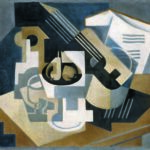
Cubism represents the most radical break from traditional Western pictorial representation since the Renaissance. Developed primarily in Paris, it abandoned the single-viewpoint perspective that had dominated art for centuries. Instead, Cubist artists analyzed subjects from multiple angles, breaking them into geometric fragments and reassembling them within a shallow, ambiguous space.
For researchers and students, it is essential to distinguish between its two primary phases:
Modern Architecture
Modern Architecture (or Modernism) is a revolutionary movement that rejected historical ornament and traditional “styles” in favor of functionalism and structural honesty. It emerged from the idea that the form of a building should be determined solely by its function and its materials. This marked a total departure from the stone-masonry traditions of the past, embracing the industrial potential of the 20th century.
Key technical pillars include the use of steel frames, reinforced concrete, and large expanses of glass. The movement popularized the “open floor plan” by shifting the load-bearing weight from thick walls to internal columns (the Dom-Ino House concept). For students and researchers, Modernism is often divided into sub-movements like the International Style, Bauhaus, and Brutalism, all unified by the mantra: “Form follows function.
Regionalism
Regionalism (often referred to as American Regionalism) was a realist modern art movement that flourished during the 1930s Great Depression era. As a direct rejection of the urban, abstract, and highly intellectual avant-garde movements coming out of Europe (like Cubism and Surrealism), Regionalism sought to create a uniquely American aesthetic.
The movement deliberately focused on rural environments, small-town life, and the agrarian working class of the American Midwest and Deep South. It was championed as “art for the people,” meant to be easily understood and deeply resonant with the average citizen who was suffering through economic collapse and the Dust Bowl. While often perceived as purely nostalgic and comforting, many Regionalist works actually contained biting social satire, subtle psychological tension, and critiques of agricultural mismanagement or religious fanaticism.
Fashion
Fashion is a dynamic, living art form that uses the human body as a three-dimensional canvas. It serves as a visual language reflecting sociological shifts, political climates, and technological advancements. As an academic and artistic category, Fashion encompasses four interconnected creative pillars:
-

Leda Fashion Garment Design (Haute Couture & Prêt-à-Porter): The structural manipulation of textiles through pattern-making, draping, and tailoring. It balances wearable architecture with human anatomy.
-
Fashion Illustration: The foundational translation of an idea from a two-dimensional sketch to a blueprint for production. Historically a fine-art discipline, it utilizes exaggerated proportions (the 9-head or 10-head figure rule) to emphasize line, movement, and textile drape.
-
Fashion Photography: The cinematic or editorial presentation of the garment. It shifted fashion from catalog documentation into a branch of surrealist, narrative-driven art, heavily utilizing studio lighting, staging, and creative direction.
Fashion History

Fashion history is essentially the story of the body being reshaped by the world around it.
-
-
Ancient & Medieval: Silhouettes were defined by fabric scarcity. Shapes were simple, geometric, and draped, as weaving was labor-intensive. Status was shown through rare dyes, not complex cuts.
-
Renaissance to Baroque: Silhouettes became architectures of leisure. Corsets, farthingales, and panniers were designed to make the wearer immobile, proving they were exempt from manual labor. The silhouette was a physical barrier between the elite and the productive class.
-
The Enlightenment & Victorian eras: Post-French Revolution, silhouettes briefly turned to Greek-inspired simplicity as a symbol of democracy. By the Victorian era, the Industrial Revolution triggered “conspicuous consumption,” leading to massive, rigid silhouettes like the crinoline to display newfound middle-class wealth.


-
The 20th Century: Wartime rationing forced fabric efficiency, leading to shorter, leaner, and more utilitarian forms. Women’s liberation then shattered these norms; hemlines rose and gender-neutral structures (like broad shoulders) replaced the obsession with the cinched waist.
-

Architectural
Architectural movements represent the evolution of human civilization through the lens of Form, Function, and Material. Unlike isolated art movements, architecture is bound by the laws of physics and the socio-economic needs of the time. A “Movement” in architecture is defined by a shared vocabulary of structural elements (how it stands up) and aesthetic ornamentation (how it looks).
For the Cgitems database, architectural movements are analyzed through three primary lenses:
-
Structural Innovation: The transition from Post-and-Lintel (Ancient) to Arches/Vaults (Medieval) to Steel Frames (Modern) and finally to Computational/Parametric design.
-
Spatial Philosophy: How a building treats the person inside—from the intimidating “divine scale” of the Gothic era to the “human-centric” ergonomics of Modernism.
-
The Facade & Envelope: The “skin” of the building, which reflects the artistic trends of the era, such as the intricate carvings of the Baroque or the “Glass Curtain Walls” of the International Style.
Architectural
Classical Architecture refers to the highly structured, formalized building traditions derived from ancient Greece and Rome. It is a style dictated by sacred geometry, mathematical ratios, and a strict adherence to symmetry. Rather than merely being a historical era, Classical Architecture is a comprehensive design system that has been revived, adapted, and reinterpreted across millennia (through the Renaissance, Neoclassicism, and Beaux-Arts movements).
The cornerstone of the system is the Architectural Order. An Order dictates the specific shape, proportions, and decoration of the column, its base, its capital (the top of the column), and the entablature (the horizontal superstructure sitting on top). For students and researchers, the system is divided into five definitive canonical orders:
-
Doric: The oldest, simplest, and sturdiest order, featuring a plain capital and no base (Greek Doric) or a simple base (Roman Doric).
-
Ionic: Characterized by elegant, slender proportions and a capital decorated with spiral, scroll-like carvings called volutes.
-
Corinthian: The most ornate style, featuring an elongated capital intricately carved with stylized acanthus leaves.
-
Tuscan: A simplified, unfluted Roman adaptation of the Doric order.
-
Composite: A rich Roman combination of the Ionic volutes and Corinthian acanthus leaves.
A core concept in Classical Architecture is entasis—the subtle, intentional swelling or curving of a column’s shaft. Classical architects discovered that perfectly straight columns appear to bow inward when viewed from a distance due to an optical illusion. Entasis corrects this, making the columns appear perfectly straight, rigid, and organically alive under the heavy weight they support.