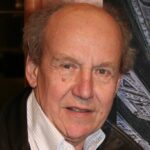
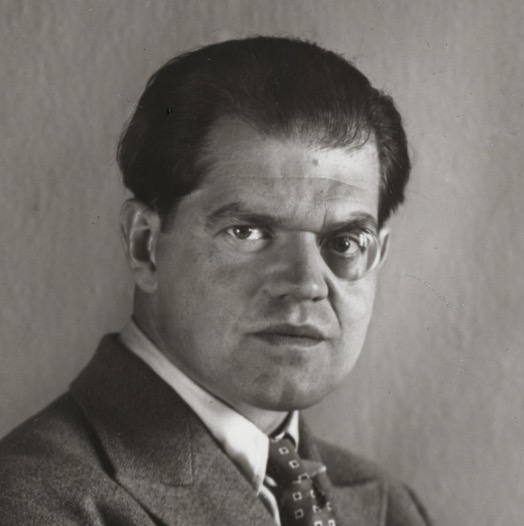


Raoul Hausmann (Father: Victor Hausmann, an academic painter; Significant Partners/Spouses: Elfriede Schaeffer, Hannah Höch, Hedwig Mankiewitz, Vera Broido) |
Raoul Hausmann (1886–1971), famously known as “Der Dadasoph” (The Dadasoph), was an Austrian artist, writer, and a central founder of the Berlin Dada movement. He played a pivotal role in radically changing the course of 20th-century modern art through his revolutionary experiments with collage, photomontage, and auditory performance.
Born in Vienna to an academic painter, Hausmann moved to Berlin with his family in 1900. His early artistic endeavors were heavily influenced by Cubism and Expressionism. However, the mass devastation of World War I pushed him, like many of his contemporaries, toward the anti-art, anti-bourgeois philosophy of Dada. In 1918, he co-founded the Berlin Dada group alongside Richard Huelsenbeck, George Grosz, John Heartfield, and his romantic and artistic partner, Hannah Höch.
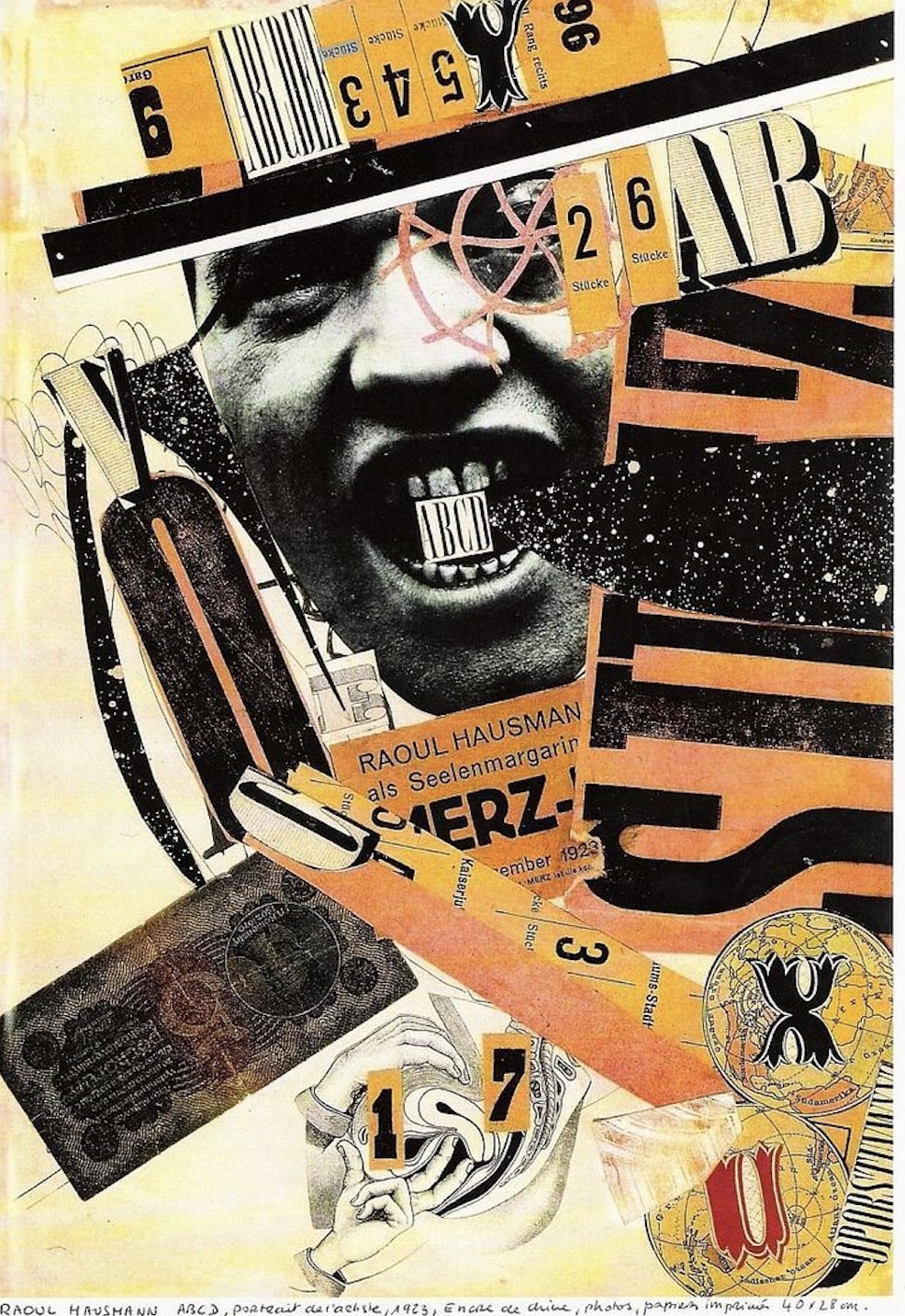
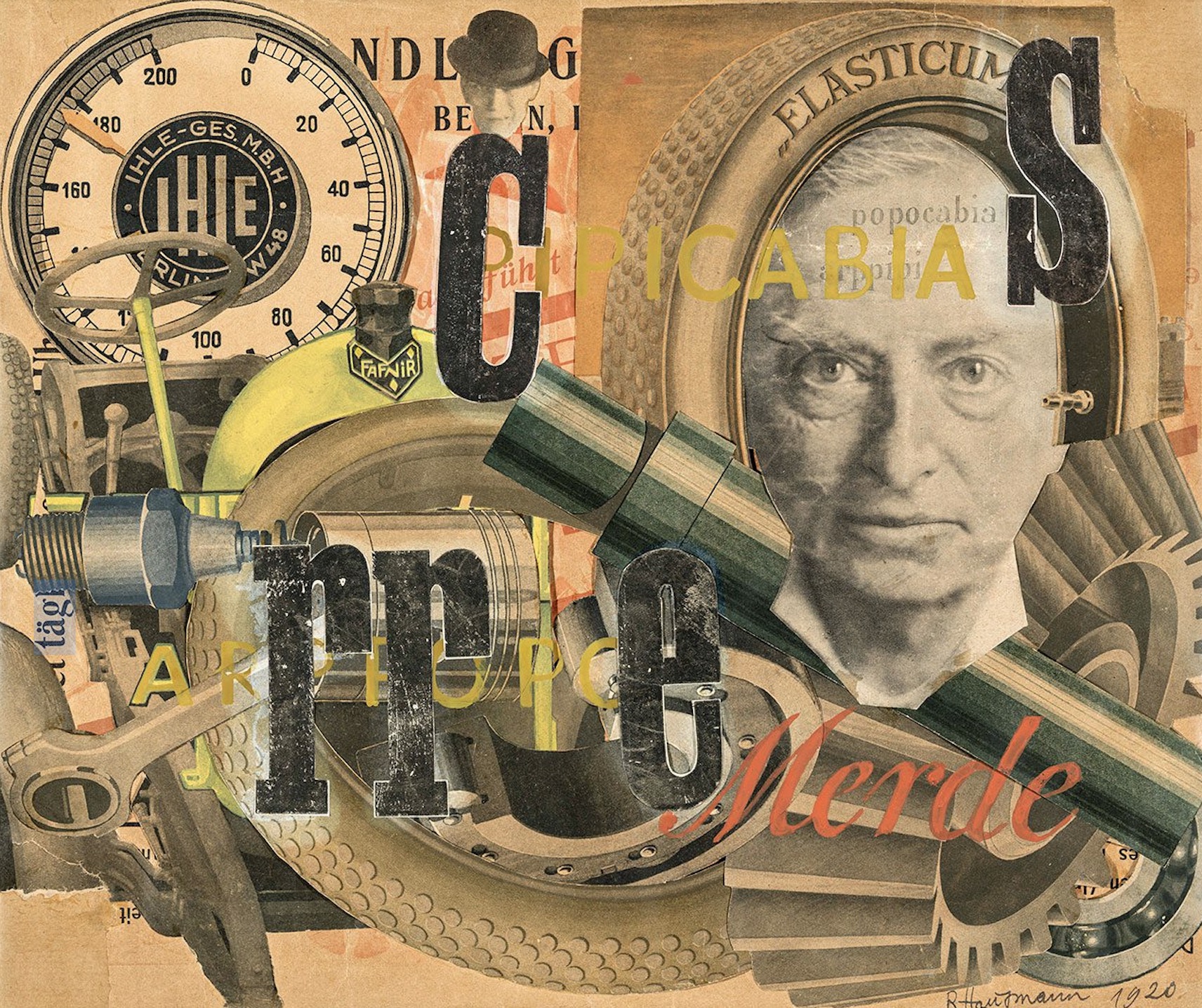
Hausmann is widely credited as one of the primary inventors of Photomontage—a technique of cutting and juxtaposing photographs and typography from mass media to create chaotic, satirical, and politically charged compositions. His most iconic artwork, however, is a three-dimensional sculptural assemblage titled Mechanical Head (The Spirit of Our Time) (1920). Constructed from a hairdresser’s wooden wig-making block attached to various measuring devices (a tape measure, a wooden ruler, a pocket watch mechanism, a jewelry box), it serves as a biting critique of the modern, unthinking, mechanically conditioned man whose mind is driven by external forces rather than internal thought.
Beyond visual art, Hausmann was a bold pioneer of “optophonetic” Sound Poetry. His groundbreaking poem fmsbw (1918), consisting of a non-sensical string of printed letters intended to be performed aloud with varied pitch and volume, profoundly influenced the auditory art of his contemporaries, most notably Kurt Schwitters’ Ursonate.
When the Nazi regime rose to power in 1933 and subsequently labeled his work “degenerate art,” Hausmann fled Germany. He lived a nomadic life in exile, moving through Ibiza, Zurich, and Prague before eventually settling permanently in Limoges, France, in 1944. He spent the remainder of his life there, continuing to paint, write, and experiment with photography until his death in 1971.
Active in others filds : Photography, Typography, Sound Poetry, Art Theory & Criticism, Publishing (Editor of the Der Dada journal).